

Fear of harm does not always come from a serious threat. Sometimes it starts with small signs like strange calls, unfamiliar faces near your home, rising crime in your area, or unwanted attention in public places. For business owners, public figures, and even private individuals with sensitive lifestyles, this fear slowly turns into constant pressure. Sleep becomes lighter, routines change, and every public outing feels risky. At that stage, people begin to search for protection in the form of a personal bodyguard or a full VIP security team. Many think both are the same thing, but the reality is very different. Understanding this difference is important before trusting anyone with your life.
Understanding the role of a personal bodyguard
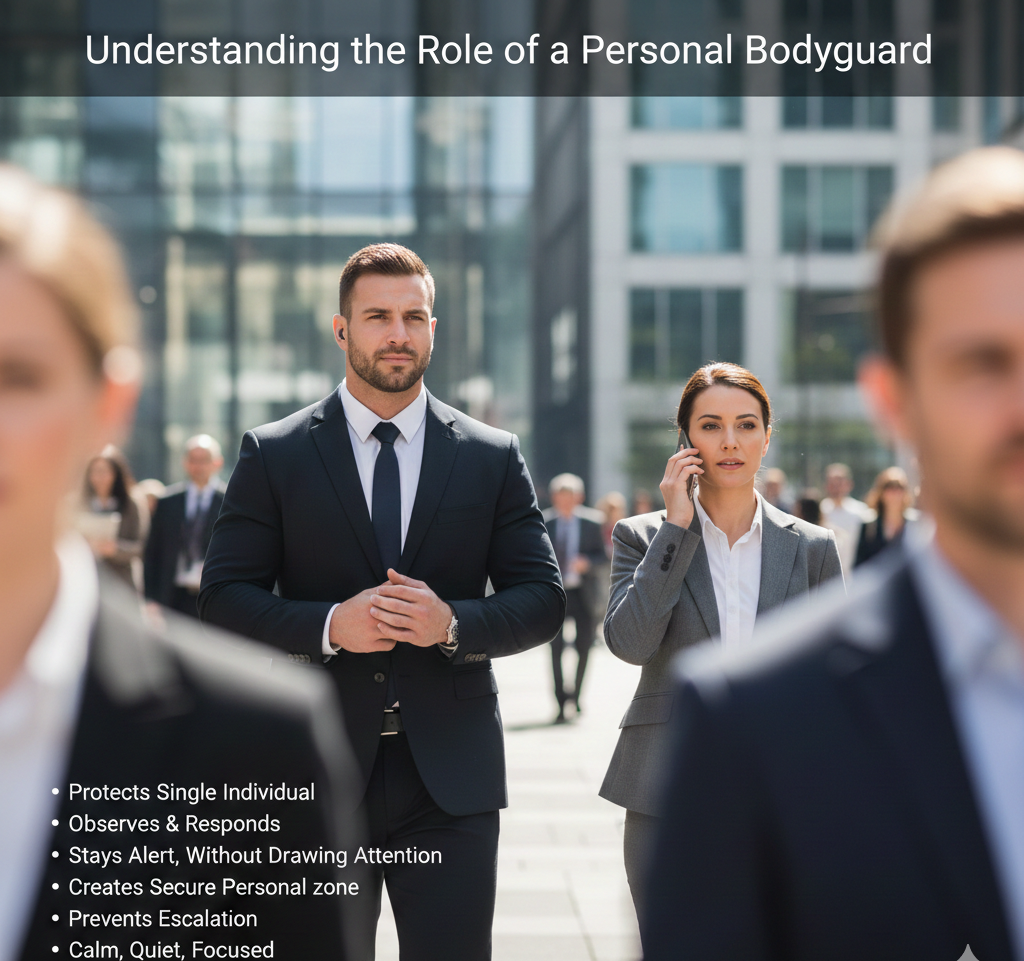
A personal bodyguard is hired to protect a single individual during daily movement and routine activities. Their role revolves around staying close, observing surroundings, and responding quickly if a threat appears. This type of protection is common among business owners, family heads, celebrities with limited exposure, and people who face personal risks rather than public-level threats. Personal bodyguards are trained to stay alert without drawing attention. They walk with you, drive with you, and remain nearby in all daily situations.
Most bodyguard services at this level focus on one protection. The goal is to create a secure personal zone around the client. The bodyguard watches crowd behavior, keeps an eye on suspicious activity, checks the surroundings before entry, and controls access when needed. Their job is not to fight but to prevent situations from getting out of control. Good personal bodyguards remain calm, quiet, and fully focused on the client at all times.
How VIP security is different in structure
VIP security is built for individuals who face public-level exposure and higher risk. This type of protection is designed for large-scale movements, including public gatherings, media events, political meetings, and high-profile business activities. VIP protection service works as a team rather than a single unit. Each team member has a fixed responsibility, and every movement is planned.
Unlike a personal bodyguard who stays close to one person, a VIP security team spreads across multiple layers. One group stays with the VIP, another checks the route, another secures the venue, and another monitors the surroundings for crowd behavior. This layered structure reduces risk from every angle. VIP security is not reactive. It is preventive and carefully planned from start to end.
Differences Between a Personal Bodyguard and a VIP Security Team
Feature |
Personal Bodyguard |
VIP Security Team |
| Protection scope | Focused on one individual | Covers the VIP, crowd, routes, and venue |
| Team size | Usually one guard | Multiple guards with assigned roles |
| Threat level | Personal risks and private threats | Public level and high-profile threats |
| Movement planning | Mostly real-time and flexible | Fully planned with backup routes |
| Public visibility | Low profile and discreet | Highly visible and authoritative |
| Training level | Close protection and self-defense | Advanced tactical and coordinated training |
| Technology use | Basic communication and safety gear | Surveillance systems and advanced monitoring |
| Cost structure | Comparatively affordable | High cost due to a large team and equipment |
| Lifestyle impact | Minimal disruption to daily routine | Strong impact on movement and privacy |
| Best for | Business owners, families, and private individuals | Politicians, celebrities, public figures |
Difference in threat level management
A personal bodyguard usually deals with limited threats. These threats may include stalking, harassment, business disputes, or small-scale security risks. The focus stays on personal safety during routine life. The bodyguard watches who approaches, who follows, and who behaves unusually. Their response is mostly defensive and protective.
VIP security deals with advanced threat levels. These may include targeted attacks, aggressive crowds, political hostility, media chaos, or organized threats. This is why VIP protection service relies heavily on intelligence, advanced scanning, and team coordination. The team does not wait for something to happen. They detect risk before it becomes visible.
Training and skill difference
Both personal bodyguards and VIP security staff receive physical training, but the depth and direction of training are different. Personal bodyguards are trained in close protection, observation, self-defense, emergency driving, and client escort methods. They learn how to stay unnoticed and how to remove the client safely if danger appears.
VIP security teams receive advanced operational training. They learn route management, crowd control, emergency evacuation, communication positioning, weapon handling, where legal, and synchronized movement. Each guard acts as part of a system rather than an individual unit. VIP protection requires discipline at a higher level because one mistake can affect the entire team.
Movement planning and route safety
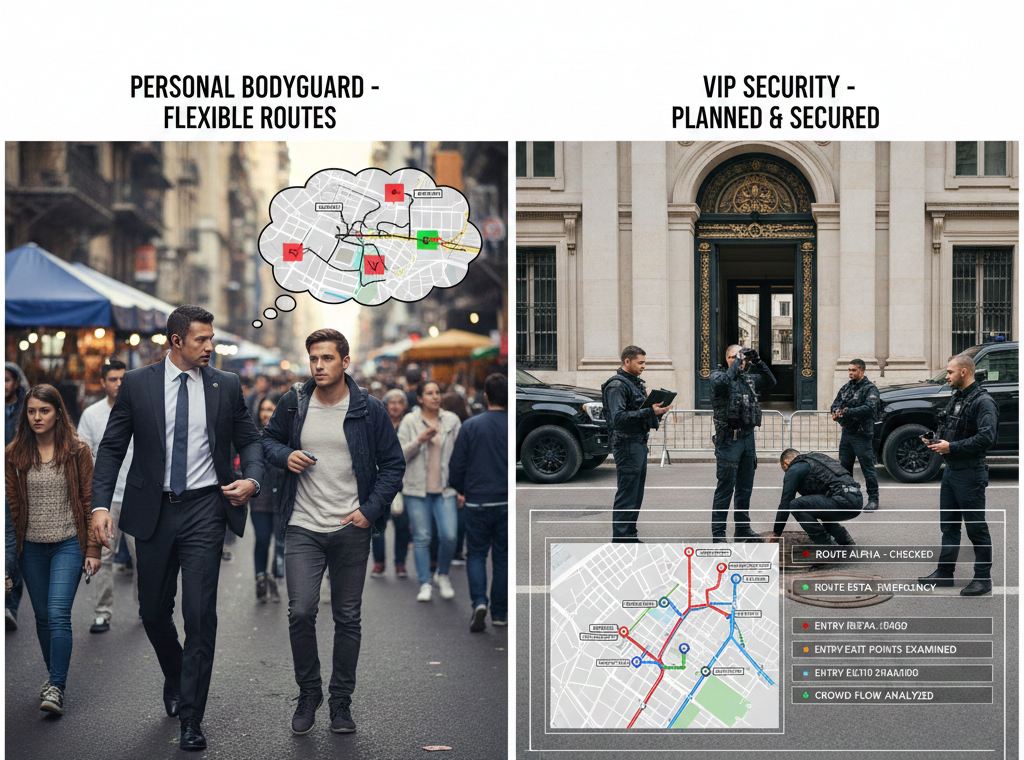
Personal bodyguards work with flexible routes. Daily life does not always allow planning, and many movements are spontaneous. In such cases, the bodyguard relies on real-time observation and quick judgment to decide the safest entry and exit.
VIP security never moves randomly. Every route is planned, checked, and secured before the VIP arrives. Alternative routes are prepared in case of emergency. Entry and exit points are examined. Crowd flow is studied. This planning is the backbone of VIP protection service and makes it different from personal protection.
Visibility and public interaction
Personal bodyguards usually stay low profile. They blend with the surroundings and avoid drawing attention to the client. This helps the protected person live with less public pressure and fewer questions from others.
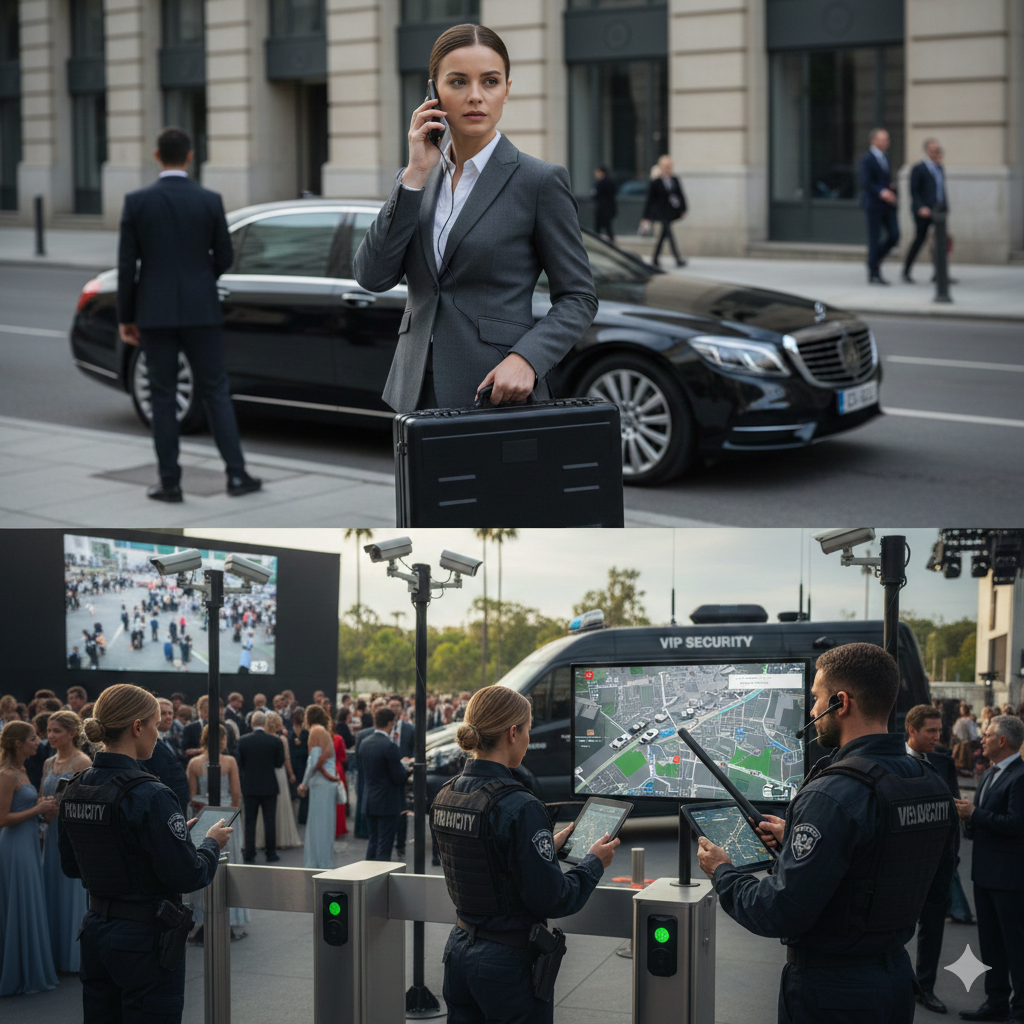
VIP security is intentionally visible. Their presence itself controls crowds and discourages disturbance. Uniformed guards, visible checkpoints, and coordinated movement send a clear signal of authority. Visibility becomes part of the protection system rather than something to hide.
Use of technology and equipment
Personal bodyguards rely mostly on communication devices, basic protective equipment, and transport control. Their tools support individual protection rather than large scale operations.
VIP security teams use advanced surveillance, wireless coordination systems, vehicle tracking, metal detection at venues, and controlled access points. Technology plays a central role in VIP protection because large areas and large crowds cannot be managed through human observation alone.
Cost difference and resource involvement
Bodyguards for hire at a personal level usually involve a lower budget compared to VIP protection. One trained guard covers one person, and the operation remains limited. This makes personal bodyguard services accessible to a larger audience.
VIP security demands multiple professionals, planning staff, supervisors, transport units, and technical support. This raises the cost significantly. The expense reflects the level of risk and complexity involved. VIP protection is not designed for casual use. It is shaped for high-exposure lives.
Client lifestyle compatibility
Personal bodyguards fit into daily life quietly. They adapt to your routine, your family environment, and your personal schedule. They become part of your movement without changing the way you live.
VIP security changes how life operates. Events follow strict schedules. Movement follows security plans. Venues are secured before arrival. Interaction with people becomes controlled. This level of protection affects how freely a person can move in public.
Decision-making authority
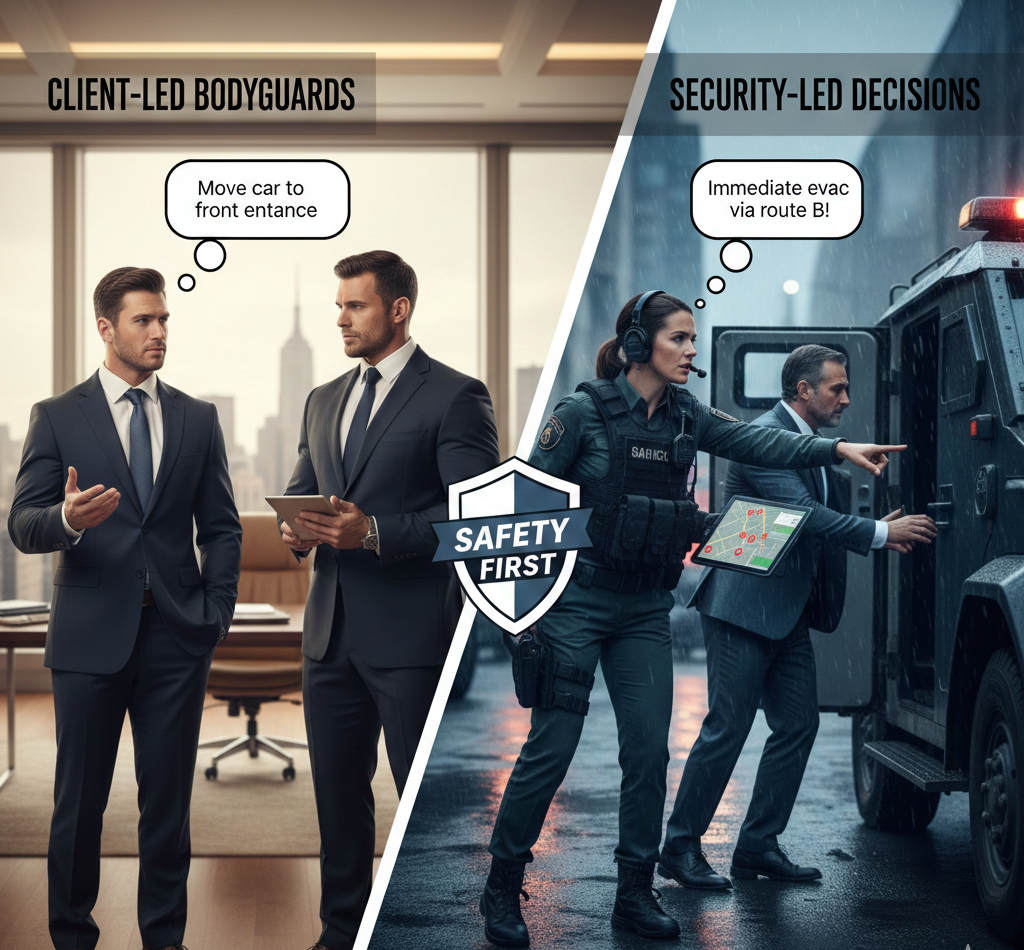
Personal bodyguards often take instructions directly from the client. They advise, but the client usually maintains control over routine decisions.
VIP security teams follow command structures. Decisions are made by security leads based on risk assessment. Even the VIP may need to follow security decisions during critical moments. Safety takes priority over personal preference in many situations.
When a personal bodyguard is enough
A personal bodyguard is suitable for individuals who face personal-level threats, private disputes, business conflicts, social exposure, or safety concerns related to travel and public movement. It suits people who want protection without heavy public visibility. It also suits families that want silent safety rather than large security arrangements.
When VIP security becomes necessary
VIP security becomes necessary when exposure reaches a level where individual protection is no longer enough. Politicians, celebrities, public speakers, high-value investors, and individuals receiving consistent public attention usually fall under this category. Here, protection is not just about the person. It extends to venues, crowds, media interaction, and travel security.
Choosing between bodyguards for hire and VIP protection
The choice depends on lifestyle, threat level, and exposure. Not every person who feels unsafe needs a VIP security team. At the same time, not every high-profile individual can survive on a single personal bodyguard. Choosing the wrong option can either waste money or leave security gaps.
Good bodyguard services help clients understand their real needs rather than forcing expensive packages. A responsible firm studies your movement, risk level, and public visibility before suggesting whether a personal bodyguard or VIP security is the right solution.

Final words
A personal bodyguard and a VIP security team both exist to protect lives, but the scale, structure, and responsibility behind each are very different. A personal bodyguard offers focused individual protection with flexibility and privacy. VIP security offers large-scale, planned, and highly visible protection designed for public exposure. Choosing between them should never be based on status or image. It should always be based on actual risk, daily routine, and level of public interaction. True protection is not about how many guards surround you, but how well your safety needs are understood and managed.
Frequently Asked Questions:
When should someone choose a personal bodyguard instead of VIP security?
A personal bodyguard is enough for private individuals facing personal-level threats, stalking, business disputes, or routine travel risks.
Is VIP security only for celebrities and politicians
No, VIP security is also used by high-value investors, public speakers, and anyone with constant public exposure and higher threat levels.
Do bodyguard services include weapons and armed protection
It depends on local law, risk level, and the type of service chosen. Many personal bodyguards work unarmed, while VIP security may include armed staff where legal.
Are bodyguards for hire available for short-term needs
Yes, many firms offer short-term bodyguard services for events, travel, or temporary security requirements.