

Security is not a fixed arrangement that works the same way all the time. Every environment, whether it is an office, event, or industrial site, has its own unique risks. Factors like the time of day, crowd size, and the type of activity taking place determine how security should be planned and executed. A strategy that works well for a small daytime gathering may fail during a crowded evening event. Understanding these changes is critical to maintain safety, prevent incidents, and ensure smooth operations in any situation.
Security Strategies That Adapt to Time, Crowd Size, and Activity
Security needs are never the same for every situation. Factors like the time of day, the number of people present, and the type of activity taking place constantly influence how security should be planned. Adapting strategies ensures both safety and efficiency while preventing potential risks before they occur.
How Time of Day Affects Security Requirements?
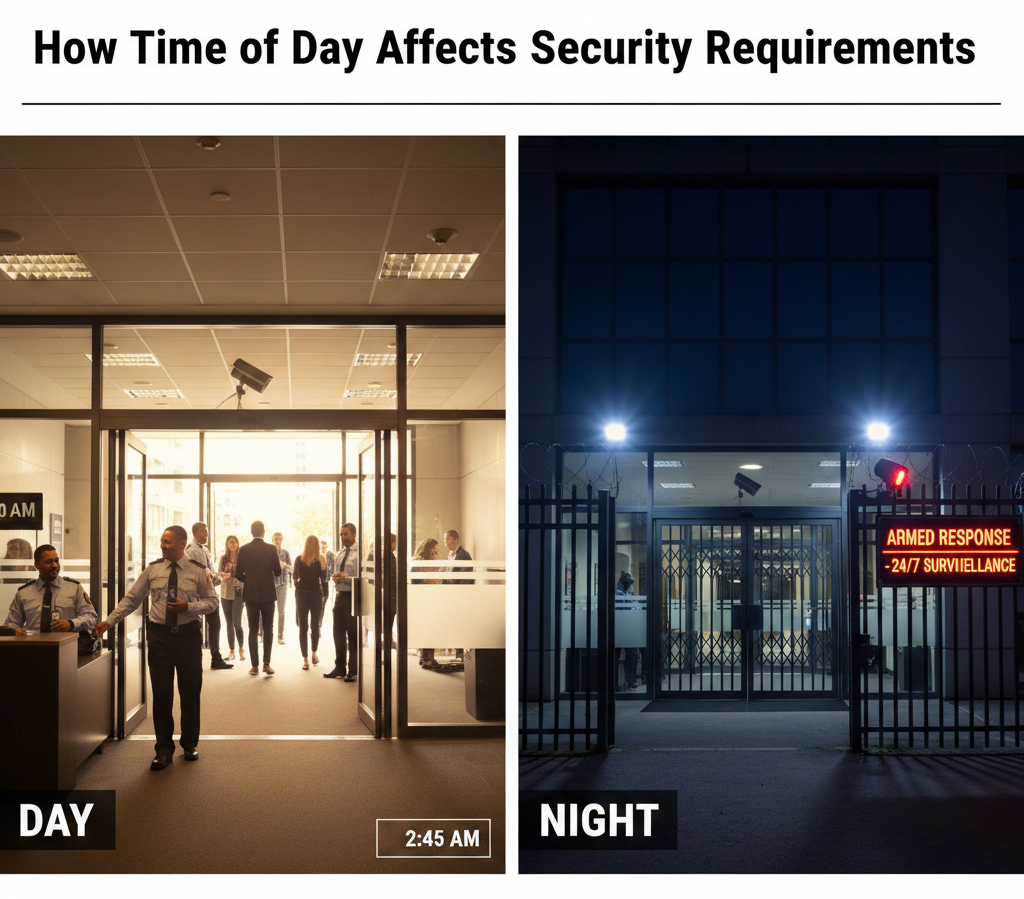
Time of day plays a major role in determining security needs. Daylight hours provide natural visibility, allowing guards and supervisors to monitor environments more effectively. People are generally more alert, and unusual behavior is easier to notice. Security coverage during daytime can focus on supervision, access control, and routine patrols. In contrast, nighttime conditions reduce visibility, increase fatigue among staff, and create opportunities for unauthorized access or criminal activity.
Darkness increases the risk of incidents, and guards must adjust their attention and positioning accordingly. Night shifts often require more personnel or specialized teams trained to stay alert for extended hours. Lighting, surveillance, and monitoring systems may also be upgraded or adjusted to compensate for limited visibility. Professional security services recognize these challenges and adapt their approach to prevent incidents. Flexible scheduling, strategic placement, and continuous observation during high-risk periods ensure both guards and the public remain safe. Ignoring these factors can leave vulnerabilities exposed, leading to safety breaches that could have been prevented with proper planning.
Impact of Crowd Size on Security Planning
Crowd size directly affects the type and intensity of security required. Small gatherings can often be monitored by a few security personnel, and potential issues can be identified quickly. However, as crowd size increases, supervision becomes more complex and unpredictable. Larger crowds create a higher risk of conflicts, accidents, and emergency situations. Entry points, exits, and high-traffic areas need stronger coverage, and additional personnel may be necessary to manage flow effectively.
Crowd density can also affect evacuation plans; an unprepared security setup can quickly become overwhelmed during emergencies. Moreover, different types of events attract different crowd behaviors. For example, a family gathering will require less stringent measures than a concert or industrial event. Guards must adjust their observation techniques, communication methods, and response protocols to handle the specific challenges posed by larger groups. Effective security planning for crowd management ensures safety, minimizes risk, and maintains order while allowing attendees to participate in activities without disruption. Static staffing or a one-size-fits-all approach rarely works, emphasizing the importance of adaptability.
Role of Event or Site Activity in Security Decisions
The type of activity occurring at a site strongly determines security requirements. Quiet office work, public events, industrial operations, and high-energy gatherings all present different risks. Activities involving alcohol, high emotion, or restricted areas increase the likelihood of incidents, while routine tasks may only require basic supervision. Security teams must anticipate behavior patterns linked to specific activities and adjust monitoring, patrols, and response strategies accordingly.
For example, a music concert may require extensive crowd control, entry checks, and rapid response teams, whereas a daytime office environment relies more on monitoring access points and maintaining visibility. Guards also need to understand potential conflict triggers, such as overcrowding, loud interactions, or restricted area access. Professional security services design their operations around these activity-specific risks, ensuring that guards are positioned strategically, communication lines are open, and protocols are prepared for likely scenarios. Ignoring the activity type often leads to inadequate coverage and increases the chance of incidents, making it essential to incorporate activity analysis into every security plan.

Changing Risk Levels During Different Phases
Risk levels are not static; they change depending on time, crowd density, and event or operational phase. Before an event starts, security risks focus primarily on setup areas, deliveries, and controlling unauthorized access. During peak hours, potential threats shift toward crowd control, conflict management, and emergency readiness. After the activity ends, risks may concentrate around exits, fatigue, or reduced supervision. Static security plans fail to account for these fluctuations, leaving vulnerable periods unprotected.
Adaptive planning ensures that guards are reallocated, patrol routes adjusted, and monitoring intensified according to changing conditions. Supervisors must constantly assess risk levels and instruct personnel to respond appropriately. Real-time adjustments minimize response time during incidents, prevent escalation, and maintain smooth operations. Professional security teams regularly evaluate situational changes, incorporating experience and observation into decisions. Understanding that risk is dynamic allows organizations to maintain safety consistently across all phases, reducing incidents while optimizing resource deployment and personnel efficiency.
How Security Coverage Adjusts in Peak and Low Hours?
Security coverage must adapt according to activity levels and crowd presence. During peak hours, the likelihood of disturbances, congestion, or emergencies increases. Security personnel must be positioned at key points, such as entrances, exits, and high-traffic areas, to manage crowd movement and prevent accidents. Continuous monitoring and clear communication among guards become essential during these periods. Conversely, low activity hours present a different type of risk.
Reduced foot traffic may make it easier for unauthorized individuals to access restricted areas unnoticed. Guards need to increase patrol frequency, stay alert for unusual behavior, and ensure surveillance systems are actively monitored. Dynamic adjustment of security coverage during different periods prevents vulnerabilities and ensures efficient use of resources. Organizations that plan for both high and low activity periods can maintain safety while avoiding unnecessary strain on personnel. This approach also helps guards stay focused and reduces complacency, ensuring effective performance throughout operational hours.
Importance of Flexible Security Deployment
Rigid security plans fail in real-world scenarios where conditions constantly change. Flexible deployment allows security teams to shift responsibilities, adjust positions, and change focus according to evolving circumstances. Guards trained in multiple roles can quickly respond to new risks without confusion or delay. Flexibility also allows supervisors to reinforce areas facing higher risk, ensuring balanced coverage across the site. This approach prevents gaps that could otherwise be exploited and maintains operational efficiency.
Professional security services emphasize flexibility as a core component of planning, including contingency measures for emergencies. Flexible deployment ensures that response times remain fast, threats are addressed proactively, and security personnel remain effective even under unexpected conditions. A well-executed flexible strategy allows organizations to manage risks dynamically, providing protection that adapts as situations evolve rather than relying on a fixed, predictable system.

Coordination Between Security Teams as Conditions Change
Coordination is essential when security needs fluctuate due to time, crowd size, or activity. Guards must communicate continuously to share observations, report incidents, and adjust priorities. Supervisors play a critical role in reallocating resources and guiding teams as conditions change. Without proper coordination, even skilled guards may act independently, causing delays, overlap, or gaps in coverage.
Clear communication channels, standardized reporting methods, and teamwork are essential to respond effectively during dynamic situations. Coordination also allows teams to react collectively to unexpected incidents, such as crowd surges, emergency evacuations, or unauthorized access. Professional security services emphasize regular briefings, real-time updates, and strategic oversight to maintain cohesion. Well-coordinated teams respond more efficiently, minimize risk, and maintain safety across all phases of operation.
Consequences of Static Security Planning
Static security planning assumes that risks remain the same, which rarely matches real conditions. Fixed patrol routes, rigid staffing, and unchanging response protocols create predictability that can be exploited. Such planning often leads to delayed reactions, ineffective monitoring, and overlooked vulnerabilities. Over time, guards may become complacent, reducing alertness and efficiency.
In dynamic environments, static plans fail to address sudden changes, crowd surges, or unexpected threats. Security breaches may occur simply because personnel cannot adjust in time. By contrast, adaptive planning ensures that resources are deployed based on current risk levels, allowing security teams to remain responsive and effective. Organizations that rely solely on fixed systems often face higher safety risks, increased liability, and operational disruptions. Professional services avoid these pitfalls by continuously assessing risks and adjusting strategies proactively.
Conclusion
Security needs are not static; they change with time, crowd size, and activity. Effective safety strategies recognize these changes and adapt accordingly, using flexible deployment, clear coordination, and trained personnel. Static approaches fail to manage dynamic environments, while adaptive strategies prevent incidents and maintain smooth operations. Understanding how risks evolve allows organizations to deploy professional security services efficiently, ensuring safety and order. By observing time, crowd, and activity factors, security teams can maintain control without unnecessary force and create environments that are safe, secure, and well-managed.
Frequently Asked Questions:
How to control crowds as a security guard?
Crowd control requires clear communication, strategic positioning, and constant observation. Guards should guide movement, manage entry and exit points, and prevent congestion. Using barriers, signage, and calm instructions helps maintain order. Coordination with fellow guards ensures quick response to incidents and smooth management of large groups.
What are the dangers of large crowds?
Large crowds can lead to stampedes, panic, and accidental injuries. Overcrowding increases tension, escalates conflicts, and reduces visibility of threats. Limited exits or poor planning can amplify emergencies. Health hazards, fights, and property damage are common risks. Proper security measures minimize these dangers and protect attendees.
Why is security an important issue for companies?
Security safeguards employees, customers, assets, and sensitive information. Breaches can lead to financial losses, legal issues, and reputation damage. Companies with strong security protocols prevent theft, vandalism, and cyber threats. Ensuring a safe environment fosters trust, productivity, and operational continuity, making security a critical business priority.
What is the key to effective crowd management?
Effective crowd management combines preparation, communication, and monitoring. Planning entry and exit routes, allocating sufficient staff, and maintaining awareness of crowd behavior ensures safety. Preventive measures, clear instructions, and quick response to issues reduce incidents. Coordination among security teams and adaptability are essential for smooth control.
What are the 4 types of crowds?
The four main types are: casual crowds, conventional crowds, expressive crowds, and acting crowds. Casual crowds gather spontaneously, conventional crowds assemble for structured events, expressive crowds show emotion or excitement, and acting crowds pursue a specific action. Each type requires different security strategies for safe management.
How does crowd density impact safety?
High crowd density increases the risk of accidents, injuries, and conflicts. Movement becomes restricted, exits are harder to access, and panic spreads quickly. Dense crowds also challenge visibility and monitoring. Security planning must account for density, using barriers, patrols, and communication to maintain safety and prevent chaos.