
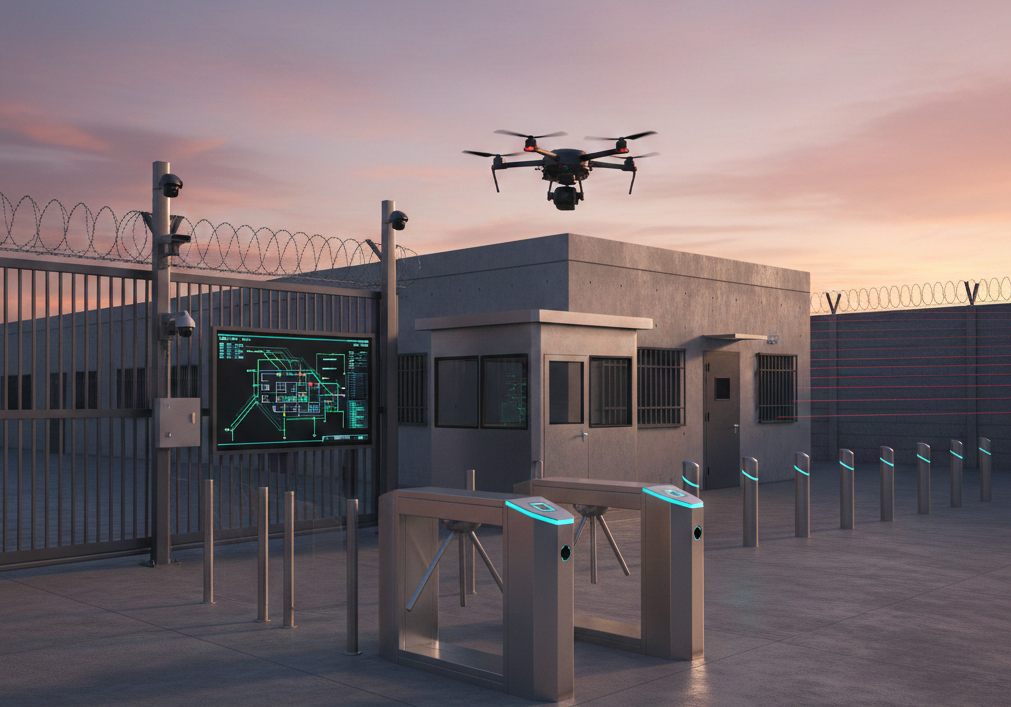
Industrial facilities handle machinery, materials, and restricted operational zones that require controlled movement. Access control systems used in industrial security help manage who can enter specific areas and at what time. These systems play a direct role in reducing safety risks, preventing unauthorized access, and maintaining discipline inside factories, warehouses, plants, and production sites. A structured access setup allows management to protect people and assets while keeping daily operations organized and secure.
What Are Access Control Systems in Industrial Security?
Access control systems are security solutions designed to manage and control entry inside industrial premises. These systems check identity before allowing entry to doors, gates, production floors, or restricted zones. Industrial environments usually contain high-risk areas such as heavy machinery rooms, electrical panels, chemical storage units, testing labs, and data sections.
Access control systems help divide these areas according to job roles and responsibilities. Only approved staff can enter sensitive zones, which reduces mistakes and safety issues. This controlled structure keeps daily operations organized and secure. Modern access control systems also store entry and exit records, making monitoring easier for management teams. These logs help during safety checks, audits, or internal reviews. When access remains properly managed, industrial facilities maintain better discipline, reduce confusion, and protect both workers and assets. Overall, access control systems form a strong foundation for industrial safety planning.
Why Access Control Systems Are Important for Industrial Security?
Industrial locations experience constant movement from employees, supervisors, contractors, delivery staff, and visitors. Without controlled entry, risks such as accidents, theft, and operational delays increase. Access control systems used in industrial security help manage this movement in an organized way. Restricted access keeps untrained people away from dangerous zones, lowering chances of injury or equipment damage. These systems also help follow safety rules and internal policies set for industrial operations.
Clear access rules improve accountability, since management can track who entered specific areas and at what time. During emergencies, access records support faster decision-making and better response planning. Controlled entry also reduces crowding in sensitive sections, helping machines and processes run smoothly. When access control systems remain properly managed, industrial facilities experience fewer disruptions, stronger safety standards, and improved overall control across the site.
Types of Access Control Systems Used in Industrial Security
Industrial facilities use different access control systems based on site layout, risk level, and operational needs. Each type plays a specific role in managing entry and maintaining security across various areas.
Physical Access Control Systems
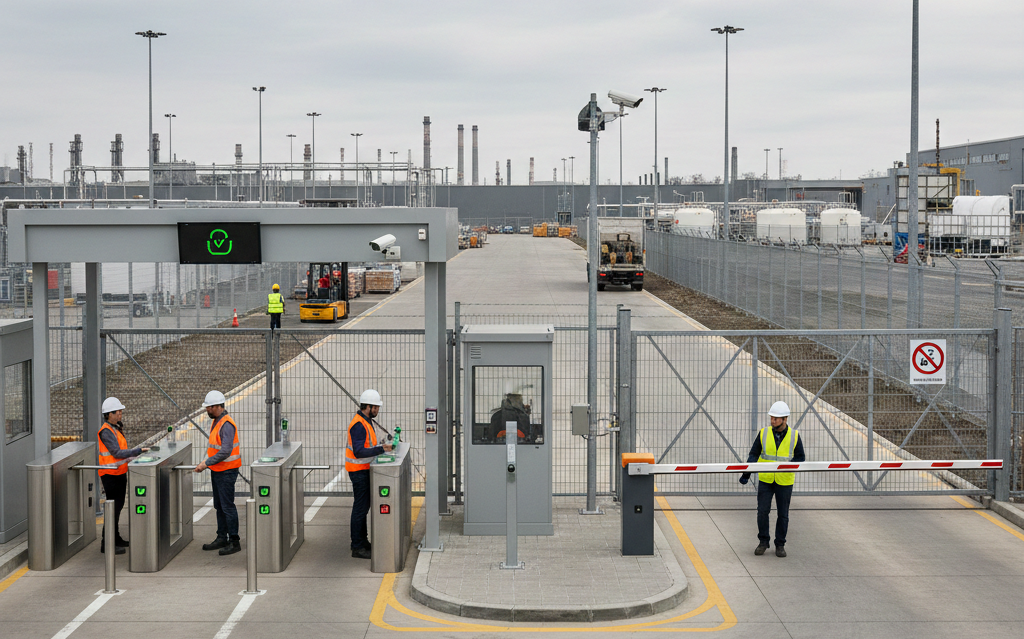
Physical access control systems include gates, fencing, security doors, barriers, and turnstiles. These controls form the first layer of industrial protection. Guards often manage these points to verify authorization. Physical controls help regulate both pedestrian and vehicle movement. Industrial sites use them at entry gates, loading areas, and storage zones. Physical systems work best when paired with electronic monitoring for better control.
Electronic Access Control Systems
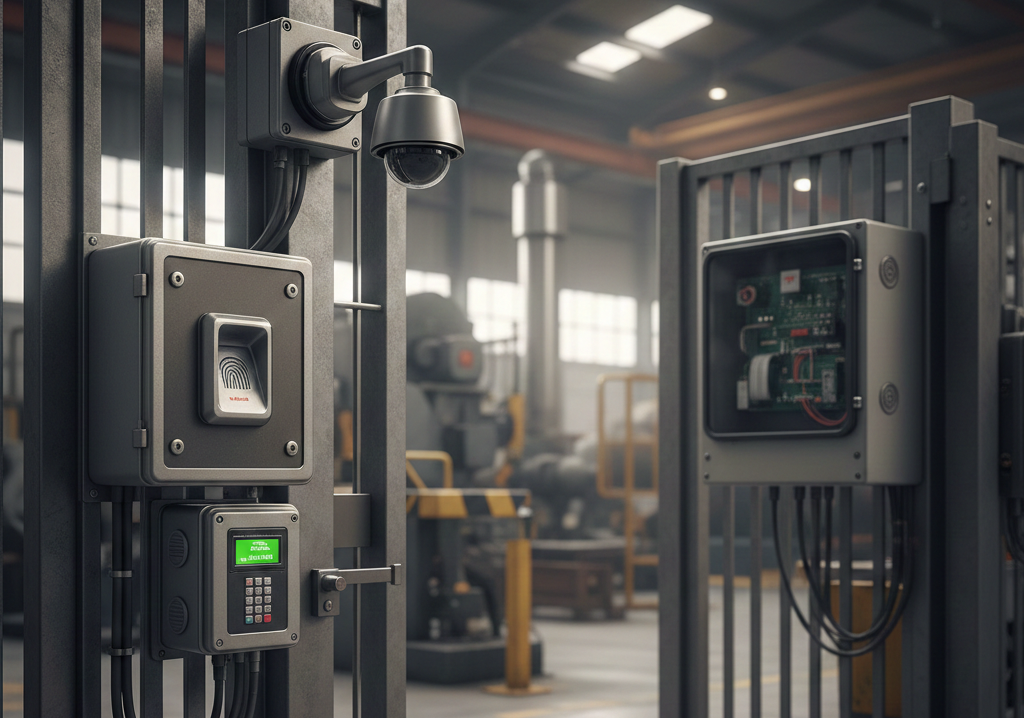
Electronic systems rely on keypads, access panels, and central controllers. Authorized personnel enter assigned codes to gain access. These systems reduce reliance on traditional keys and allow quick permission updates. Centralized control makes management easier, especially for large industrial sites. Electronic access control systems used in industrial security support logging and monitoring of entry activity.
Biometric Access Control Systems
Biometric access control systems use unique human features for identification. Fingerprint scanners, facial recognition, and iris readers are common examples. These systems provide high accuracy and prevent credential sharing. Industrial facilities often use biometric systems in sensitive zones such as control rooms and labs. Biometric access improves accountability and strengthens security protocols.
Card-Based and RFID Access Systems
Card-based systems use ID cards or RFID tags assigned to employees. Users scan cards at access points for entry. RFID technology allows contactless access, making it suitable for large workforces. These systems also support attendance tracking and movement records. Industrial sites benefit from faster access flow and better workforce monitoring.
Access Control System Hardware
Access control hardware forms the foundation of industrial security systems. This includes readers, scanners, control panels, locks, and monitoring devices installed at entry points. Card readers and biometric scanners verify identity, while electronic locks control physical access. Control panels connect multiple access points to a central system for easier management. Industrial-grade hardware is designed to handle dust, moisture, vibration, and heavy usage. Reliable hardware ensures uninterrupted security operations in demanding environments. Proper installation and quality equipment reduce system failures and improve long-term performance. Hardware selection depends on site size, security requirements, and environmental conditions within the industrial facility.
Industrial Access Control System Features
Below are the key features of industrial access control systems that help manage entry, improve safety, and maintain controlled operations across industrial facilities.
- Multiple access levels for different roles
- Time-based access for shift control
- Card, biometric, and keypad authentication
- Centralized system management
- Entry and exit activity logs
- Alarm system integration
- CCTV and video verification support
- Mobile and browser-based access control
- Asset and zone tracking
- Emergency lockdown capability
- Easy permission updates
- Scalable system expansion
How Access Control Systems Improve Industrial Safety?
Access control systems used in industrial security improve safety by limiting access to hazardous zones. Only trained and authorized staff can enter areas with heavy machinery or sensitive operations. This reduces workplace accidents and safety violations. Controlled access also helps manage emergency situations, allowing security services and teams to identify who is inside specific zones. Clear access boundaries reduce crowding and confusion during daily operations. Safety improves when movement follows defined rules. Access control supports a safer work culture by enforcing responsibility and discipline across industrial environments.
Access Control Systems and Workforce Management
Modern access control systems support workforce management through accurate tracking and reporting. Entry logs help monitor attendance, shift timing, and staff movement. This reduces reliance on manual records and improves efficiency. Supervisors gain insights into workforce flow across departments. Access data also supports investigations and compliance reporting. Clear records promote accountability and fair management practices. Access control systems help maintain balanced staffing levels and smoother operations across industrial facilities.

Access Control System Maintenance and Expansion
Industrial access control systems require regular maintenance to perform reliably. Environmental conditions such as dust and moisture can affect hardware performance. Routine inspections help prevent failures. Expansion becomes necessary as operations grow or new zones are added. Scalable systems allow new access points without complete system replacement. Planned maintenance and expansion ensure long-term system value. A well-maintained access control system continues supporting safety and operational needs without disruption.
Challenges in Industrial Access Control Systems
Industrial environments present challenges such as harsh conditions, power issues, and system misuse. Hardware wear, network interruptions, and lack of staff training can affect system performance. Managing large workforces also requires careful access planning. Despite these challenges, proper system design and regular monitoring reduce risks. Addressing challenges early helps maintain smooth and secure operations.
Choosing the Right Access Control System for Industrial Security
Selecting the right access control system depends on facility size, risk level, and operational complexity. Smaller sites may need basic card systems, while large plants benefit from biometric and integrated solutions. System scalability, reliability, and ease of management matter for long-term use. Choosing the right solution improves safety, efficiency, and control across industrial operations.
Conclusion:
Access control systems used in industrial security play a central role in protecting people, assets, and operations. From physical barriers to advanced biometric solutions, these systems help maintain order and safety across industrial facilities. A well-structured access setup supports safer workplaces, controlled movement, and efficient management. Investing in the right access control solution strengthens industrial security for the long term.
Frequently Asked Questions:
What are the access control systems in industrial security include?
Access control systems in industrial security include physical barriers, electronic systems, and digital management tools. These systems cover gates, security doors, keypads, access cards, biometric scanners, and RFID readers. They also include control panels, monitoring software, and activity logs. Together, these components help manage who can enter specific industrial areas, control movement, and keep records for safety and accountability.
What are the 4 types of access control?
The four main types of access control are:
-
- Discretionary Access Control (DAC) – Access decided by the owner or administrator.
- Mandatory Access Control (MAC) – Access controlled through strict rules and classifications.
- Role-Based Access Control (RBAC) – Access based on job role or responsibility.
- Discretionary Access Control (DAC) – Access decided by the owner or administrator.
- Rule-Based Access Control – Access granted based on predefined rules like time or location.