

Visitor management system in housing societies has become an important part of daily life. Housing societies handle many visitors every day, including guests, delivery staff, helpers, and maintenance teams. Managing all these entries without a proper system often creates confusion and security gaps. A visitor management system helps societies keep clear records and control movement at entry points. It brings order to gate operations and supports residents in feeling safe. As societies grow larger, manual visitor handling no longer fits modern needs. A structured system supports smooth entry while maintaining safety rules for everyone.
Why Housing Societies Need a Visitor Management System
Housing societies face daily challenges related to visitor control. Open entry without proper checks increases safety risks and causes discomfort for residents. A visitor management system helps societies know who enters and for what reason. This clarity reduces chances of unauthorized access. Residents also feel more confident when visitor approvals remain in their control. For management teams, the system helps maintain rules without constant arguments at gates.
Security staff can focus on monitoring instead of paperwork. Large societies with multiple blocks benefit the most since manual tracking becomes confusing. A proper system supports peaceful living and reduces complaints related to entry delays or missing records. Over time, it builds trust between residents, guards, and management.
Common Visitor Entry Problems in Housing Societies
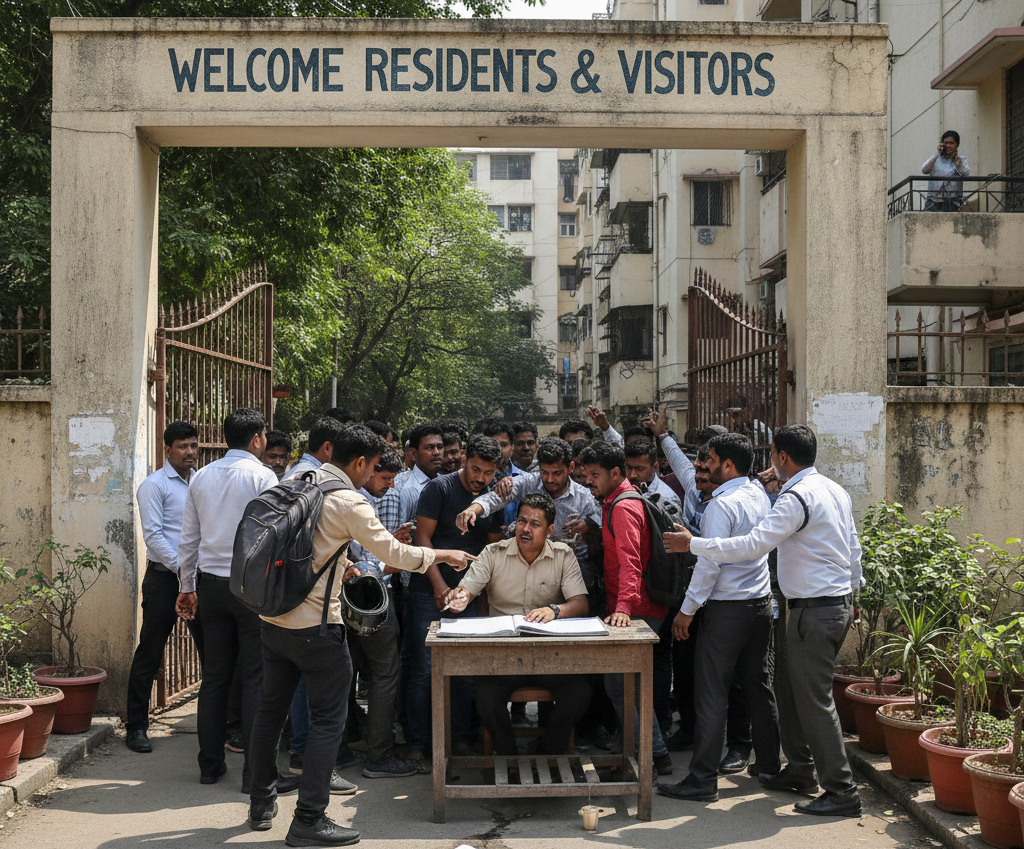
Many housing societies still depend on handwritten visitor registers at the main gate. During busy hours, this system creates long waiting lines and unnecessary delays. Security services teams often struggle to read unclear handwriting or search through old pages to confirm past entries. Due to pressure from crowds, some visitors enter without complete details, which weakens security control. Residents also receive repeated phone calls for visitor approvals, which becomes irritating over time.
Paper registers can easily get lost, damaged, or torn, causing missing records that create trouble during complaints or investigations. Delivery riders usually hurry, increasing the risk of wrong entries. Arguments between guards, visitors, and residents are common because rules are not clearly followed. These issues reduce gate efficiency and increase daily stress. A visitor management system solves these problems through organized entry steps and proper record keeping.
How a Visitor Management System Works in Housing Societies
A visitor management system follows a clear and organized process. When a visitor arrives at the gate, basic details such as name, purpose, and flat number get recorded. Security staff enters this information into the system using a device or a fixed entry method. In many setups, residents receive a notification or call to approve the visit. Once approval is granted, the visitor receives permission to enter.
The system records the entry time automatically, which removes guesswork. At the time of exit, guards mark departure to complete the visit record. Management can later access reports if required. This step-by-step flow reduces confusion during rush hours. Guards follow fixed rules instead of personal judgment, which reduces mistakes. Residents remain informed about visitor movement, creating better coordination and smoother daily operations.
Types of Visitors Managed in Housing Societies
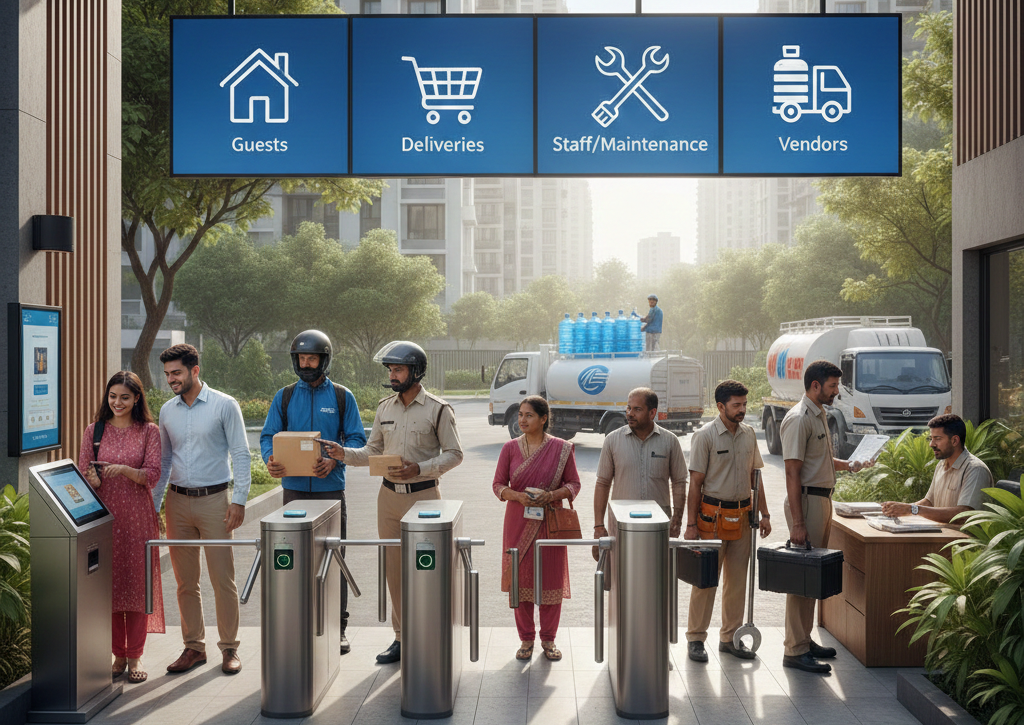
Housing societies deal with many types of visitors on a daily basis. Guests visiting residents form one major group and usually need approval before entry. Delivery riders from food, grocery, or courier services visit frequently and often require quick verification. Domestic staff such as maids, drivers, cooks, and helpers enter regularly and may follow fixed schedules.
Maintenance workers like electricians, plumbers, and technicians visit for repair tasks. Vendors supplying water, gas, or household items also enter at scheduled times. Each visitor category needs different checks and permissions. A visitor management system allows proper classification of all entries. Regular staff can have pre-approved access, while guest visits require confirmation. This organized classification reduces delays, improves understanding for guards, and keeps daily movement structured and disciplined within the society.
Key Features of a Visitor Management System
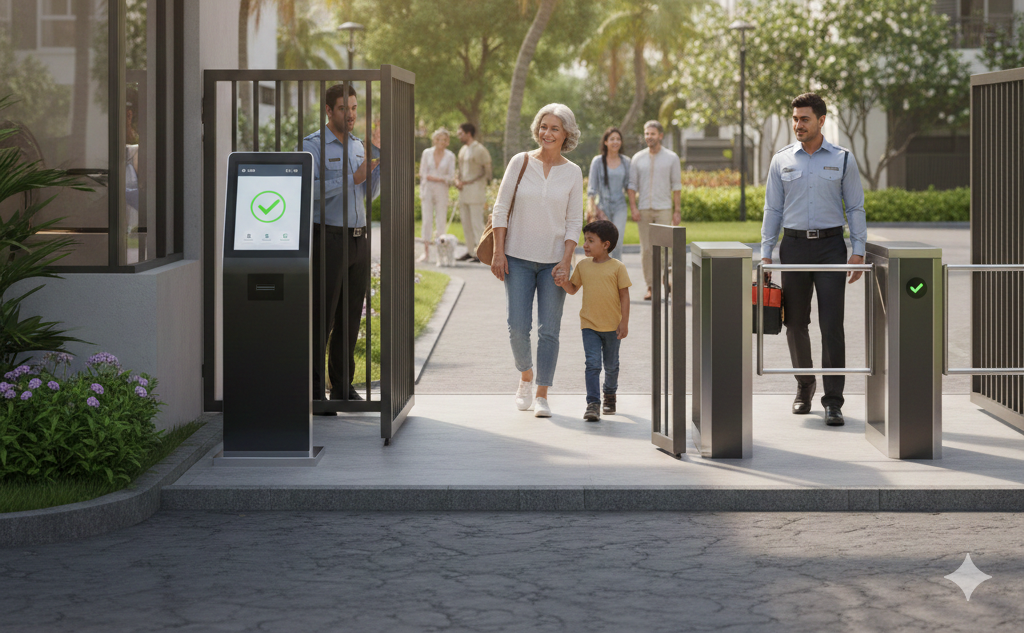
A visitor management system includes features that make entry control easier and more reliable. Recording visitor details forms the foundation of the system. Approval alerts allow residents to decide who can enter. Entry and exit time tracking helps maintain accurate movement records. Search functions make it easy to find past entries during complaints or inquiries.
Some systems allow photo capture for extra verification. Report generation helps management review visitor patterns daily or monthly. Alerts inform guards about denied or restricted entries. These features work together to reduce confusion and improve discipline at entry points. Simplicity remains important because complex systems discourage proper use. When features remain easy to understand, guards adopt them quickly. A well-designed system improves accuracy without slowing down the gate process.
Role of Security Staff in Visitor Management
Security staff play a central role in visitor management success. Guards serve as the first contact point for all visitors entering the society. Their duty includes collecting correct information and following the system process carefully. Proper training helps guards use devices or registers with confidence. Clear procedures reduce unnecessary arguments with visitors. Guards also guide visitors politely through approval steps, which improves cooperation.
During emergencies, visitor records help security teams respond quickly. Many societies combine visitor systems with professional security services to maintain consistency. When guards understand the importance of accurate entries, their responsibility level improves. Daily system performance depends heavily on guard discipline. Strong coordination between security staff and management ensures smooth operations and better control over visitor movement.
Benefits of Visitor Management System for Residents
Residents experience many advantages from a visitor management system. They gain better control over who enters their living space. Approval processes reduce unexpected visits and improve personal comfort. Clear records help residents track domestic staff or service visits easily. Reduced gate calls lower daily disturbance.
Families feel more relaxed knowing entry rules are followed properly. During disputes or complaints, visitor records provide clarity and avoid confusion. Elderly residents feel safer with controlled access at gates. Trust between residents and management improves when systems work smoothly. Overall living comfort increases when entry remains organized. A structured visitor system supports peaceful community life and better coordination between residents, guards, and management.
Benefits for Housing Society Management
Housing society management benefits greatly from a visitor management system. Visitor records help enforce rules without personal confrontation. Reports assist in understanding peak visitor hours and adjusting security staffing. Reduced complaints save management time and effort. Digital records allow quick review during disputes or investigations.
Committees gain transparency and accountability through clear data. Paper registers no longer require storage or manual checks. Management decisions become data-based rather than assumption-based. The system reduces dependency on individual guards for record accuracy. Over time, management experiences smoother operations and improved resident satisfaction. A structured visitor system supports long-term planning and better control across the society.
Visitor Management System and Society Security
Society security improves when visitor movement stays controlled and recorded. Unauthorized entry becomes difficult due to proper verification steps. Entry logs help trace movement if any issue arises. Guards rely on system guidance instead of personal judgment. Residents remain alert through approval notifications.
Coordination between security staff and systems strengthens safety standards. Emergency handling becomes faster with accurate visitor data. Pattern analysis supports better security planning. Societies using organized visitor control experience fewer conflicts and incidents. A visitor management system supports security goals without creating inconvenience for residents or visitors.
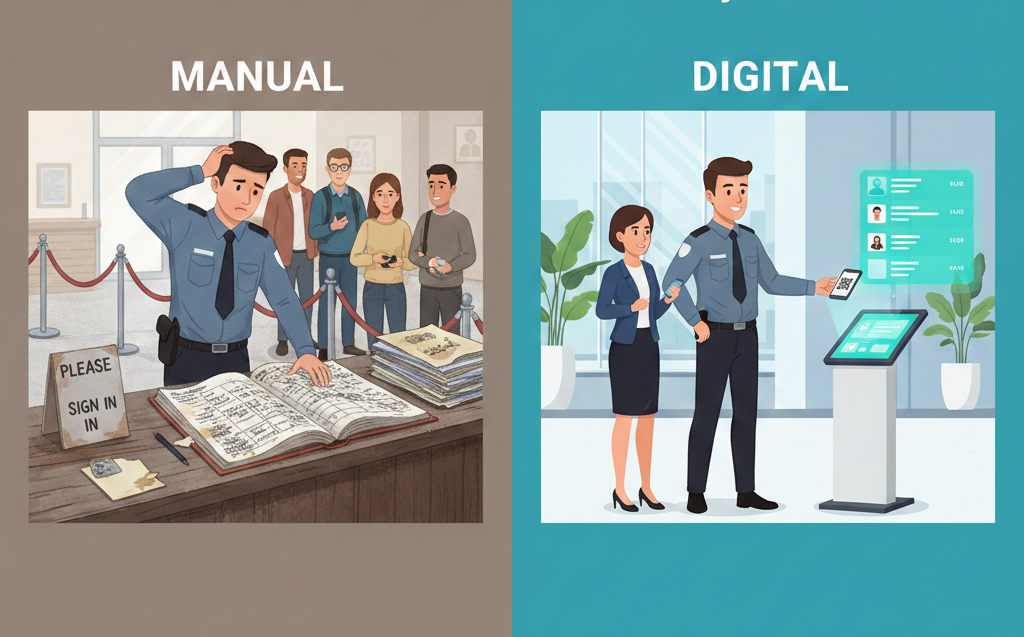
Digital vs Manual Visitor Management System
Manual visitor systems depend on paper registers, which often cause delays and errors. Digital systems store records safely and allow quick access. Paper records can get lost, damaged, or misread. Digital data remains searchable and organized. Guards find digital systems easier during busy hours. Manual entries rely heavily on handwriting quality. Digital methods improve accuracy and reduce confusion.
Training remains necessary for both systems. Societies shifting to digital solutions notice smoother operations. Choosing the right system depends on society size and visitor volume. Digital systems offer long-term convenience and better control compared to manual methods.
Privacy and Data Handling in Visitor Management
Handling visitor data requires responsibility and care. Information collection should stay limited to entry needs only. Access to records must remain restricted to authorized staff. Residents should feel confident that visitor data stays protected. Clear rules help prevent misuse of information. Regular record reviews support better control. Digital systems should follow basic data protection practices. Trust remains important in any system handling personal details. Societies benefit when privacy stays respected. Responsible data handling builds confidence among residents and visitors.
Challenges in Implementing Visitor Management System
Many societies face challenges during system implementation. Guards may resist learning new processes. Residents may worry about entry delays initially. Technical issues can cause early frustration. Lack of training reduces system effectiveness. Management support remains important during transition. Clear communication helps reduce confusion. Gradual implementation works better than sudden changes. With time and guidance, staff adapt to new systems. Most challenges reduce once users understand benefits. Proper planning and patience lead to successful adoption.
Choosing the Right Visitor Management System for a Housing Society
Selecting the right visitor system requires understanding society needs. Large societies require systems that handle heavy traffic smoothly. Smaller societies may prefer simple setups. Ease of use matters for guards and residents. Budget planning avoids future issues. Vendor support and training availability also matter. Feature comparison helps make better decisions. A practical system supports long-term use. Proper selection improves acceptance and daily performance. The right choice ensures smooth operations and better control.
Future of Visitor Management in Housing Societies
Visitor management systems continue to develop with new technology. Automation reduces manual workload. Integration with access control improves gate efficiency. Mobile approvals simplify resident interaction. Data analysis supports planning and security improvements. Future systems focus on speed and accuracy. Societies adopting modern solutions experience smoother daily operations. Technology continues to support safer and better-managed living environments.
What Is a Visitor Management System?
A visitor management system is a structured process used to record and monitor people entering and leaving a housing society. This system replaces old paper registers with digital or semi digital methods that store visitor details safely. Information such as name, contact number, visit purpose, and entry time gets recorded in one place. Some systems also include resident approval before allowing entry.
Guards can quickly check past entries without searching through pages. The system helps reduce mistakes that often happen with manual writing. Housing societies use it to maintain discipline at entry gates and control unnecessary movement. It also supports faster decision making during busy hours. Overall, the system creates a clear record that helps both residents and management stay informed.
Conclusion:
Visitor management system in housing societies plays a strong role in maintaining order and safety. It helps residents feel secure and supports guards in performing duties properly. Management benefits from clear records and structured control. Challenges may appear during setup, but long term benefits outweigh early effort. A well planned system improves daily life within societies. As housing communities grow, visitor management becomes a practical solution for smooth and safe living.
Frequently Asked Question:
How many types of visitor management systems are there?
Visitor management systems mainly three types ke hote hain.
Manual systems paper registers par depend karte hain.
Digital systems computer, tablet, ya mobile apps use karte hain.
Integrated systems visitor management ko access control, CCTV, aur security systems ke saath connect karte hain.
Small societies aksar manual ya basic digital systems use karti hain, jab ke large housing societies integrated systems prefer karti hain.
What is the purpose of a visitor control system?
Visitor control system ka main purpose security aur control hota hai.
Yeh ensure karta hai ke sirf approved log hi society ke andar enter karen.
System visitor movement ka proper record rakhta hai.
Residents ko surprise visits se protection milti hai.
Management ko clear data milta hai jo disputes aur investigations mein help karta hai.
Overall, yeh system safety, discipline, aur smooth entry process maintain karta hai.
How to create a visitor management system?
Visitor management system banane ke liye pehle society needs samajhna zaroori hota hai.
Visitor types identify kiye jate hain jaise guests, delivery, aur staff.
Entry rules define kiye jate hain.
Manual ya digital system select kiya jata hai.
Security staff ko proper training di jati hai.
Clear approval process set kiya jata hai.
Regular monitoring aur updates se system effective rehta hai.
What are the four components in the management system?
Visitor management system ke four basic components hote hain:
- Visitor Registration – visitor details record karna
- Approval Process – resident ya management ki permission
- Access Control – entry aur exit tracking
- Reporting and Records – data storage aur review
Yeh components mil kar system ko reliable aur organized banate hain.
What is the best visitor management software?
Best visitor management software society ki requirements par depend karta hai.
Achha software easy to use hona chahiye.
Fast entry process aur clear reports provide kare.
Mobile approval support karta ho.
Security staff ke liye simple interface ho.
Local support aur training available ho.
Feature heavy software tab useful hota hai jab staff use kar sake.
Practical aur simple system aksar best result deta hai.