
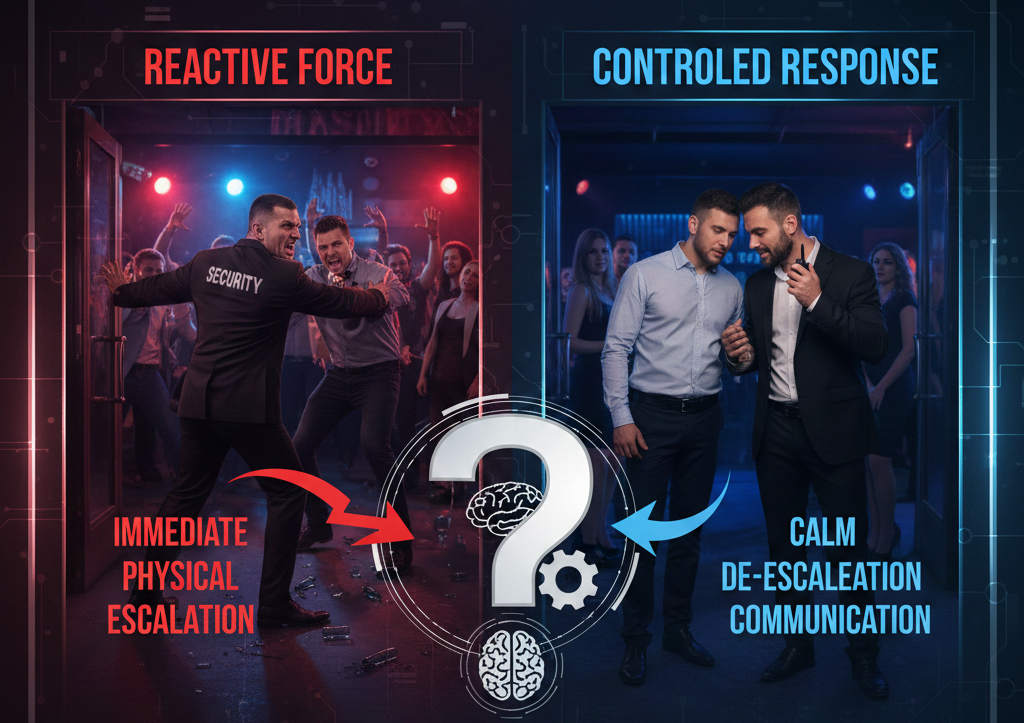
Reactive force and controlled response are two different approaches used in bouncer security. Reactive force involves quick physical action when there is immediate danger, such as a fight or sudden attack. It focuses on stopping harm fast but carries higher risks like injuries and legal issues. A controlled response is a calm and planned approach that relies on observation, communication, and minimal physical action. It helps prevent situations from escalating and keeps the environment safe. Professional bouncers prefer controlled response whenever possible, using reactive force only as a last option when safety is at risk.
What Is Reactive Force in Bouncer Security?
Reactive force refers to an immediate physical action taken by a bouncer in response to a sudden threat. This type of force is usually used when there is no time for discussion or verbal control. Examples include breaking up a violent fight, stopping an attack on staff, or responding to a weapon threat. In such moments, the priority is to remove danger as quickly as possible. Reactive force is not planned in advance and often happens under pressure. A bouncer reacts based on instinct, training, and experience.
While this approach can stop harm instantly, it also carries risks. Excessive force, even if unintentional, can lead to serious injuries. Crowded venues increase this risk, as nearby guests can get hurt during physical intervention. Reactive force also attracts attention and can escalate panic if not controlled properly. Because of these risks, professional security teams understand that reactive force should only be used when there is clear and immediate danger. It is not meant for handling verbal arguments, intoxicated behavior, or minor disturbances.
Risks and Limitations of Reactive Force
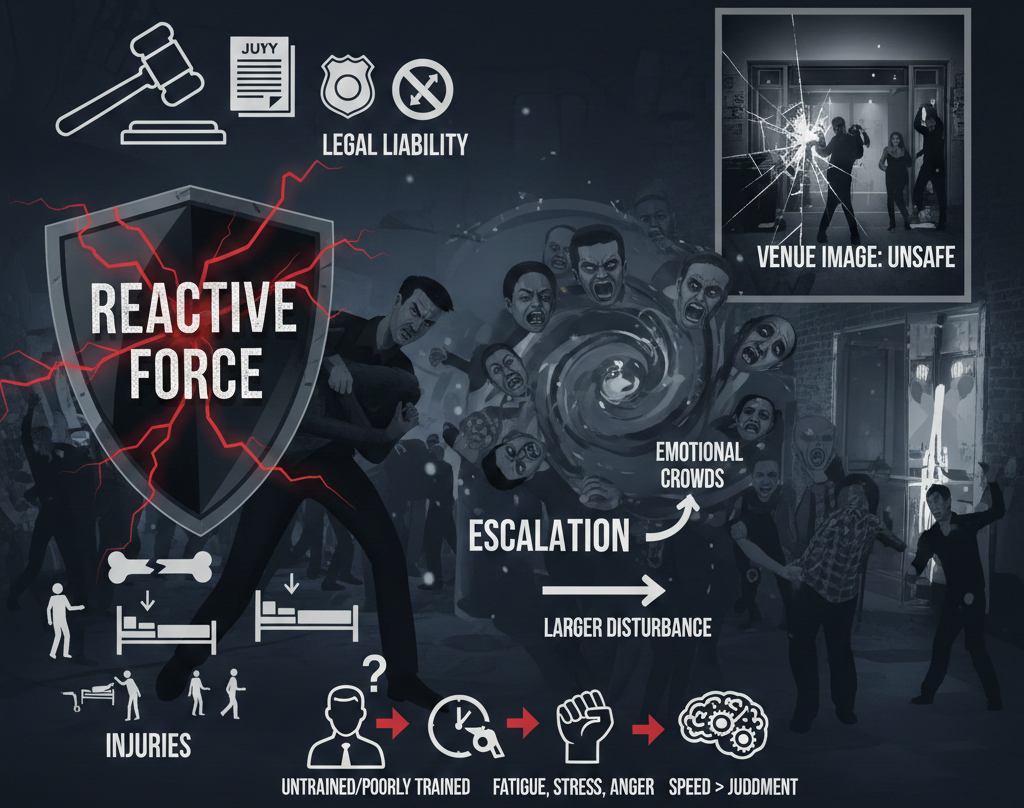
Although reactive force can be necessary in dangerous situations, it comes with serious limitations. One major risk is legal liability. If force is seen as unnecessary or excessive, bouncers and venue owners can face lawsuits, police involvement, and license problems. Injuries to guests or staff can result in long-term consequences for everyone involved. Another limitation is escalation. Physical force can trigger emotional reactions from crowds, turning one incident into a larger disturbance.
Reactive force also affects the image of a venue. Guests may feel unsafe if they witness aggressive handling, even if the bouncer acted to stop danger. This is why professional security services focus strongly on discipline and controlled behavior during incidents. Training plays a big role here, as untrained or poorly trained bouncers may rely too much on physical reactions. Fatigue, stress, or personal anger can also influence split-second decisions, leading to mistakes. Because reactive force depends on speed rather than judgment, it leaves little room for assessing the full situation. These risks explain why reactive force is considered a last option rather than a standard method in professional bouncer security operations.
What Is a Controlled Response in Bouncer Security?
A controlled response is a planned and measured approach to managing security situations. Instead of rushing into physical action, the bouncer observes, communicates, and evaluates the risk before acting. This method focuses on keeping control of the environment while minimizing harm. Controlled response often begins with body language, positioning, and verbal communication. A calm tone and clear instructions can stop many problems before they turn violent. Trained bouncers learn to recognize early warning signs such as aggressive posture, raised voices, or intoxicated behavior.
This awareness allows them to step in early and guide the situation toward a safe outcome. If physical action becomes necessary, it is applied carefully and only to the level required to gain control. Controlled response helps maintain order without drawing unnecessary attention. It also protects the rights and safety of guests. This approach reflects professionalism and discipline, which modern venues expect from their security teams. Controlled response shows that the goal of bouncer security is prevention and protection, not dominance.
Situations Where Controlled Response Works Best
Controlled response works best in situations that grow slowly instead of exploding suddenly. Crowd management is a strong example. When venues become busy, small movements, blocked paths, or pushing can create tension. A calm and aware bouncer can guide people, manage space, and reduce pressure without using force. Intoxicated guests also respond better to controlled handling. Alcohol often affects judgment, not intention. Speaking clearly, giving time to understand instructions, and keeping a respectful distance helps calm such guests.
Verbal disputes between customers are another situation where controlled response proves effective. Most arguments start with words, not violence. Early involvement, separation, and calm communication can stop the issue before it turns physical. Access control at entrances is also better handled through controlled response. Guests denied entry may feel insulted or frustrated. Clear explanation, firm tone, and professional behavior reduce anger and prevent conflict. These situations show that controlled response protects safety while maintaining order. It helps bouncers stay in control without creating unnecessary stress or harm inside the venue.

Reactive Force vs Controlled Response – Key Differences
Decision Making
Reactive force relies on instant decisions made under pressure. There is little time to analyze the situation, and actions are based on immediate threat. Controlled response allows time to observe behavior, assess risk, and choose the safest action. This leads to better judgment and fewer mistakes.
Level of Force
Reactive force often involves strong physical action to stop danger quickly. Controlled response focuses on minimal force. Physical action is used only when necessary and only to the level required to gain control.
Safety Outcomes
Reactive force increases the chance of injuries to guests, staff, and bystanders. Controlled response aims to reduce harm, keeping everyone safer and preventing panic inside the venue.
Legal Consequences
Reactive force carries higher legal risk if actions appear excessive. Controlled response is easier to justify, as it shows restraint, professionalism, and respect for rules.
Professional Standards
Modern security standards value calm handling and control. Controlled response reflects proper training, discipline, and accountability. Reactive force is seen as an emergency measure, not a routine method.
Why Modern Venues Prefer Controlled Response?
Modern venues focus heavily on guest experience and long-term reputation. Controlled response helps create a safe and respectful environment where guests feel protected rather than threatened. Industry trends now prioritize prevention over reaction, as calm handling reduces incidents and complaints. Venues also face strict regulations and legal responsibilities. Controlled response supports compliance with security policies and reduces the risk of lawsuits.
Guests are more likely to return to places where security staff act professionally and respectfully. Social media and public reviews also influence business success, and visible aggression can damage a venue’s image. Controlled response allows security teams to manage issues quietly and effectively. It also supports teamwork between staff members, creating smoother operations during busy hours. For these reasons, modern venues choose controlled response as their primary security approach while keeping reactive force reserved for real emergencies.
Role of Training in Choosing the Right Response
Training plays a vital role in helping bouncers choose the correct response. Professional training teaches how to read behavior, manage stress, and communicate clearly. It helps bouncers understand legal limits and responsibilities. Training also prepares security staff to stay calm under pressure and avoid emotional reactions. Through regular practice, bouncers learn when controlled response is enough and when reactive force becomes necessary.
Scenario-based training builds confidence and improves decision-making. Well-trained bouncers can switch between responses smoothly without panic. This balance protects guests, staff, and the venue. Without training, bouncers may rely too much on physical force or hesitate during real danger. Proper training ensures that every action taken serves safety and professionalism.
Conclusion:
Understanding the difference between reactive force and controlled response is vital for effective bouncer security. While reactive force may be unavoidable in moments of immediate danger, it should never be the default approach. Controlled response allows bouncers to manage situations calmly, protect guests, and maintain order without unnecessary conflict.
Modern security standards focus on prevention, awareness, and responsibility. Well-trained bouncers know how to shift between these two methods depending on the situation. This balance improves safety, reduces legal risks, and builds trust between venues and their guests. In the end, professional bouncer security is not about force, but about control, judgment, and protecting everyone involved.