
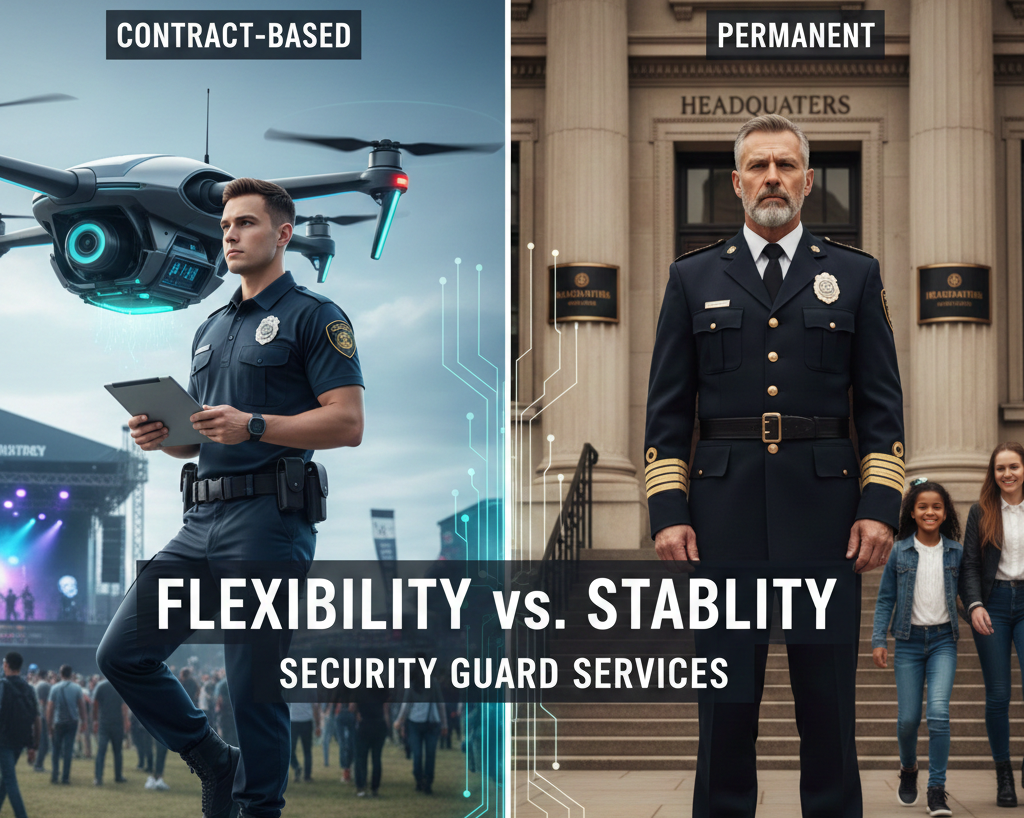
Security guard services play an important role in protecting people, property, and daily operations. Businesses, residential areas, and industrial sites often struggle to decide between contract-based and permanent security guard services. Each option serves a different purpose and fits different security needs. Some locations need long-term, stable protection, while others require guards for a limited time or specific situations. Understanding where each type of service works best helps avoid unnecessary costs and security gaps. This article explains the best use cases for permanent and contract-based security guard services, followed by a clear comparison of their key differences. The goal is to help businesses and property managers choose the right security setup with confidence.
What Are Contract-Based Security Guard Services?
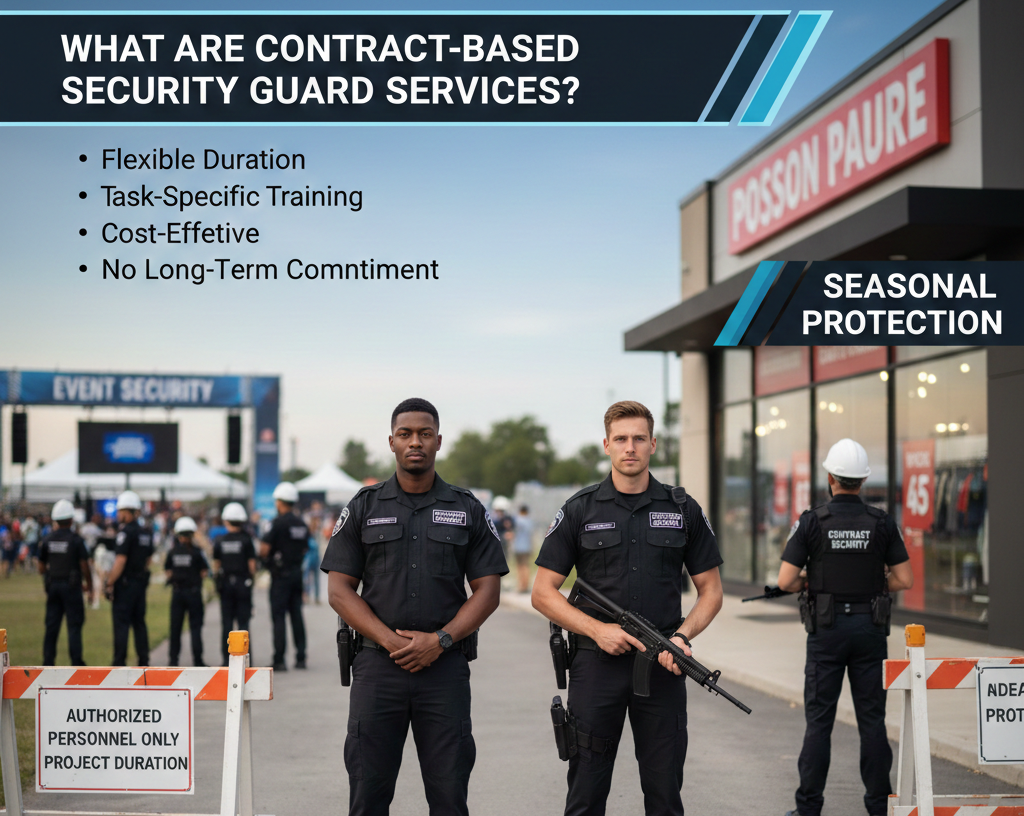
Contract-based security guard services refer to security arrangements provided for a fixed time period under a formal agreement. These services are usually hired for short-term needs, specific projects, or special situations where permanent security is not required. Businesses, event organizers, and property managers often choose contract-based guards for construction sites, public events, seasonal business activity, or temporary risk situations. The security company remains responsible for recruitment, training, scheduling, and supervision of guards during the contract period.
One major advantage of contract-based security services is flexibility. Guard strength can be increased or reduced depending on the situation. This makes it easier to manage costs and respond to changing security needs. Since the service is time-bound, clients do not need to worry about long-term employment commitments. Contract-based guards usually receive task-specific training, which helps them handle crowd control, access management, or emergency response efficiently. These services suit locations where security needs change frequently or where protection is required for a limited duration only.
What Are Permanent Security Guard Services?
Permanent security guard services involve long-term deployment of guards at a specific location. These guards work on a continuous basis and become part of the daily security routine of the site. Offices, residential societies, factories, hospitals, and educational institutions often rely on permanent security guards to maintain order and safety. Since guards stay at the same site for extended periods, they develop a deep understanding of the environment, routines, and people they protect.
Permanent guards handle tasks such as access control, visitor verification, patrols, and emergency response. Their familiarity with the location helps them detect unusual activity quickly. This type of service creates consistency and accountability, which is important for high-traffic or sensitive areas. Permanent security also improves coordination with management and staff, as communication becomes smoother over time. While this option involves a long-term commitment, it often provides better control and reliability for locations that require continuous protection throughout the year.
Key Differences Between Contract-Based and Permanent Security Guards
Duration of Service
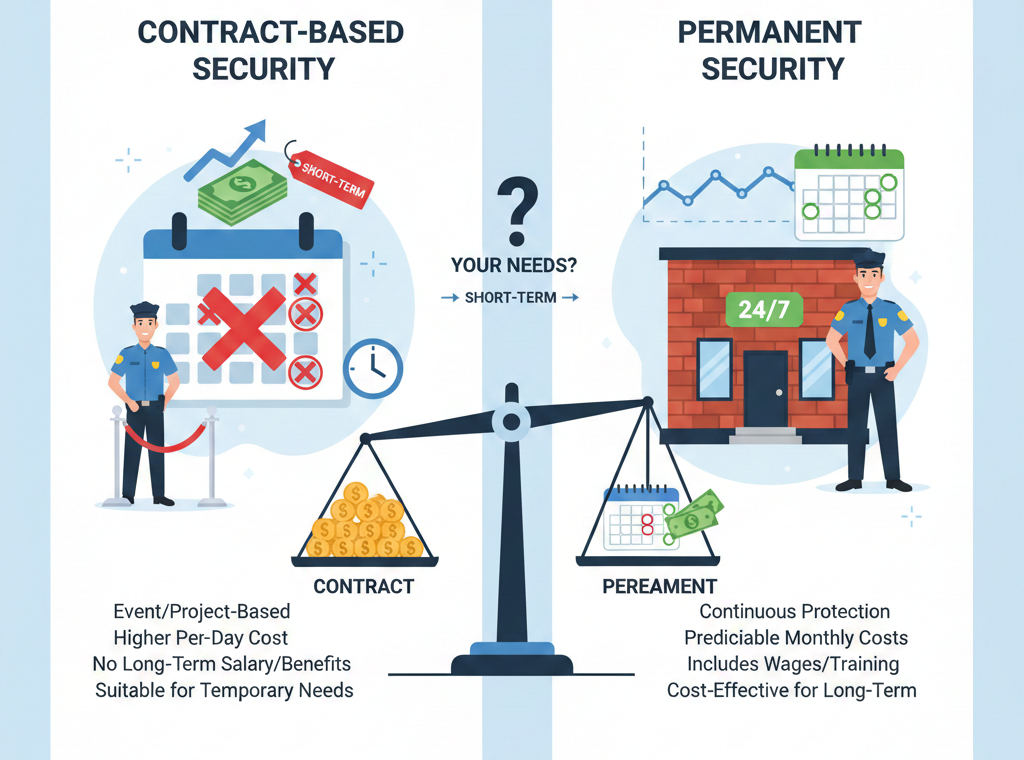
Permanent security guards are hired for long-term or ongoing protection. They remain assigned to the same location for months or years, which helps them understand daily routines and security patterns. Contract-based guards, on the other hand, are deployed for a fixed period. Their service ends once the contract duration is complete. This makes contract-based security suitable for temporary needs, while permanent guards support continuous protection.
Cost Structure
Permanent security services usually involve a stable monthly cost that includes salaries, training, and supervision. Over time, this can be cost-effective for locations with constant security needs. Contract-based security works on short-term agreements, often with higher per-day rates. While it may seem expensive initially, it helps save money when security is needed only for limited durations.
Flexibility and Staffing
Contract-based security offers high flexibility. Guard numbers can be increased or reduced quickly based on requirements. Permanent security has limited flexibility since guards are fixed to the site. However, permanent staffing ensures consistency and familiarity, which improves coordination and daily security operations.
Cost Comparison: Contract-Based vs Permanent Security Services
Cost plays an important role when choosing between contract-based and permanent security guard services. Contract-based security usually follows a short-term pricing model. Clients pay for guards only during the contract period, which makes it suitable for events, projects, or temporary needs. Although the per-day or per-shift cost may be higher, it avoids long-term salary obligations and related expenses.
Permanent security services involve regular monthly costs that cover guard wages, supervision, and ongoing training. Over time, this option can become more cost-effective for locations that need continuous protection. Instead of repeatedly hiring short-term services, a fixed security setup helps manage expenses in a predictable way. Permanent guards also reduce repeated onboarding costs, as the same staff remains assigned to the site.
The right choice depends on how often security is required. Short-term needs usually suit contract-based services, while long-term, daily protection often justifies the cost of permanent security arrangements.
Flexibility and Staffing Control
Flexibility is one of the strongest advantages of contract-based security guard services. Guard numbers can be adjusted quickly based on crowd size, risk level, or operational changes. This is helpful for events, seasonal business activity, or emergency situations where immediate reinforcement is needed. Contract-based staffing allows businesses to respond without long-term commitments.
Permanent security guard services offer limited flexibility in staffing levels. Guards are usually assigned on fixed schedules, making sudden changes more difficult. However, this setup provides better control over daily operations. Permanent guards follow established routines and understand site-specific security rules. Their stable presence supports smoother coordination and reduces confusion.
Staffing control depends on the nature of the site. Locations with changing security demands benefit from flexible contract-based staffing. Sites with stable operations and constant foot traffic usually perform better with a fixed, permanent security team.
Training, Discipline, and Performance Standards
Training and discipline are important factors in both security service models. Contract-based security guards often receive task-focused training designed for specific duties such as crowd control, access checks, or event safety. This helps them perform effectively in short-term assignments. Security companies monitor their performance during the contract period to maintain service quality.
Permanent security guards usually undergo regular training updates and follow long-term discipline standards. Their continuous presence allows management to track performance closely and improve procedures over time. Permanent guards also develop better communication skills related to the site, which improves response during emergencies.
Both models rely on professional supervision, but permanent guards benefit from consistent performance monitoring. Contract-based guards rely more on predefined protocols and quick adaptation. The choice depends on how much ongoing training and discipline control a location requires.
Best Use Cases for Contract-Based Security Guard Services
Contract-based security guard services are best suited for situations where protection is needed for a limited time or for specific purposes. These services offer flexibility and quick deployment, making them ideal for temporary or high-risk scenarios.
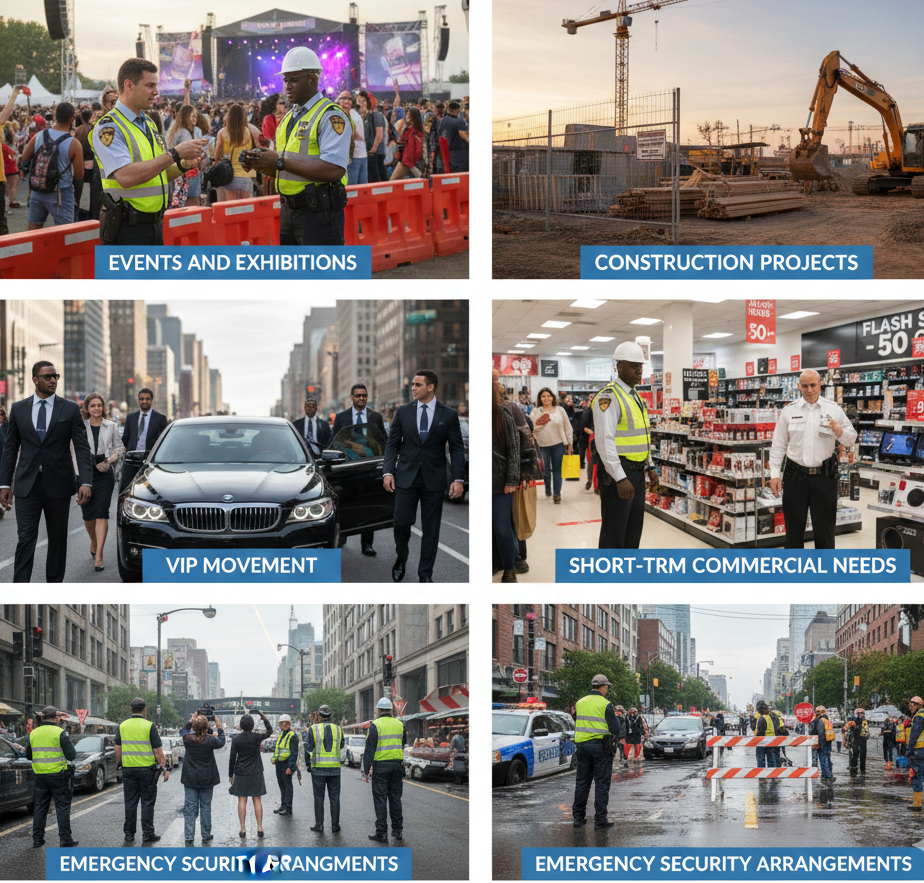
Events and Exhibitions
Large gatherings such as exhibitions, concerts, and private functions need trained guards for crowd control and access management. Contract-based guards handle entry checks, manage queues, and respond to incidents during the event. Once the event ends, the service can be discontinued, which makes this option practical and cost-controlled for event organizers.
Construction Projects
Construction sites often remain active for a fixed duration and contain valuable materials. Contract-based security guards protect equipment, control site access, and prevent theft. Since projects have a clear timeline, temporary security coverage matches operational needs without long-term staffing commitments.
VIP Movement
VIP movements require trained guards for short periods. Contract-based security offers close protection, route management, and coordination during travel or public appearances. This setup provides professional protection without maintaining a permanent security team.
Short-Term Commercial Needs
Retail stores and commercial spaces often require extra security during sales seasons or special promotions. Contract-based guards help manage increased foot traffic and reduce security risks during busy periods.
Emergency Security Arrangements
In sudden risk situations such as threats or unrest, contract-based security guards can be deployed quickly. This immediate response helps stabilize the situation until normal operations resume.
Best Use Cases for Permanent Security Guard Services
Permanent security guard services suit locations that require daily monitoring and long-term protection. These guards become familiar with routines, people, and security procedures, which improves overall safety and coordination.
Residential Societies
Housing societies rely on permanent guards for access control, visitor checks, and night patrols. Familiarity with residents helps guards identify unusual activity and maintain a secure living environment.
Corporate Offices
Offices need continuous security for employees, assets, and daily operations. Permanent guards manage entry points, monitor internal movement, and support emergency procedures with consistency.
Industrial Units
Factories operate on regular schedules and store expensive machinery. Permanent security guards understand shift timings and safety protocols, which improves response during incidents.
Hospitals and Schools
Sensitive locations like hospitals and schools require disciplined security. Permanent guards help manage crowds, protect staff and students, and maintain order at all times.
Warehouses and Factories
Warehouses store valuable inventory and require constant monitoring. Permanent guards control access, conduct patrols, and reduce theft risks through consistent security presence.
Which Security Option Is Right for Your Business?
Choosing the right security option depends on business size, risk level, and duration of security needs. Businesses with short-term projects, public events, or temporary risk situations usually benefit from contract-based security guard services. This option offers flexibility and cost control without long-term commitments.
Companies operating offices, factories, residential communities, or healthcare facilities often need permanent security guard services. Daily operations and regular foot traffic require guards who understand routines and security expectations. Permanent guards provide stability and consistent monitoring, which improves overall safety.
Before deciding, businesses should assess their security goals, budget, and operational structure. Consulting a professional security service provider helps identify risks and select the most suitable model. The right choice supports safety, efficiency, and long-term peace of mind.
Conclusion:
Choosing between contract-based and permanent security guard services depends on the nature of the location and security needs. Permanent guards suit places that require daily monitoring and long-term protection. Contract-based security works best for temporary, event-based, or emergency situations. Understanding the differences helps businesses control costs while maintaining safety standards. A professional security provider can assess risks and recommend the most suitable option. The right decision creates a safer environment and supports smooth operations over time.
FAQs:
What are the three types of security guards?
The three common types of security guards are unarmed guards, armed guards, and specialized guards. Unarmed guards handle access control and monitoring. Armed guards provide higher-risk protection. Specialized guards manage events, VIP security, or sensitive locations.
What is the difference between in-house security and contract security?
In-house security guards are hired directly by a company and managed internally. Contract security guards are provided by a security company under a service agreement. Contract security reduces hiring and training responsibility for businesses.
What are the 4 types of security?
The four types of security include physical security, personnel security, information security, and operational security. Security guards mainly support physical and personnel security.
What is a security guard contract?
A security guard contract is a formal agreement between a client and a security company. It defines service duration, duties, guard strength, payment terms, and responsibilities.