
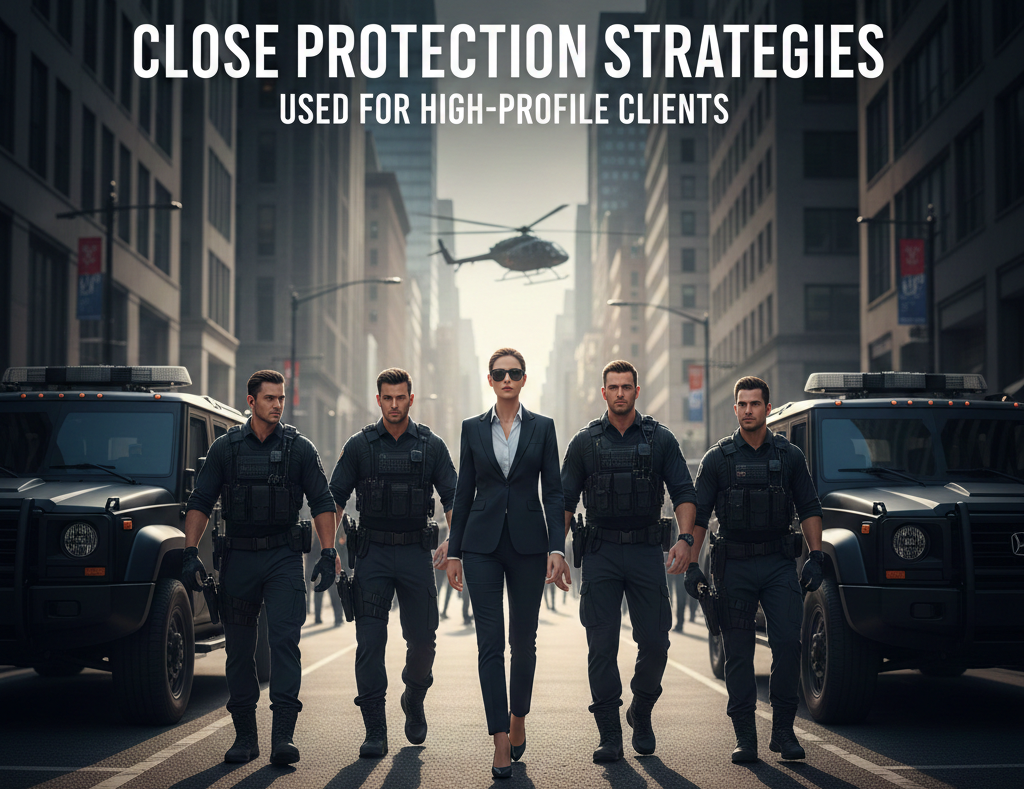
Close protection plays a critical role in keeping high-profile clients safe in public and private spaces. Business leaders, celebrities, diplomats, and public figures often face risks that ordinary people do not encounter. These risks can come from unwanted attention, targeted threats, or unpredictable crowd behavior. Close protection focuses on prevention, planning, and fast response rather than force. Trained professionals work quietly in the background to reduce danger and keep daily routines smooth. Strong close protection strategies depend on careful assessment, disciplined teamwork, and constant awareness. When planned properly, these strategies allow high-profile clients to move freely, attend events confidently, and continue their professional and personal activities with peace of mind.
What Is Close Protection?
Close protection refers to specialized personal security services designed to protect individuals facing elevated risk. Unlike general guarding, close protection focuses on the person rather than a fixed location. Officers stay near the client at all times, monitoring surroundings and anticipating potential threats. Their role includes escorting clients during travel, securing event appearances, and maintaining safety during routine movements. Close protection also involves advance planning, intelligence gathering, and coordination with drivers and support teams. The goal is not to create fear or visible force, but to prevent incidents before they occur. Effective close protection blends discretion with readiness, allowing clients to maintain a normal lifestyle while remaining protected in various environments.
Why High-Profile Clients Require Close Protection?
High-profile clients attract attention because of wealth, influence, or public visibility. This attention can increase exposure to threats such as harassment, stalking, kidnapping, or targeted attacks. Public appearances, travel schedules, and media coverage often make movements predictable. Close protection reduces this risk through structured planning and constant situational awareness. These clients also attend crowded events where sudden incidents can happen. A trained protection team manages crowd behavior, controls access, and reacts quickly if conditions change. Without professional protection, even small security gaps can lead to serious consequences. Close protection helps maintain safety while preserving privacy and allowing clients to focus on their responsibilities without constant concern about personal security.

Risk Assessment and Threat Analysis
Understanding potential risks is the first step in building an effective protection plan. A detailed assessment helps the team decide where focus and resources are needed most.
Identifying Potential Threats
Identifying threats involves gathering information from multiple sources. These may include public records, media coverage, social platforms, and local intelligence. Threats can range from aggressive fans to organized criminal activity. Each threat is assessed based on intent, capability, and opportunity. This step helps determine which risks require immediate attention and which can be monitored. By understanding the nature of possible threats, the protection team can plan appropriate responses. Accurate threat identification allows security efforts to remain focused and efficient rather than reactive or excessive.
Evaluating Client Lifestyle and Exposure
A client’s lifestyle greatly affects risk levels. Frequent travel, public meetings, and social events increase exposure. Protection teams study daily routines, preferred locations, and habits that could make movements predictable. Simple patterns, such as using the same routes or schedules, can increase vulnerability. Evaluating lifestyle helps security professionals suggest safer alternatives without disrupting normal life. Adjustments may include varied travel times, controlled public appearances, or private entry points. This evaluation balances safety with comfort, allowing protection to feel natural rather than restrictive.
Location and Travel Risk Analysis
Every location carries different security challenges. Travel risk analysis focuses on airports, hotels, roads, and event venues. Factors such as local crime rates, political climate, and emergency response capability are reviewed. Routes are checked for choke points, traffic risks, and escape options. This analysis allows the team to select safer locations and prepare contingency plans. When travel risks are understood in advance, protection teams can respond calmly and effectively to unexpected situations.
Advance Planning and Route Management
Careful planning ensures smooth and secure movement during every assignment. Route management reduces uncertainty and helps the team respond quickly to changing situations.
Secure Route Selection
Secure routes are chosen based on traffic flow, visibility, and emergency access. Routes with fewer stops and controlled environments are preferred. Protection teams avoid predictable paths and vary routes when possible. Secure route selection reduces the chance of ambush or disruption. This process also considers nearby medical facilities and police access points. Thoughtful route planning helps maintain safety without drawing attention to security measures.
Alternate Routes and Contingency Plans
No plan is complete without backups. Alternate routes prepare the team for road closures, accidents, or suspicious activity. Contingency plans outline actions for different scenarios, such as vehicle breakdowns or sudden crowd formation. These plans reduce confusion during emergencies. When every team member understands alternatives, response time improves. Contingency planning keeps operations controlled even in unpredictable conditions.
Venue Reconnaissance
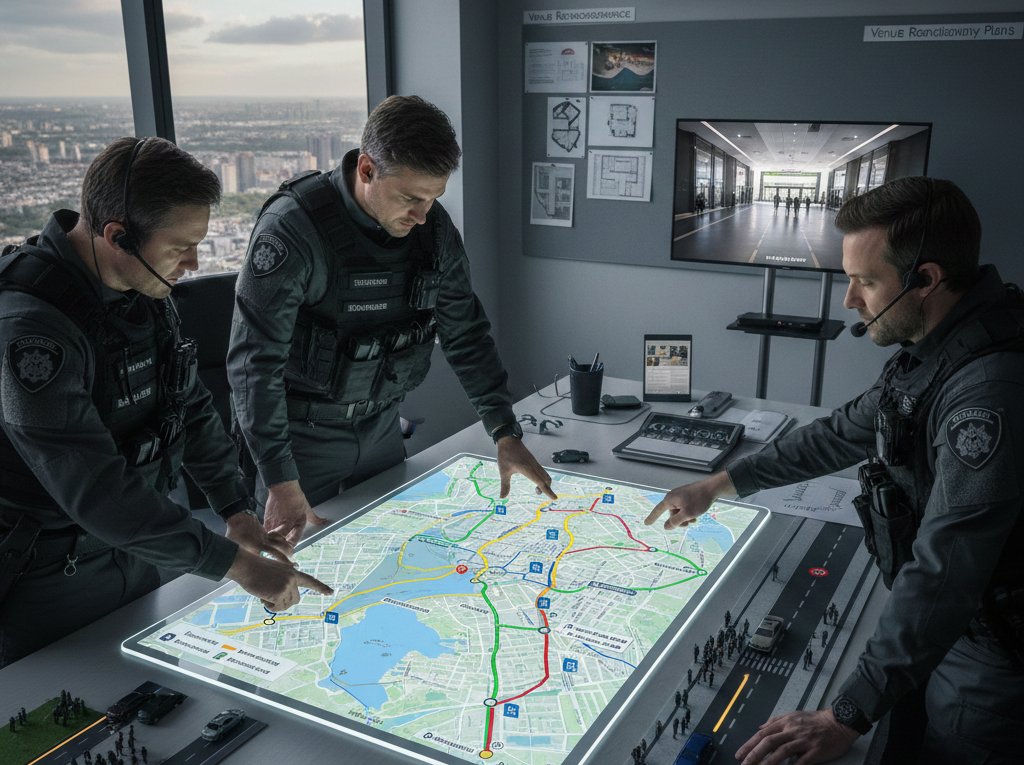
Venue reconnaissance involves inspecting locations before client arrival. Protection officers review entry and exit points, crowd flow, and restricted areas. They identify potential hazards and coordinate with venue staff. This preparation helps prevent surprises during events. Reconnaissance also allows discreet positioning of protection staff. A well-prepared venue reduces risk and supports smooth client movement.
Close Protection Team Formation
Team Size and Role Allocation
Team size varies based on threat level and activity type. Some situations require a small, discreet team, while others need multiple officers. Roles are assigned clearly, such as lead protector, support officer, and driver liaison. Clear allocation ensures coverage from all angles. Proper team sizing balances safety with discretion.
Communication and Coordination
Clear communication keeps the team aligned. Protection teams use secure communication methods and agreed signals. Coordination allows members to share observations quickly. This reduces reaction time and prevents misunderstandings. Strong communication supports calm and controlled protection even in busy environments.
Role-Based Responsibilities
Each team member focuses on specific responsibilities. Some monitor crowds, others focus on route security or client proximity. Defined roles prevent overlap and gaps. When everyone understands their task, the team operates smoothly. Role-based structure supports professionalism and reliability.
Personal Escort and Proximity Control
Personal escort and proximity control play a key role in protecting high-profile clients during public movement. The main objective is to maintain a protective space around the client without causing discomfort or drawing unnecessary attention. Close protection officers position themselves strategically to observe surroundings, monitor crowd behavior, and identify potential risks early. Proximity control helps prevent sudden contact, aggressive approaches, or unwanted physical interaction.
This method depends heavily on awareness, body positioning, and calm authority rather than force. Skilled escorts continuously adjust their distance based on crowd density, location type, and movement speed. During public appearances, entrances, and exits, escorts guide the client smoothly while keeping escape paths clear. Effective proximity control allows the client to move confidently through public settings while maintaining a sense of normalcy and personal comfort.
Secure Transportation Strategies
Transportation is one of the most sensitive phases in close protection due to movement predictability and exposure. Secure transportation strategies focus on careful planning before every journey. This includes selecting suitable vehicles, coordinating trained drivers, and planning safe routes. Drivers receive training in defensive driving, situational awareness, and emergency maneuvering to respond calmly under pressure. Vehicles undergo regular inspections to ensure mechanical reliability and safety readiness.
Route planning avoids high-risk areas, congestion points, and predictable travel patterns. Backup routes and timing adjustments are also prepared to handle unexpected situations. Secure transportation aims to reduce delays, limit public exposure, and maintain smooth transitions between locations. When executed properly, these strategies protect the client while keeping travel efficient, discreet, and stress-free.
Residential and Workplace Protection
Residential and workplace protection focuses on creating a safe and controlled environment for daily activities. These locations often require long-term security planning rather than short-term measures. Access control plays a central role, ensuring only authorized individuals can enter the premises. Trained guards, visitor verification procedures, and monitoring systems help reduce unauthorized access.
Protection teams coordinate with household staff or workplace employees to maintain normal routines while strengthening safety. Surveillance systems support constant monitoring without disrupting daily operations. Emergency response plans are developed for incidents such as intrusion, medical situations, or evacuation needs. This layered approach keeps both home and workplace environments secure while allowing the client to live and work comfortably with minimal disruption.
Use of Technology in Close Protection
Technology supports modern close protection operations through enhanced monitoring and communication. Surveillance systems help track movement around residences, workplaces, and event venues. GPS tracking tools assist in route management and real-time location awareness. Secure communication devices allow protection teams to share information instantly without alerting others. Technology helps identify unusual activity early, allowing faster response and better coordination.
However, technology does not replace human judgment or situational awareness. Trained professionals interpret data and make decisions based on real-world conditions. Balanced use of technology strengthens security planning while keeping operations flexible and discreet. When integrated properly, technology enhances safety, improves efficiency, and supports proactive protection strategies.

Emergency and Crisis Response Strategies
Emergency and crisis response strategies prepare protection teams to act quickly during unexpected situations. These situations may include medical emergencies, security threats, or evacuation requirements. Clear procedures guide officers on immediate actions, communication steps, and client movement. Regular training ensures that responses remain calm and controlled under pressure.
Protection teams practice scenarios to improve coordination and decision-making speed. Fast and organized response can prevent incidents from escalating and reduce harm. Crisis planning also includes coordination with medical services and local authorities when needed. Preparedness protects not only the client but also people nearby. Strong emergency response strategies ensure stability and confidence during high-pressure moments.
Legal and Ethical Considerations in Close Protection
Close protection services operate within strict legal and ethical frameworks. Officers must understand local laws related to security operations, use of force, and personal privacy. Respecting client confidentiality is a core responsibility. Ethical conduct builds trust and maintains professionalism in all interactions. Proper documentation supports accountability and legal compliance. Training helps officers make sound decisions while respecting legal boundaries. Ethical behavior also strengthens the reputation of protection services. Legal awareness protects both the client and the protection team from unnecessary risk. When legal and ethical standards are followed, close protection remains professional, respectful, and effective.
Training and Skills Required for Close Protection Officers
Close protection officers require a wide range of skills to perform their duties effectively. Physical fitness supports endurance during long assignments and rapid response situations. Situational awareness helps officers detect potential threats early. Training covers risk assessment, emergency response, first aid, communication, and defensive techniques. Decision-making under pressure is a critical skill developed through realistic training exercises. Continuous training keeps skills sharp and prepares officers for changing environments. Professional conduct and discipline are equally important. Well-trained officers protect clients confidently while maintaining calm and control in complex situations.
Choosing the Right Close Protection Service
Choosing the right close protection service involves careful evaluation of experience and operational standards. A reliable provider focuses on planning, discretion, and adaptability. Training quality, team coordination, and communication practices indicate professionalism. A strong service understands client lifestyle needs and adjusts protection accordingly. Transparency, trust, and clear coordination matter as much as physical security measures. The right service integrates smoothly into the client’s routine while maintaining safety. Proper selection ensures long-term protection and peace of mind.
Ending Words:
Close protection strategies for high-profile clients rely on preparation, awareness, and teamwork. From risk assessment to emergency response, every step focuses on prevention and control. Effective protection allows clients to live and work with confidence. When strategies are applied correctly, security becomes a supportive presence rather than a visible barrier.