
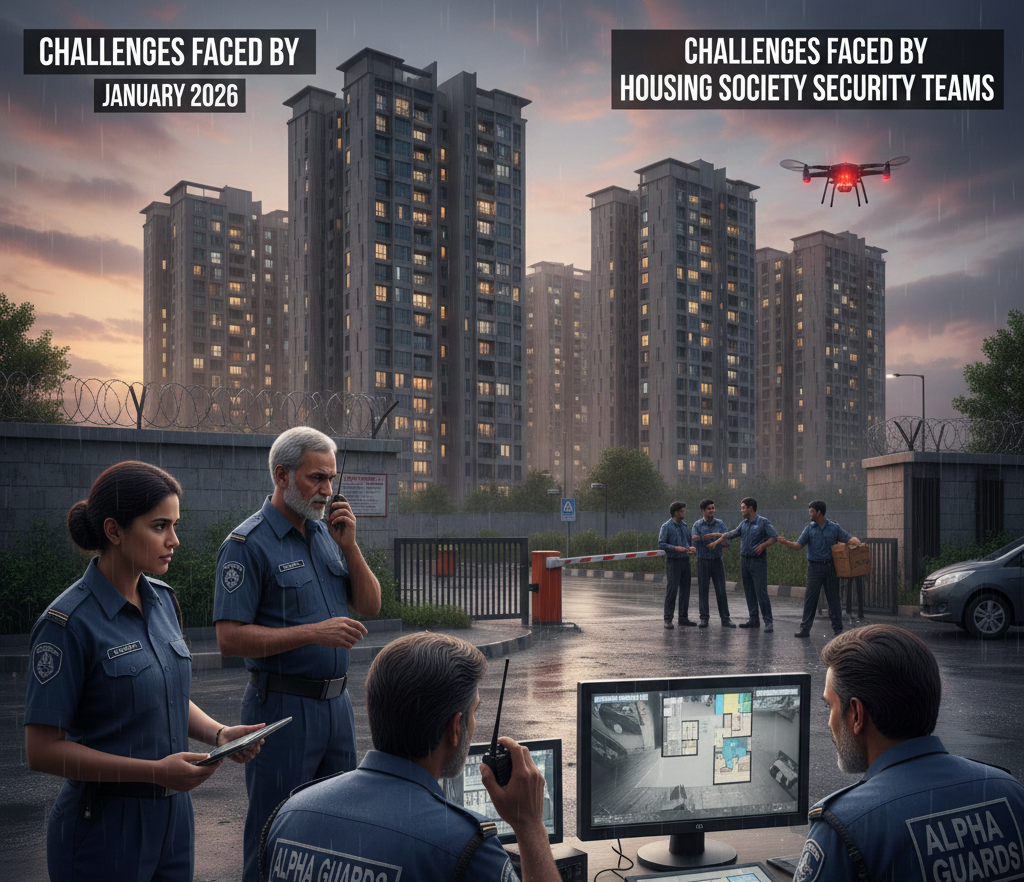
Housing society security teams play a very important role in keeping residents safe and maintaining order inside residential communities. Their daily responsibilities include access control, patrol duties, monitoring suspicious activity, and handling emergencies. Despite these responsibilities, security teams often work under challenging conditions that affect their performance and morale. Understanding the challenges faced by housing society security teams helps residents and management improve safety standards and support guards more effectively. When these challenges are addressed properly, overall security improves, response times become faster, and residents feel more confident about their safety. Recognizing these issues is the first step toward building a reliable and well-managed security system for any housing society.
Challenges Faced by Housing Society Security Teams
The following are the key challenges faced by housing society security teams that affect their daily operations and overall effectiveness. Understanding these issues helps in finding practical solutions to improve safety and efficiency.
Lack of Proper Training and Professional Skills
One of the biggest challenges faced by housing society security teams is the lack of proper training and professional skills. Many guards are hired with minimal instruction, which limits their ability to handle real-life security situations. Without training, guards may struggle with decision-making during suspicious activities, emergencies, or conflicts. Poor training also affects their understanding of patrol procedures, access control rules, and emergency response methods. Guards may not know how to communicate properly, manage crowd situations, or report incidents accurately. This lack of preparation can lead to delayed responses and mistakes that put residents at risk. Professional security services provide structured training programs that help guards stay alert, act confidently, and follow protocols correctly. When security staff lack professional skills, overall safety standards decline, and residents may lose trust in the housing society’s security system.
Difficulty in Managing Unauthorized Access
Managing unauthorized access is another major challenge for housing society security teams. Many residential areas have multiple entry and exit points, which makes monitoring difficult. Visitors, delivery personnel, and service staff enter daily, increasing the risk of unverified access. Guards often face pressure to allow quick entry without proper verification, especially during busy hours. Open gates, broken barriers, or lack of visitor records create security gaps. Large housing societies make it even harder to monitor movement effectively. Without proper systems, guards rely on manual checks, which are time-consuming and prone to errors. Unauthorized access increases the risk of theft, vandalism, and suspicious activities. Effective visitor control requires clear procedures, proper supervision, and cooperation from residents to help security teams perform their duties properly.
Long Working Hours and Staff Shortages
Long working hours and staff shortages greatly affect the efficiency of housing society security teams. Many guards work extended shifts without adequate rest, which leads to physical and mental fatigue. Tired guards find it difficult to stay alert, especially during night shifts. Staff shortages force guards to cover larger areas alone, increasing stress and reducing patrol quality. Overworked guards may miss suspicious movements or fail to respond quickly during incidents. Fatigue also increases the chances of mistakes in reporting and access control. Limited manpower means fewer patrols and delayed responses during emergencies. Proper shift planning and adequate staffing help maintain alertness and improve performance. When guards are well-rested and supported, they perform their duties more effectively and maintain better security standards.
Communication Gaps Within Security Teams
Poor communication within security teams creates serious challenges in housing societies. Guards working in different areas may not receive updates on incidents or suspicious activity. Lack of proper reporting systems causes delays in sharing important information. During emergencies, unclear communication leads to confusion and slow responses. Guards may not know whom to contact or how to coordinate actions effectively. Communication gaps also affect shift handovers, where important details may be missed. Without proper coordination, security operations become disorganized. Clear communication channels help teams work together smoothly and respond quickly. Regular briefings, written reports, and proper coordination improve teamwork and incident handling. Strong communication builds trust among guards and helps management stay informed about security concerns.
Handling Emergency and Crisis Situations
Handling emergencies is one of the most demanding challenges faced by housing society security teams. Situations such as fire incidents, medical emergencies, theft attempts, or suspicious behavior require quick thinking and calm actions. Guards without proper emergency training may panic or respond incorrectly. Lack of clear emergency procedures creates confusion during critical moments. In medical emergencies, delayed assistance can worsen the situation. Fire incidents require immediate action and coordination with emergency services. Security teams must also manage crowds and keep residents safe during crises. Without proper planning and drills, guards struggle to handle pressure. Emergency preparedness improves confidence and response efficiency. Well-trained security teams reduce damage and protect lives during unexpected situations.
Dealing With Residents and Visitors
Dealing with residents and visitors is a daily challenge for housing society security teams. Guards must remain polite and professional while enforcing rules. Some residents may misunderstand security procedures and react negatively. Visitors may resist verification or become impatient. Guards often face verbal pressure while trying to maintain order. Handling such situations requires patience, communication skills, and emotional control. Without proper guidance, guards may respond poorly, leading to conflicts. Maintaining professionalism helps build trust and cooperation. Clear rules and resident awareness reduce misunderstandings. Security teams perform better when residents respect procedures and support security efforts. Positive interaction improves the overall security environment within the housing society.
Limited Use of Security Technology
Limited use of security technology creates ongoing challenges for housing society security teams and affects daily safety operations. Many societies still rely on outdated CCTV cameras that produce unclear footage, making it difficult to identify faces, vehicles, or suspicious activity. When cameras fail or have blind spots, guards must depend on physical patrols, which increases workload and leaves gaps in monitoring. The absence of access control systems also forces guards to manage entries manually.
Visitor registers, handwritten logs, and verbal approvals slow down entry checks and increase the chances of mistakes. Manual patrols make it hard to confirm patrol completion and track guard movement across large areas. Incident reporting also becomes time-consuming without digital tools, delaying action and follow-ups. Limited budgets and poor planning often stop societies from upgrading systems, even when risks increase. Security technology supports guards through better surveillance, faster verification, and improved response time. Proper tools reduce pressure on guards and help management maintain records. When technology is used properly, security operations become more organized, accurate, and dependable for residents.
Weather and Environmental Challenges
Weather and environmental challenges strongly impact the performance of housing society security teams. Guards often work long hours outdoors, facing extreme heat, cold, rain, or humidity. These conditions cause discomfort, physical stress, and reduced concentration, especially during extended shifts. During hot weather, guards may experience dehydration and fatigue, which affects alertness.
Cold conditions reduce mobility and increase health risks. Rainy weather limits visibility and makes patrolling difficult. Poor lighting during night shifts creates blind spots and raises safety concerns for both guards and residents. Open areas without shelters expose guards to harsh conditions, increasing exhaustion and slowing response time. Environmental factors also affect equipment such as walkie-talkies, registers, and patrol gear. Providing proper uniforms, weather-appropriate gear, shaded posts, and lighting helps guards perform duties more effectively. Safe working conditions improve focus and morale. Addressing weather-related challenges shows management care and helps maintain consistent security performance throughout the year.
Accountability and Performance Monitoring Issues
Accountability and performance monitoring issues create serious challenges in housing society security management. Without proper tracking systems, it becomes difficult to monitor guard attendance, patrol timing, and duty completion. Manual registers and verbal reporting allow errors and sometimes false entries. Lack of supervision leads to inactive posts, skipped patrols, and delayed responses. Performance evaluation also becomes unclear when there are no measurable records of daily activities.
Guards may feel less responsible when monitoring is weak. This affects discipline and reduces overall security quality. Inconsistent reporting creates confusion during incidents and weakens trust between management and residents. Proper monitoring systems help track patrol routes, duty hours, and incident logs accurately. Regular checks and clear reporting procedures improve accountability. When guards know their work is being reviewed fairly, responsibility increases. Strong accountability builds consistency, improves performance, and supports a safer housing society environment.
Improving Security Operations in Housing Societies
Improving security operations in housing societies requires organized planning and continuous support from management. Regular training programs help guards improve skills, confidence, and decision-making. Proper staffing plans reduce overwork and help maintain alertness during all shifts. Clear security procedures guide guards on patrol routines, access control, and emergency response. Strong communication systems improve coordination and reporting across all posts.
Technology upgrades support monitoring, entry management, and incident documentation. Resident awareness programs help reduce misunderstandings and encourage cooperation with security staff. Comfortable duty posts, proper uniforms, and basic facilities improve morale and performance. When guards feel supported, they work more responsibly and efficiently. A well-structured security system reduces risks and increases resident confidence. Continuous improvement keeps security operations reliable and responsive, creating a safer and more organized housing society.
Conclusion:
Housing society security teams face many challenges that affect safety and efficiency. Issues such as poor training, staff shortages, communication gaps, and limited technology reduce security effectiveness. Environmental conditions and difficult interactions also add pressure. Addressing these challenges requires organized planning, proper support, and cooperation between management and residents. Strong security teams create a safe living environment and protect community well-being. Investing in security improvements benefits everyone within the housing society.
FAQs:
What Are 5 Common Problems and Solutions for Security?
- Lack of Proper Training
Many security guards do not receive enough training, which affects their ability to handle incidents.
Solution: Regular training sessions improve skills, confidence, and response quality.
- Unauthorized Access
Open gates and weak visitor checks allow unknown people to enter secured areas.
Solution: Strong entry rules, visitor verification, and access control systems improve safety.
- Poor Communication
Delayed reporting and weak coordination create confusion during incidents.
Solution: Clear communication systems and daily briefings improve coordination.
- Long Working Hours
Extended shifts cause fatigue and reduce alertness.
Solution: Proper shift planning and enough staff maintain performance.
- Limited Use of Technology
Old cameras and manual patrols reduce monitoring efficiency.
Solution: Updated CCTV systems and digital reporting improve security operations.
What Challenges Do Security Guards Face?
Security guards face many challenges during daily duties. Long working hours and staff shortages cause physical and mental fatigue. Guards often work in harsh weather conditions, which affects comfort and alertness. Dealing with difficult residents or visitors also adds pressure. Limited training makes it hard to handle emergencies or suspicious activities. Poor lighting, outdated equipment, and weak communication systems reduce effectiveness. Guards also face accountability issues when proper monitoring systems are not in place. These challenges make security work demanding and require strong management support.
What Are the Security Challenges?
Security challenges include unauthorized access, weak monitoring, slow response time, and poor coordination. Large areas are difficult to manage with limited staff. Manual systems increase errors in reporting and tracking. Environmental factors such as poor lighting and bad weather increase risks. Lack of technology and training reduces security effectiveness. Communication gaps delay emergency response. Addressing these challenges requires proper planning, training, staffing, and security systems to maintain safety.