
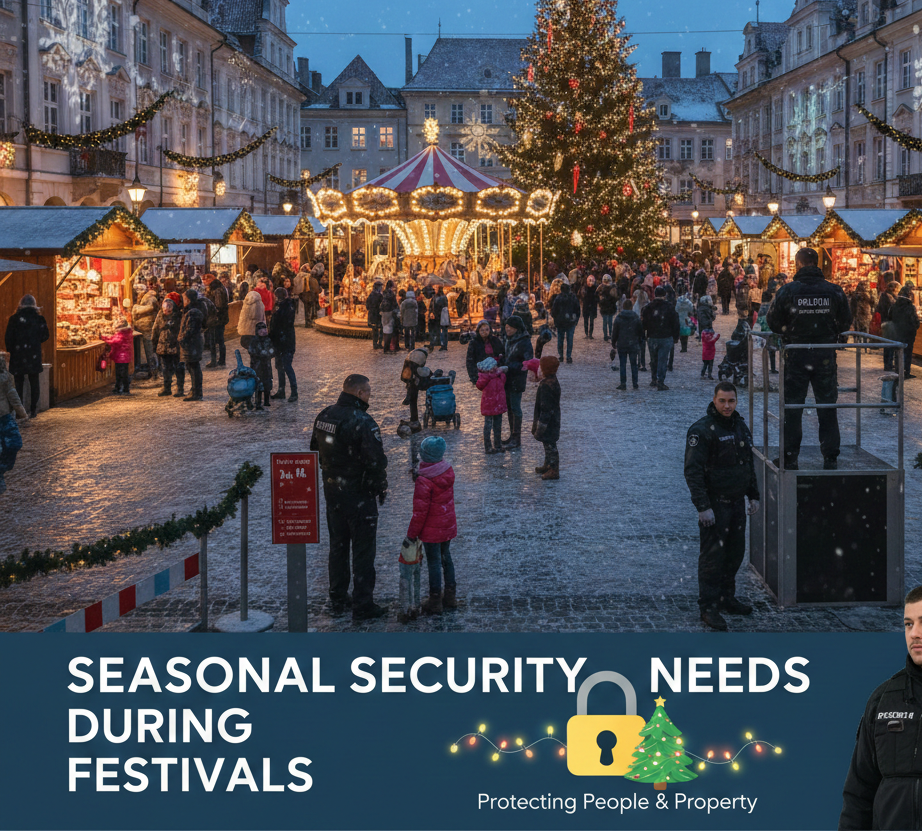
Seasonal security needs during festivals become a serious concern as cities, markets, and residential areas experience a sudden increase in activity. Festivals bring joy, celebrations, and social gatherings, yet they also attract large crowds, extended operating hours, and unfamiliar visitors. These changes create new risks for safety, property, and public order. Homes remain empty as families attend events, markets stay open late, and public spaces become crowded. Without proper planning, small security gaps can quickly turn into major problems. Festival security is not only about preventing crime but also about managing people, controlling access, and responding quickly to emergencies. A well-planned security setup allows celebrations to continue smoothly while keeping everyone safe and stress-free.
Why Security Demands Increase During Festival Seasons?
Festival seasons naturally increase security demands because daily routines change. People travel more, shopping areas remain busy, and public gatherings grow larger than usual. Criminal activity often rises during this time as thieves target crowded places and unattended properties. Noise, excitement, and heavy foot traffic make it easier for suspicious behavior to go unnoticed. Events held late at night require additional monitoring, while temporary stalls and event setups create access points that do not exist on normal days. Security teams must adapt to these temporary conditions. Extra manpower, longer shifts, and faster response times become necessary. Without seasonal planning, existing security arrangements often fail to handle festival pressure.
Common Security Risks Faced During Festivals
Festival environments bring several security risks due to heavy crowds and increased public activity. One of the most common challenges during festivals is managing large groups of people safely and smoothly.
Crowd Management Issues
Crowd control becomes one of the biggest challenges during festivals. People gather at popular locations, prayer areas, markets, and event grounds. Poor crowd movement can lead to pushing, injuries, or panic situations. Children and elderly individuals are at higher risk in overcrowded areas. Security guards play an important role in guiding people, managing entry and exit points, and preventing overcrowding. Clear pathways and visible security presence help maintain order. When crowds feel guided and safe, the risk of accidents reduces. Crowd management requires training, coordination, and constant observation throughout the event.
Theft and Pickpocketing
Festivals create ideal conditions for theft. Crowded areas allow pickpockets to blend in easily, targeting distracted visitors. Mobile phones, wallets, jewelry, and shopping bags are common targets. Vehicles parked near event areas also face break-in risks. Security teams focus on patrolling high-risk zones and identifying suspicious behavior early. Visible guards act as a strong deterrent. Quick reporting and response prevent small theft attempts from spreading panic among crowds. Preventing theft during festivals helps maintain a positive environment for visitors and businesses alike.
Unauthorized Access and Trespassing
Temporary event setups often involve open spaces, making it difficult to control access. Unauthorized individuals may enter restricted areas, backstage zones, or private properties nearby. This can create safety concerns for performers, staff, and residents. Security guards manage access points, check passes, and prevent unwanted entry. Proper fencing, signage, and guard placement reduce trespassing risks. Controlled access helps events run smoothly without interruptions or security breaches.
Traffic and Parking Challenges
Festival traffic creates chaos if not managed properly. Roads become congested, emergency access routes get blocked, and parking areas overflow. Poor traffic control increases the risk of accidents and delays emergency services. Security personnel assist traffic police, guide vehicles, and monitor parking areas. Organized parking systems and clear directions help reduce confusion. Smooth traffic management improves safety for pedestrians and drivers during busy festival hours.
Role of Professional Security Services During Festivals
Professional security services provide structured and reliable protection during festivals. Trained guards understand crowd behavior, risk assessment, and emergency response. They coordinate with event organizers, local authorities, and emergency services to create a secure environment. Security companies offer flexible staffing, allowing extra guards during peak hours and special events. Their experience helps identify weak points before problems arise. Professional services also provide discipline and accountability, which temporary volunteers cannot always deliver. A reliable security team allows festival organizers to focus on celebrations without constant safety worries.
Crowd Control Strategies for Festival Events
Effective crowd control starts with planning. Entry and exit points must be clearly marked and monitored. Security guards guide crowd movement using barriers, signs, and verbal instructions. Monitoring crowd density helps prevent overcrowding in one area. Guards stay alert for signs of panic or aggression and act quickly to calm situations. Coordination among team members ensures fast communication during emergencies. Crowd control is not about force but about guidance and awareness. A calm and visible security presence reassures attendees and keeps events orderly.
Access Control and Entry Management
Access control becomes critical during festivals, especially for ticketed events or restricted zones. Security guards verify passes, tickets, or invitations before allowing entry. Bag checks and metal detection may be required for larger gatherings. Controlled entry prevents prohibited items from entering event areas. Residential communities also require access management as guest visits increase during festivals. Proper access control reduces risks and ensures only authorized individuals enter protected spaces.
Importance of Trained Security Guards During Festivals
Trained security guards bring discipline, awareness, and quick decision-making to festival environments. They understand how to handle crowds, communicate clearly, and manage conflicts calmly. Training prepares guards to identify suspicious behavior early and act without causing panic. Guards also assist lost children, elderly visitors, and people needing help. Their role extends beyond protection to public assistance. Well-trained guards create a sense of safety that encourages people to enjoy festivities freely.
Use of Technology in Festival Security
Technology supports festival security teams in managing large crowds and wide areas more effectively. Tools like monitoring systems and instant communication help guards respond quickly and maintain control during busy events.
CCTV Monitoring
CCTV systems enhance festival security by providing real-time monitoring of large areas. Cameras help track crowd movement, identify suspicious activity, and record incidents for later review. Security teams use CCTV feeds to respond quickly to developing situations. Temporary camera setups are often used for outdoor events. Surveillance technology adds an extra layer of protection when combined with physical security.
Communication Systems
Effective communication is essential during festivals. Security teams rely on radios and mobile communication systems to share updates instantly. Quick communication allows guards to coordinate responses, request backup, and report emergencies. Clear communication reduces confusion during high-pressure situations. Well-connected teams operate more efficiently and respond faster to risks.
Emergency Response Planning for Festival Days
Emergency planning prepares security teams for unexpected situations. Medical emergencies, fires, power failures, or crowd panic require immediate action. Security services work with event organizers to develop response plans. Emergency exits, medical stations, and evacuation routes must remain accessible. Guards receive instructions on handling emergencies calmly and guiding people to safety. Preparedness saves lives and reduces damage during critical moments.
Security Needs for Residential Areas During Festivals
Residential areas face increased security risks during festivals. Homes may remain unattended as families attend celebrations or travel. Increased visitor traffic creates unfamiliar movement within communities. Security guards monitor entrances, patrol streets, and verify visitors. Night patrols become more important due to late-night activities. A strong residential security presence helps prevent burglary and reassures residents during festive periods.
Security for Commercial Areas and Markets
Markets and shopping centers experience peak activity during festivals. Extended business hours, cash handling, and crowded spaces increase risks. Security guards protect shops, manage crowds, and monitor suspicious behavior. Parking areas and loading zones also require attention. Proper security helps businesses operate smoothly while protecting customers and staff.
Women and Family Safety During Festivals
Women and families require special attention during crowded events. Security teams focus on preventing harassment, assisting families, and responding quickly to complaints. Female security guards help handle sensitive situations discreetly. Safe environments encourage families to participate freely in celebrations. Family-focused security planning builds trust and comfort during festivals.
Challenges Faced by Security Teams in Festival Seasons
Festival security teams face long shifts, weather challenges, and high-pressure situations. Managing large crowds requires constant alertness. Temporary event setups may lack proper infrastructure. Communication gaps and unexpected situations test security preparedness. Despite these challenges, trained teams adapt through coordination, experience, and planning. Addressing these challenges requires strong leadership and adequate resources.
How to Plan Seasonal Security Effectively?
Effective planning starts with risk assessment. Understanding event size, location, and visitor profile helps determine security needs. Coordination with local authorities and emergency services strengthens preparedness. Hiring professional security services ensures trained manpower. Clear roles, communication plans, and emergency procedures improve efficiency. Early planning reduces last-minute confusion and ensures smooth festival operations.
Choosing the Right Security Company for Festivals
Choosing the right security company for festivals plays a major role in maintaining safety and smooth operations. A security provider with experience in festival environments understands crowd behavior, temporary setups, and seasonal challenges. Trained guards, clear communication systems, and on-ground supervision help manage situations without delay. A reliable company also offers flexible staffing to match peak festival hours and event size. Background checks and regular training keep security standards consistent. Quick Action Security Company stands out due to its trained personnel, fast response approach, and strong coordination during busy festival periods. Their focus on quick decision-making and active monitoring helps prevent incidents before they escalate. Selecting a dependable security partner builds confidence for organizers, businesses, and visitors throughout festival celebrations.
Conclusion:
Seasonal security needs during festivals require careful planning, trained personnel, and coordinated efforts. Festivals bring happiness and community spirit, yet they also create temporary risks that cannot be ignored. From crowd control and access management to emergency response and residential protection, every aspect plays a role in maintaining safety. Professional security services provide the structure and experience needed to handle festival challenges effectively. With proper security planning, festivals remain joyful, organized, and safe for everyone involved.
Frequently Asked Question:
What does security do at festivals?
Security teams manage crowd movement, monitor entry and exit points, and prevent unauthorized access. Guards patrol event areas to discourage theft and disorder. They also assist visitors, handle conflicts calmly, and respond quickly to emergencies. Their presence helps maintain order, protect property, and create a safe environment so people can enjoy the festival without fear.
What safety measures should be in place at festivals?
Festivals should have controlled entry points, trained security guards, and clear emergency exits. Crowd control plans, CCTV monitoring, and communication systems help manage risks. Medical support and fire safety arrangements should remain accessible at all times. Proper lighting and signage also help guide visitors and reduce confusion during busy festival hours.
Is a seasonal festival?
A seasonal festival is an event celebrated during a specific time of the year, often linked to cultural, religious, or seasonal traditions. These festivals usually attract large crowds and increased activity within a short period. Due to their temporary nature, seasonal festivals require special planning, staffing, and security arrangements to manage safety during peak days.
What care should be taken while celebrating a festival?
People should remain aware of their surroundings and follow security instructions. Valuables should be kept secure, and children should stay close to family members. Avoid overcrowded areas when possible and use designated pathways. Reporting suspicious activity and respecting safety guidelines helps create a secure and enjoyable festival experience for everyone.