
Public gatherings bring communities together for celebration, entertainment, corporate networking, and cultural expression. However, large crowds also create complex security challenges that require structured planning and professional management. Common security risks at public events can quickly escalate if preventive measures are not carefully designed and executed. From unauthorized access and crowd surges to medical emergencies and external threats, every risk demands a calculated response. Event organizers carry the responsibility of protecting guests, staff, performers, and assets. A single oversight can damage reputation, disrupt operations, and create legal consequences. This article explains the most frequent security risks at public events and outlines how professional security strategies reduce potential harm.
Crowd Control and Overcrowding
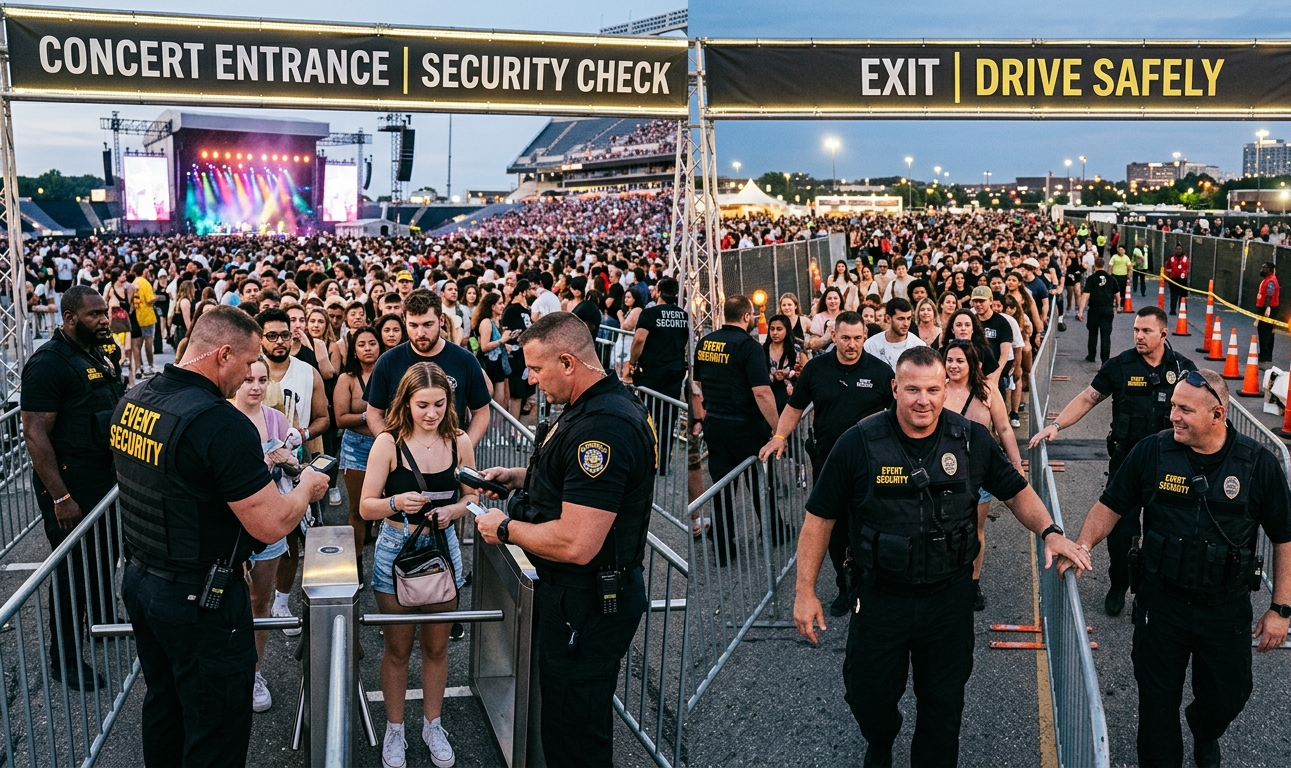
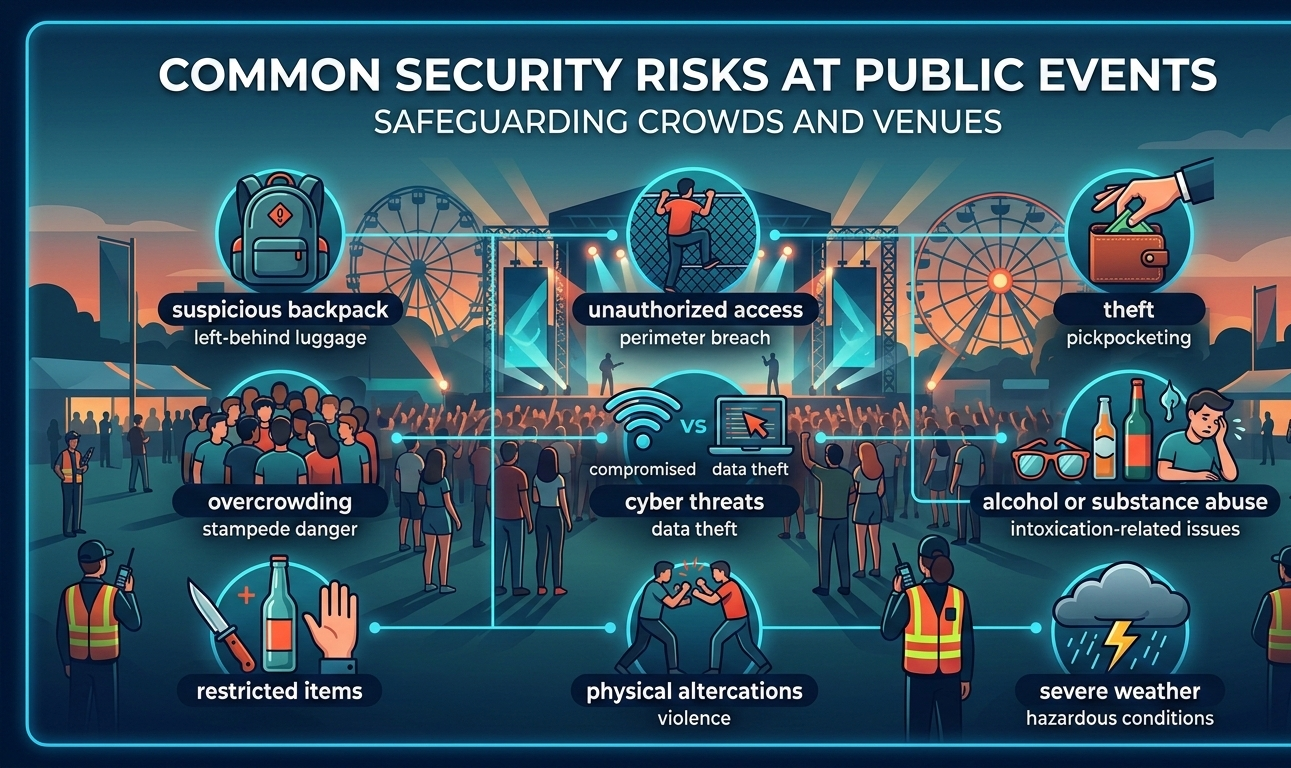
Crowd control remains one of the most critical security concerns at public events. When large numbers of attendees gather in limited spaces, movement becomes restricted and panic situations can develop rapidly. Overcrowding increases the likelihood of stampedes, physical injuries, and structural stress on event infrastructure. Entry and exit bottlenecks are particularly dangerous if not managed through planned crowd flow systems. Professional security teams conduct site assessments to determine capacity limits and emergency evacuation routes. Barriers, controlled access points, and trained crowd management personnel help maintain order. Clear signage and public announcements guide attendees during peak movement times. Without proper supervision, even a peaceful gathering can transform into a hazardous environment. Structured crowd management planning significantly reduces confusion and allows security teams to respond immediately if pressure zones begin to form within the venue.
Unauthorized Access and Gate Crashing
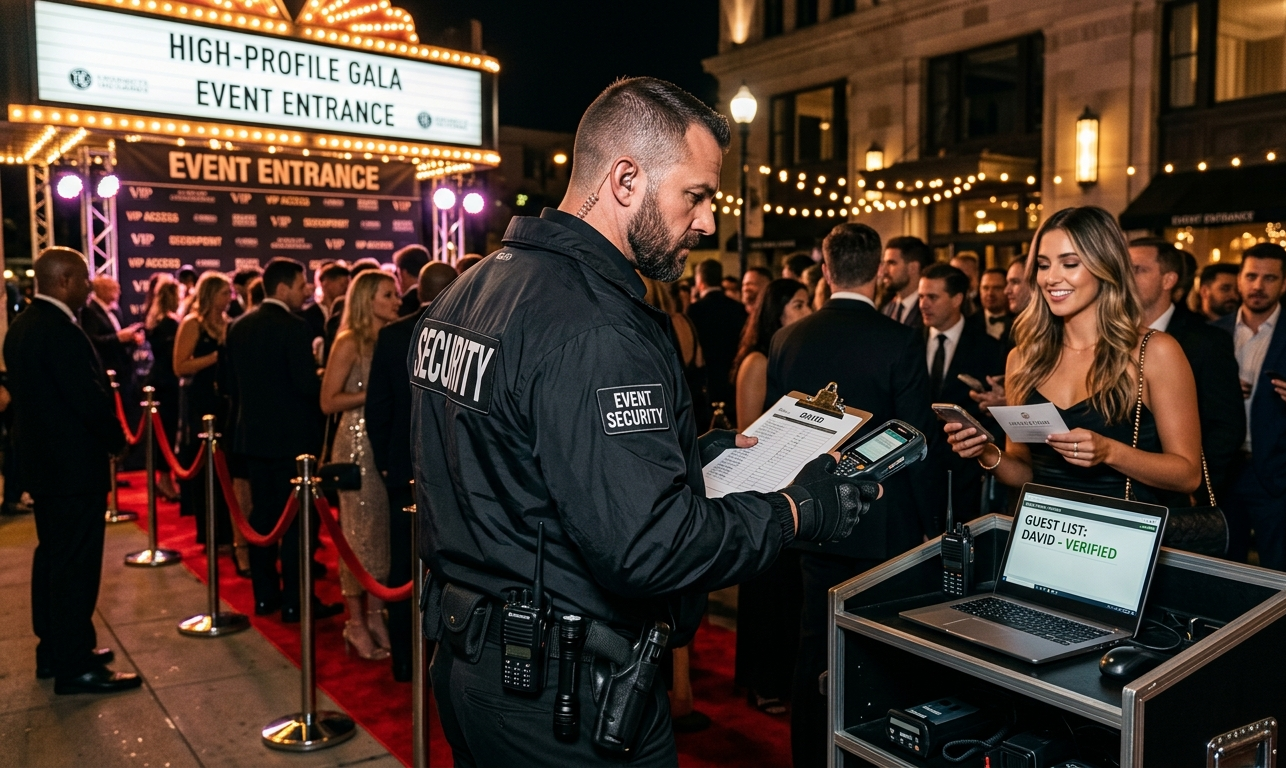
Unauthorized access poses serious risks to event safety and operational control. Individuals attempting to enter without valid credentials can disrupt proceedings and create security gaps. Gate crashing not only compromises ticket revenue but also increases the risk of theft, vandalism, or targeted threats. High-profile events are especially vulnerable when perimeter controls are weak. Professional security personnel implement layered access control systems that include ticket verification, wristband validation, identity checks, and digital scanning technology. Restricted zones such as backstage areas, VIP sections, and control rooms require additional screening procedures. Surveillance monitoring at entry points strengthens detection capabilities. Clear fencing and controlled pathways prevent unauthorized entry attempts. Strong perimeter protection ensures that only approved attendees gain access to sensitive areas. Effective access control safeguards both guests and event organizers from unnecessary exposure to preventable risks.
Theft and Property Crimes
Theft is a common security challenge at crowded public events. Large gatherings create opportunities for pickpocketing, bag snatching, and equipment theft. Vendors and exhibitors are also vulnerable to financial losses if protective measures are weak. Criminal activity often increases when lighting is poor and surveillance coverage is limited. Professional security planning includes visible patrol units, CCTV monitoring, and asset protection strategies. Security officers maintain active observation of high-traffic zones such as food courts, entry gates, and seating areas. Secure storage areas protect valuable equipment and personal belongings. Lost and found management systems also help track misplaced items efficiently. Preventive visibility serves as a deterrent to potential offenders. A proactive security presence reassures attendees while discouraging criminal behavior. Well-coordinated surveillance and patrol strategies significantly reduce theft-related incidents during public gatherings.
Medical Emergencies and Health Risks
Public events attract diverse audiences, including children, elderly individuals, and people with underlying medical conditions. Sudden health emergencies such as fainting, dehydration, allergic reactions, or cardiac incidents require immediate response. Delayed medical attention can lead to severe consequences and reputational damage for organizers. Professional event security planning integrates emergency medical services into the overall risk management strategy. First aid stations, trained responders, and clearly marked medical points enhance preparedness. Security staff receive training to identify early warning signs of distress within crowds. Rapid communication systems ensure coordination between medical teams and event control centers. Heat exposure during outdoor events increases health risks if hydration facilities are insufficient. Structured emergency medical protocols protect attendees and demonstrate responsible event management. A prepared response system significantly reduces the impact of unexpected health incidents.
Fire Hazards and Electrical Risks
Temporary event structures, lighting equipment, sound systems, and catering setups introduce fire and electrical hazards. Faulty wiring, overloaded circuits, and flammable materials can ignite quickly in crowded environments. In enclosed venues, smoke accumulation increases panic and restricts evacuation routes. Fire risk assessment is a mandatory component of professional event security planning. Certified technicians inspect electrical installations before event commencement. Fire extinguishers, alarm systems, and emergency lighting must be strategically positioned throughout the venue. Clear evacuation maps guide attendees toward safe exit points. Security personnel coordinate with local fire authorities to ensure compliance with safety regulations. Routine equipment checks during the event reduce the chance of malfunction. Preventive fire management strategies protect lives and infrastructure. Proactive safety compliance significantly minimizes the probability of fire-related emergencies.
Violence and Physical Altercations
Disputes, intoxication, and emotional conflicts can escalate into physical altercations during public gatherings. Sporting events, concerts, and political rallies often carry elevated tension levels. Uncontrolled aggression threatens attendees and disrupts event continuity. Professional security teams are trained in conflict resolution techniques and de-escalation methods. Visible security presence discourages aggressive behavior and reinforces authority. Rapid intervention protocols ensure that disturbances are contained before spreading. Designated holding areas allow security personnel to manage disruptive individuals discreetly. Alcohol management policies also play a critical role in reducing violence-related risks. Surveillance systems assist in identifying potential confrontations before escalation. Structured communication between security supervisors and event organizers ensures quick decision-making. Effective incident response planning protects both attendees and staff from harm.
Terror Threats and Suspicious Activities
Large-scale public events may attract targeted threats due to their visibility and attendance volume. Suspicious packages, unauthorized drones, or hostile individuals represent serious security concerns. Even unverified threats can trigger panic and operational shutdowns. Risk assessment begins long before the event date through coordination with law enforcement agencies. Security teams conduct background analysis and vulnerability mapping of the venue. Controlled access screening, bag checks, and metal detection systems reduce risk exposure. Surveillance operators monitor unusual behavior patterns within crowds. Emergency response drills prepare staff for rapid evacuation if necessary. Communication clarity is critical to prevent misinformation. Professional security frameworks prioritize preventive intelligence gathering and layered protection strategies. Vigilant monitoring combined with structured contingency planning strengthens defense against potential terror-related threats.
Weather-Related Disruptions
Outdoor events are highly vulnerable to unpredictable weather conditions. Heavy rain, strong winds, lightning, and extreme heat can compromise structural safety and attendee well-being. Temporary stages, tents, and lighting rigs may collapse under severe conditions if not properly secured. Professional event planning includes weather risk forecasting and contingency strategies. Structural engineers inspect installations for stability under adverse conditions. Clear communication channels inform attendees of schedule adjustments or evacuation instructions. Emergency shelters and alternate arrangements minimize confusion during sudden weather changes. Hydration stations and shaded areas protect against heat-related illnesses. Event organizers must maintain constant monitoring of meteorological updates. Preparedness allows security teams to act swiftly and minimize disruption. Weather contingency planning ensures operational continuity while protecting public safety.
Cybersecurity and Digital Threats
Modern public events rely heavily on digital ticketing systems, payment platforms, and communication networks. Cybersecurity threats such as data breaches, hacking, and system disruptions can compromise sensitive attendee information. Unauthorized access to digital systems may affect financial transactions and operational coordination. Professional security management extends beyond physical protection to include digital safeguards. Encrypted payment gateways, secure Wi-Fi networks, and access-controlled databases reduce vulnerability. IT monitoring teams detect unusual activity in real time. Backup systems maintain functionality in case of cyber incidents. Staff training prevents phishing and internal security breaches. Data protection policies strengthen public trust. Integrating cybersecurity protocols into event planning ensures that both physical and digital environments remain protected.
Conclusion:
Public events demand comprehensive security planning to address diverse and evolving risks. From crowd control challenges and medical emergencies to cyber threats and environmental disruptions, each risk requires professional evaluation and structured response mechanisms. Effective security management is not limited to visible guards; it involves coordinated planning, surveillance technology, emergency preparedness, and regulatory compliance. Event organizers who prioritize risk assessment and professional security services create safer environments for attendees and staff. Proactive preparation reduces liability exposure and protects organizational reputation. Thorough security frameworks transform potential vulnerabilities into manageable situations. A well-secured public event reflects responsible leadership and commitment to public safety, ensuring that gatherings remain memorable for the right reasons rather than preventable incidents.