
Event Security Planning for Large Gatherings is a critical responsibility that demands careful coordination, professional expertise, and strategic preparation. Large events attract diverse crowds, high-profile guests, vendors, and media attention, which increases both opportunity and risk. Without a structured security framework supported by professional security services, even a well-organized event can face operational disruption, safety threats, or reputational damage. Effective planning involves risk assessment, crowd management, surveillance systems, trained personnel, and emergency response strategies. Professional security planning protects attendees, staff, assets, and event reputation while ensuring smooth operations from entry to exit. A strong security structure builds trust and confidence among participants, sponsors, and organizers.
Risk Assessment and Threat Analysis
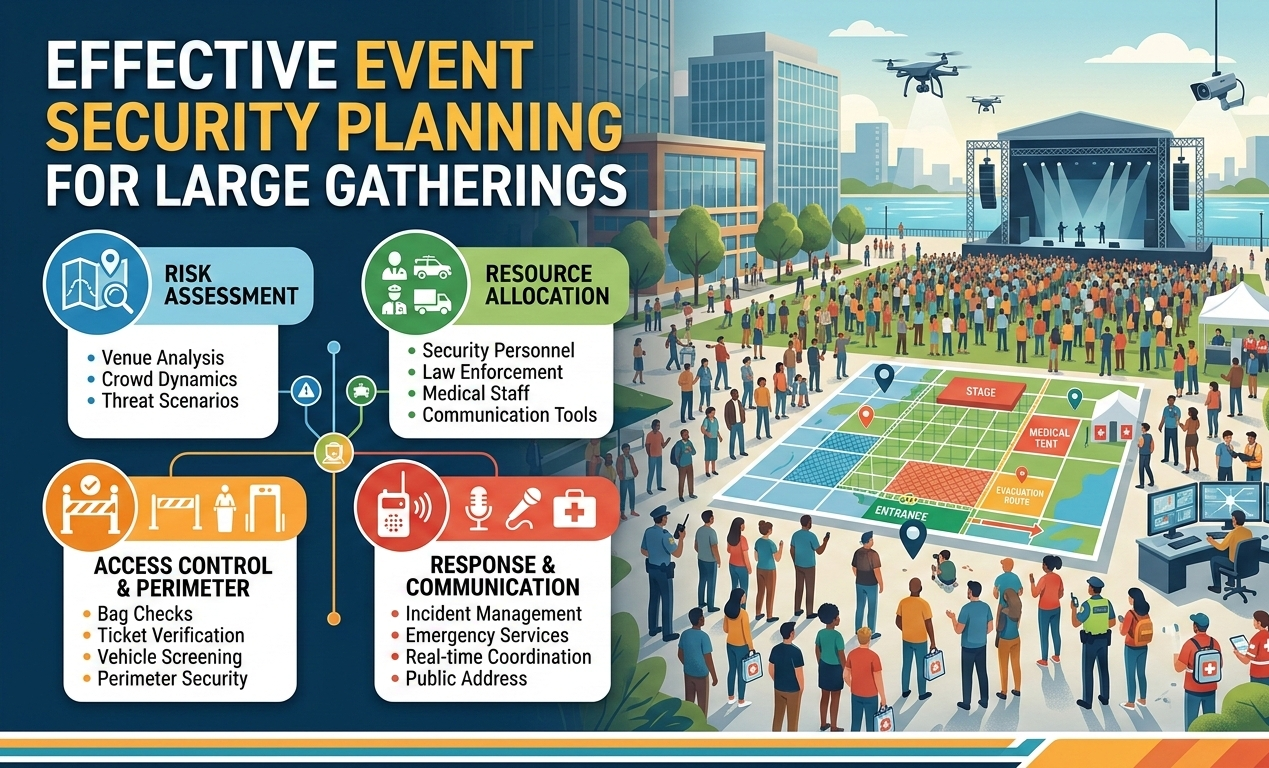
Every successful security plan begins with a detailed risk assessment and threat analysis. Large gatherings present varying levels of risk depending on location, audience profile, event type, and political or social climate. Security planners must evaluate potential threats such as unauthorized access, crowd disturbances, theft, vandalism, medical emergencies, fire hazards, and even terrorism-related risks. Risk assessment includes reviewing venue layout, identifying vulnerable entry points, examining nearby surroundings, and understanding expected attendance numbers.
Threat analysis also considers historical incidents at similar events and local law enforcement intelligence. Professional teams conduct site surveys to identify blind spots, emergency exits, parking risks, and restricted zones. This evaluation allows planners to allocate manpower effectively and implement layered security controls. A structured risk matrix helps categorize threats according to probability and impact. Without this step, security deployment may remain reactive rather than preventive. Risk assessment ensures preparedness, strategic positioning of resources, and proactive mitigation measures, forming the backbone of comprehensive event security planning.
Crowd Management Strategies
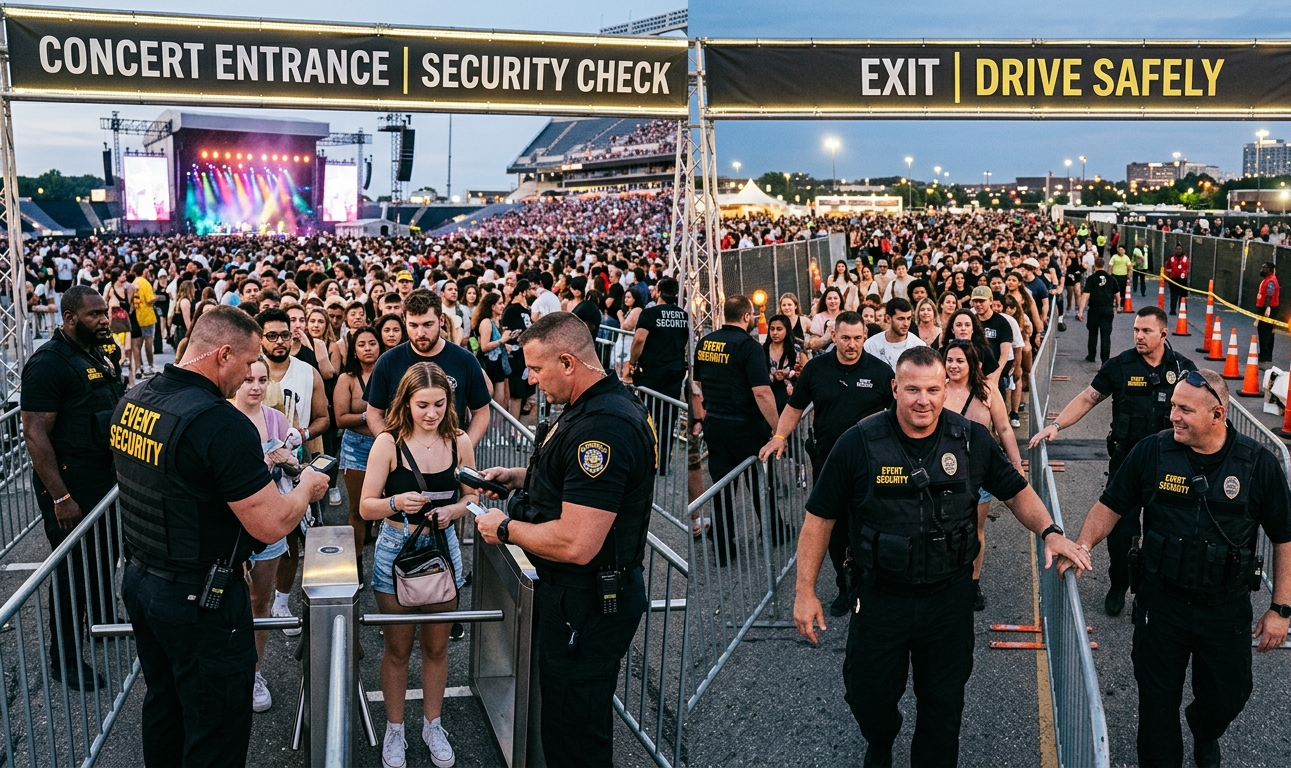
Managing large crowds requires structured planning, trained personnel, and clearly defined movement flows. Uncontrolled crowd behavior can lead to panic situations, stampedes, or conflicts. Security teams must establish entry and exit points that prevent congestion and allow smooth circulation. Barriers, signage, and directional guidance systems support orderly movement. Professional crowd management involves calculating safe venue capacity and ensuring attendance does not exceed limits. Queue management systems reduce waiting time and frustration at checkpoints. Security personnel must monitor crowd density, particularly near stages, VIP areas, and emergency exits. Real-time communication between ground teams and control rooms allows immediate intervention if overcrowding occurs.
Event organizers must also develop contingency plans for emergency evacuation. Clear announcements, trained marshals, and illuminated exit routes are necessary for safe dispersal. Structured crowd control measures maintain discipline, reduce risks, and enhance overall event experience. A proactive crowd management strategy protects both safety and reputation during large-scale gatherings.
Access Control and Credential Verification
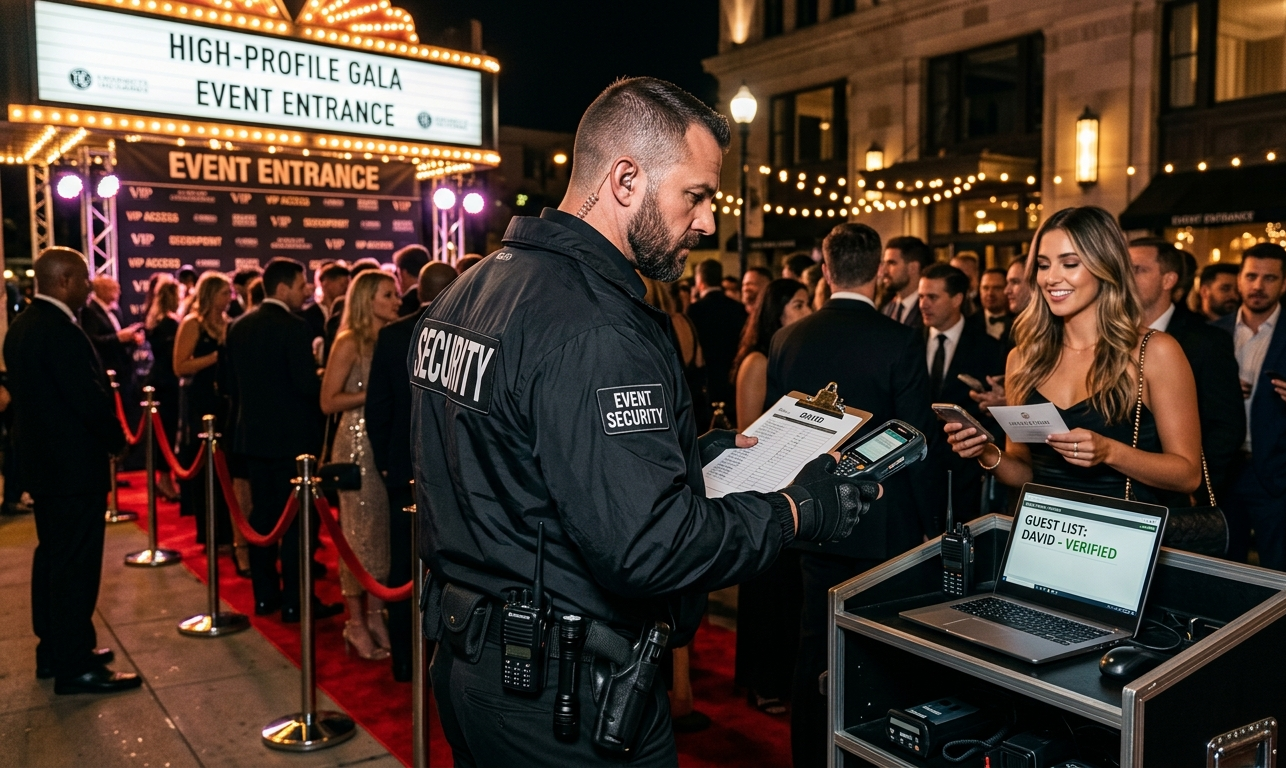
Access control is a fundamental component of event security planning. Large gatherings typically involve multiple categories of attendees, including general participants, VIP guests, performers, staff members, vendors, and media representatives. Each category requires controlled entry procedures to prevent unauthorized access. Credential verification systems such as digital tickets, RFID badges, barcoded passes, and biometric verification enhance security accuracy. Physical checkpoints with trained security personnel help screen bags and detect prohibited items. Metal detectors and handheld scanners add another layer of protection.
Segregated access zones must be clearly marked and enforced. VIP areas, backstage zones, and technical rooms require restricted entry and continuous monitoring. Proper access control reduces the likelihood of infiltration, theft, or targeted threats. It also ensures operational efficiency by preventing congestion and confusion. A structured credential system builds accountability and traceability throughout the event.
Surveillance and Monitoring Systems
Advanced surveillance systems strengthen the overall security framework of large gatherings. CCTV cameras strategically installed at entrances, exits, parking areas, stage zones, and crowd concentration points provide continuous visual monitoring. High-definition cameras with night vision capabilities enhance visibility under low-light conditions. Modern control rooms integrate video feeds, communication tools, and incident reporting software. Security supervisors can track activities in real time and deploy response teams immediately when suspicious behavior is detected. Surveillance data also serves as evidence in case of disputes or investigations.
In addition to CCTV, drone surveillance may be used for outdoor events to monitor crowd density and perimeter security. Public address systems allow quick communication during emergencies. Technology-driven monitoring reduces blind spots and strengthens proactive intervention. Effective surveillance integration enhances situational awareness and supports rapid decision-making throughout the event lifecycle.
Emergency Response and Crisis Management
Comprehensive emergency response planning is essential for large gatherings. Emergencies may include medical incidents, fire outbreaks, structural failures, security threats, or severe weather conditions. A detailed crisis management plan outlines roles, responsibilities, communication channels, and evacuation procedures. Security teams must coordinate closely with local law enforcement, fire departments, and medical services. On-site medical stations equipped with trained paramedics provide immediate assistance to attendees. Emergency exits must remain unobstructed and clearly marked.
Regular pre-event drills ensure staff members understand protocols and response sequences. Clear communication systems, including two-way radios and emergency announcements, support coordinated action. Crisis response teams must remain calm, decisive, and well-trained to manage high-pressure situations. Preparedness reduces panic, minimizes injuries, and ensures rapid containment of incidents. A structured emergency framework safeguards human life and maintains operational control during unexpected circumstances.
Perimeter Security and Asset Protection
Securing the perimeter of an event venue prevents unauthorized intrusion and external threats. Fencing, barricades, and controlled entry gates create defined boundaries. Security personnel stationed at perimeter points monitor suspicious activity and enforce entry regulations. Parking areas require special attention, as they often present vulnerabilities. Vehicle screening, designated parking zones, and traffic control officers reduce risks. Delivery vehicles and vendor supplies must undergo inspection before entering restricted zones.
Asset protection also includes safeguarding stage equipment, lighting systems, audio gear, and digital infrastructure. Theft or sabotage can disrupt event operations and cause financial losses. Secure storage areas and limited access authorization protect valuable equipment. A layered perimeter security strategy deters criminal activity and maintains a controlled environment. Effective boundary management ensures that security measures extend beyond internal operations, covering external surroundings comprehensively.
Communication and Coordination Framework
Strong communication systems form the backbone of event security operations. Large gatherings require seamless coordination between security personnel, event managers, emergency responders, and support staff. Clear command hierarchy ensures structured reporting and decision-making. Two-way radios, encrypted communication devices, and central control rooms enhance operational efficiency. All team members must understand communication protocols, including incident reporting formats and escalation procedures.
Coordination meetings conducted prior to the event align expectations and clarify responsibilities. During the event, real-time updates allow rapid response to developing situations. Miscommunication can lead to delayed action and increased risk. A well-defined communication strategy ensures clarity, accountability, and immediate reaction to security concerns. Effective coordination strengthens operational discipline and maintains consistent situational awareness across all security layers.
Professional Security Personnel and Training
Trained security professionals are central to effective event security planning. Guards must possess skills in crowd control, conflict resolution, emergency response, and access management. Professional conduct, alertness, and communication skills reflect positively on event management. Pre-event training sessions brief personnel about venue layout, emergency exits, VIP handling procedures, and risk factors. Role assignments must align with individual experience and specialization. Supervisors oversee team performance and maintain discipline.
Customer interaction is also important. Security personnel represent authority while maintaining respectful engagement with attendees. Balanced professionalism prevents unnecessary confrontation while enforcing rules firmly. Continuous training and scenario-based drills enhance preparedness. A competent security team ensures consistent enforcement of policies and effective response to dynamic challenges. Skilled personnel significantly reduce operational vulnerabilities and support smooth event execution.
Conclusion:
Event Security Planning for Large Gatherings demands strategic preparation, skilled manpower, advanced technology, and structured coordination. From risk assessment to emergency response, every component contributes to a secure and organized environment. Large events involve complex dynamics that require proactive planning rather than reactive measures. Professional security planning safeguards attendees, protects assets, and preserves event reputation. A comprehensive security framework strengthens operational stability and ensures confidence among participants, sponsors, and stakeholders. With structured planning and disciplined execution, large gatherings can achieve both safety and success.