
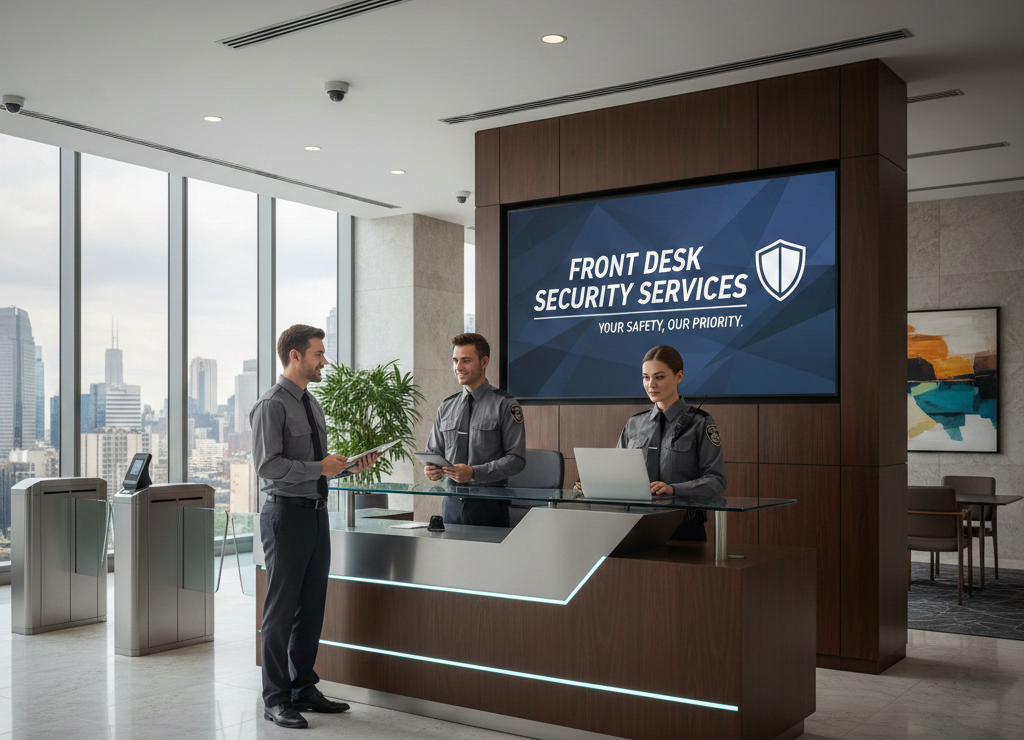
Front desk security services for corporate buildings play a key role in keeping offices safe, organized, and professional. The front desk remains the first point of contact for employees, visitors, and vendors, so strong security here helps set clear rules from the start. A trained guard manages entries, checks identities, and guides visitors without disturbing daily work. Many companies now rely on security services to manage these responsibilities in a structured and calm manner. When the front desk works smoothly, staff feel protected and guests experience a well-managed environment. This layer of security reduces confusion, controls movement, and supports office discipline, which is very important in busy corporate buildings where people come and go throughout the day.
What Are Front Desk Security Services?
Front desk security services focus on controlling and monitoring all activity at the main entrance of a corporate building. These services involve trained security personnel who handle visitor entry, staff access, and general reception safety tasks. The guard checks identification, confirms appointments, and ensures only authorized people enter the premises.
Unlike regular reception staff, front desk security guards are trained to handle risk situations while maintaining a polite and professional attitude. Their presence discourages unauthorized access and reduces the chances of theft or disturbance. In corporate buildings, these services help maintain order during peak hours when employees, clients, and delivery staff arrive at the same time. The guard also keeps records of daily movement, which helps management track visitors if any issue arises. Front desk security services combine customer handling skills with safety awareness, making them a strong support system for modern offices.
Role of Front Desk Security in Corporate Buildings
The role of front desk security in corporate buildings goes beyond simple entry control. These guards act as the first line of defense and support for the entire office. They monitor who enters and exits, guide visitors to the correct departments, and make sure company rules are followed. During busy office hours, they manage crowds calmly and prevent unauthorized wandering inside the building. Front desk security also supports internal teams through coordination with HR or administration when access issues arise.
If a visitor arrives without proper approval, the guard contacts the concerned department before allowing entry. Their alert presence helps reduce conflicts and keeps operations running smoothly. In case of suspicious behavior, they take immediate action and inform senior staff. This role helps create a secure and organized environment where employees can focus on their work without constant interruptions.
Visitor Management at Corporate Front Desk
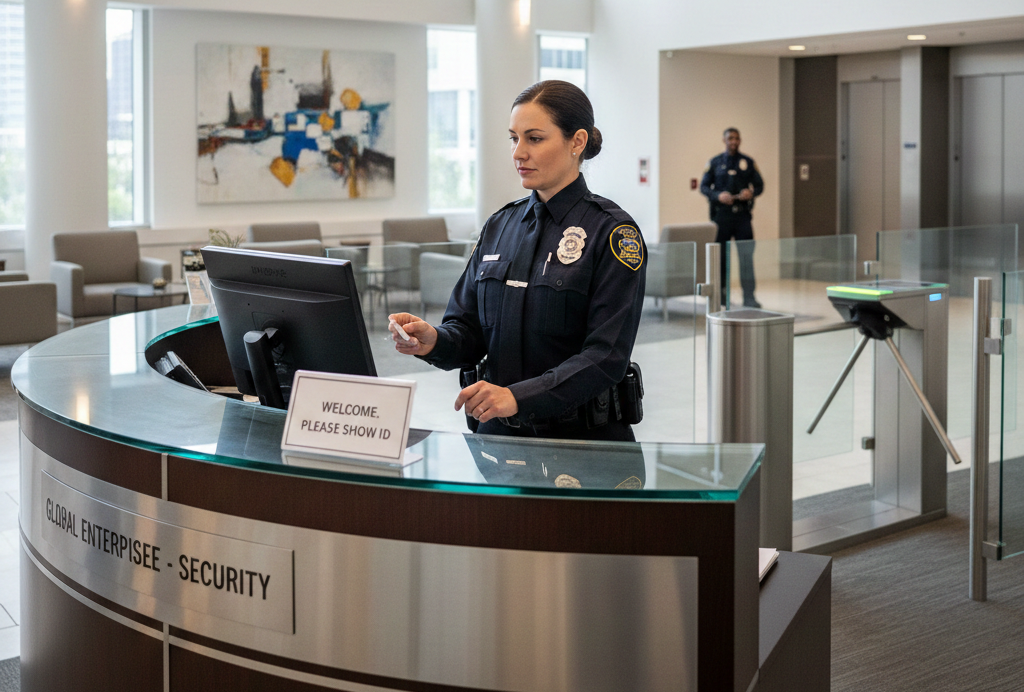
Visitor management stands as one of the most important tasks of front desk security in corporate buildings. Every visitor must be properly identified, recorded, and guided to avoid confusion and risk. Security guards ask for valid identification, check appointment details, and issue visitor badges when required. These steps help track who is inside the building at any given time. Proper visitor handling also reduces unauthorized movement, which protects sensitive areas and information.
Front desk security ensures visitors wait in designated areas until approval is granted. In larger offices, guards may use digital logs or manual registers to maintain accurate records. This organized process helps management review visitor history if needed. Good visitor management also improves the company image because guests feel welcomed while rules remain clear and professional.
Employee Access Control and Verification
Employee access control helps maintain discipline and safety inside corporate buildings. Front desk security guards verify staff entry through access cards, ID checks, or attendance systems. These checks ensure that only active employees enter the building and restricted areas remain protected. Guards also watch for tailgating, where unauthorized people try to enter behind employees.
When new staff or temporary workers join, the front desk follows specific approval instructions shared by management. Access control supports internal security policies and prevents misuse of office resources. During shift changes or late hours, security guards remain alert to unusual activity. Their role helps maintain accountability among staff and reduces internal security risks. A well-managed access system improves trust between employees and management while creating a safe working atmosphere.
Package Handling and Courier Management
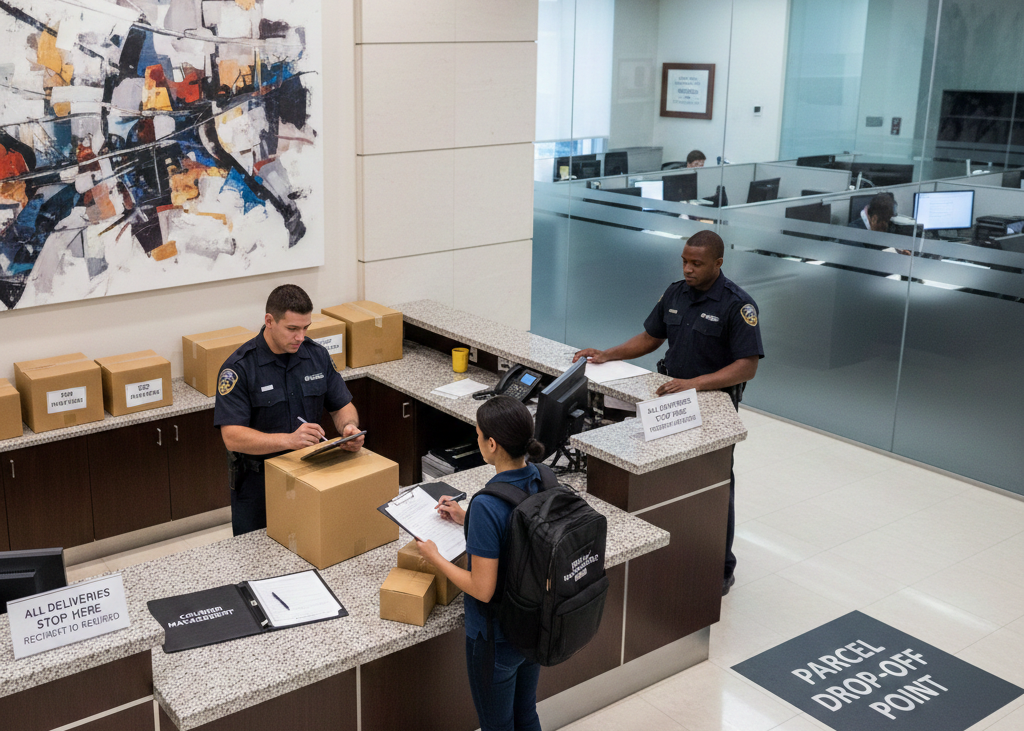
Package handling and courier management require careful attention at corporate front desks. Many offices receive daily deliveries, which makes this task sensitive. Front desk security guards record courier details, check delivery slips, and confirm the recipient before allowing packages inside. This process helps prevent misplaced items and reduces the risk of suspicious deliveries.
Guards also guide delivery staff to designated drop-off points to avoid unnecessary movement inside office areas. In some buildings, parcels remain at the front desk until collected by authorized employees. Proper documentation supports accountability and reduces disputes related to lost packages. Courier management also helps maintain cleanliness and order at the entrance. Through careful handling, front desk security protects company assets and ensures smooth delivery operations without disturbing office workflow.
Emergency Response and Incident Handling
Emergency response is a critical responsibility of front desk security services in corporate buildings. Guards receive training to handle situations such as fire alarms, medical emergencies, or security threats. When an incident occurs, they follow set procedures to protect people and property. Front desk security quickly informs management and emergency services while guiding employees and visitors to safe areas. Their calm response helps reduce panic and confusion. Guards also secure entry points during emergencies to control movement and prevent further risks. After the situation is under control, they prepare incident reports for review. This documentation helps companies improve safety plans. Reliable emergency handling builds confidence among staff and shows the organization takes safety seriously.
Surveillance and Monitoring Support
Front desk security plays a strong role in surveillance and monitoring support. Guards observe live CCTV feeds or coordinate with monitoring teams to watch key areas. They remain alert to suspicious behavior near entrances, parking areas, and reception zones. When something unusual appears on cameras, front desk security takes immediate action or informs supervisors. This monitoring helps prevent theft, vandalism, or unauthorized access. Guards also perform routine checks of surveillance equipment to ensure systems work properly. Their coordination with technical teams helps maintain continuous coverage. Surveillance support adds an extra layer of protection that strengthens overall building safety. It also helps management respond quickly to incidents and maintain a secure working environment.
Professional Appearance and Communication Skills
Professional appearance and communication skills matter greatly for front desk security in corporate settings. Guards represent the company at the entrance, so their behavior influences first impressions. A clean uniform, polite tone, and confident posture help create trust among visitors and employees. Front desk security communicates clearly when giving instructions or handling concerns. Calm communication helps manage difficult situations without escalation. Guards also respect confidentiality while dealing with sensitive information. Good communication ensures smooth coordination with staff and management. A professional approach improves cooperation and reduces misunderstandings. Through positive interaction, front desk security supports both safety and the company’s professional image.
Benefits of Front Desk Security for Corporate Offices
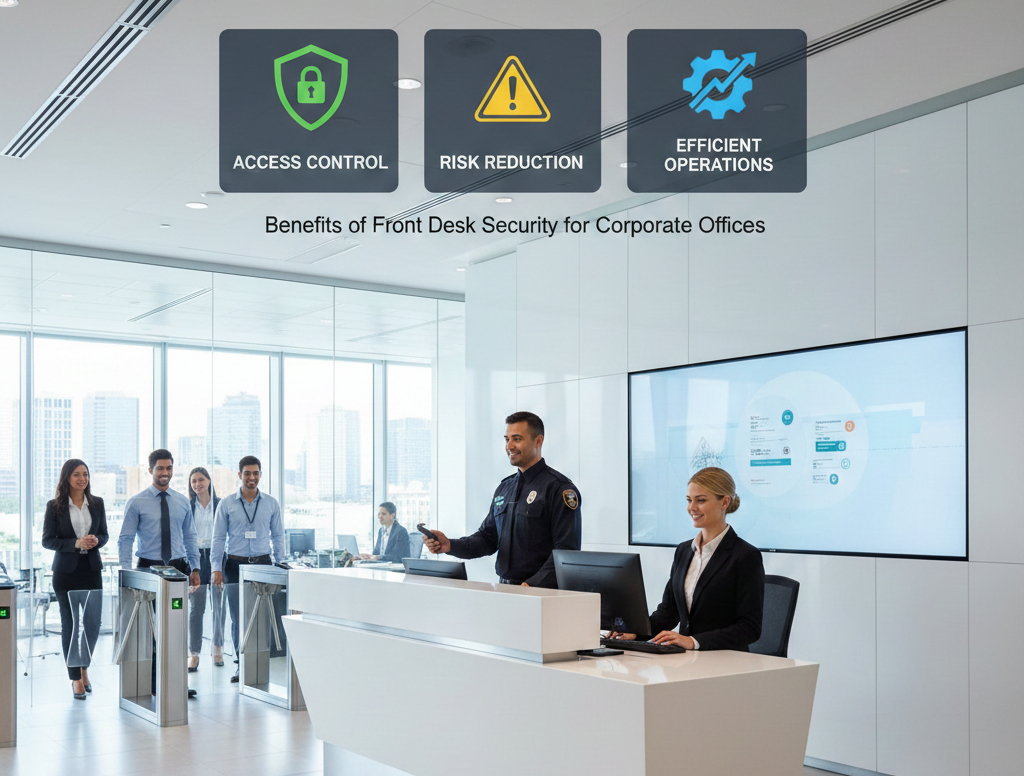
Front desk security services bring many benefits to corporate offices. They help control access, reduce risks, and improve daily operations. Employees feel safer knowing trained guards manage the entrance. Visitors receive proper guidance, which reduces confusion and delays. Organized entry systems improve discipline and accountability. Front desk security also reduces pressure on administrative staff, allowing them to focus on core tasks. Their presence discourages unwanted behavior and supports company policies. With proper records and monitoring, management gains better control over building activity. These benefits contribute to a secure and efficient workplace where productivity can grow without constant security concerns.
Technology Used in Modern Front Desk Security
Modern front desk security uses technology to improve accuracy and speed. Digital visitor logs replace paper registers, reducing errors and saving time. Access control systems use cards or biometric devices for staff verification. Intercoms help guards confirm approvals quickly. Surveillance systems support real-time monitoring of entrances. Some buildings use integrated software to track entries and exits throughout the day. Technology helps guards respond faster during emergencies and improves reporting. These tools support better coordination between security and management. With modern systems, front desk security becomes more reliable and organized, matching the needs of corporate buildings.
Compliance with Corporate Security Policies
Compliance with corporate security policies remains a core responsibility of front desk security services. Guards follow company guidelines related to access control, visitor handling, and confidentiality. These policies help maintain consistency across all departments. Front desk security ensures that rules apply equally to everyone, including senior staff and vendors. Regular briefings help guards stay updated on policy changes. Compliance reduces legal risks and supports internal discipline. When policies are followed properly, security operations run smoothly. This structured approach helps companies maintain a safe and professional environment without confusion or favoritism.
Choosing the Right Front Desk Security Service Provider
Choosing the right front desk security service provider requires careful evaluation. Companies should look for trained staff with corporate experience. Communication skills, discipline, and reliability matter greatly. A good provider offers regular training and clear reporting systems. Background checks and proper uniforms also reflect professionalism. Providers who understand corporate culture can handle visitors and employees smoothly. Management should review service records and client feedback before selection. The right provider strengthens building security and supports daily operations. Careful selection ensures long-term safety and consistent service quality.
Ending Words:
Front desk security services for corporate buildings support safety, order, and professionalism. From managing visitors to handling emergencies, their role affects daily operations. Trained guards help protect people, assets, and company reputation. Proper systems and clear policies strengthen this support. When front desk security works effectively, employees feel confident and visitors feel guided. Investing in skilled security services helps corporate buildings maintain a calm and secure environment where work continues without disruption.