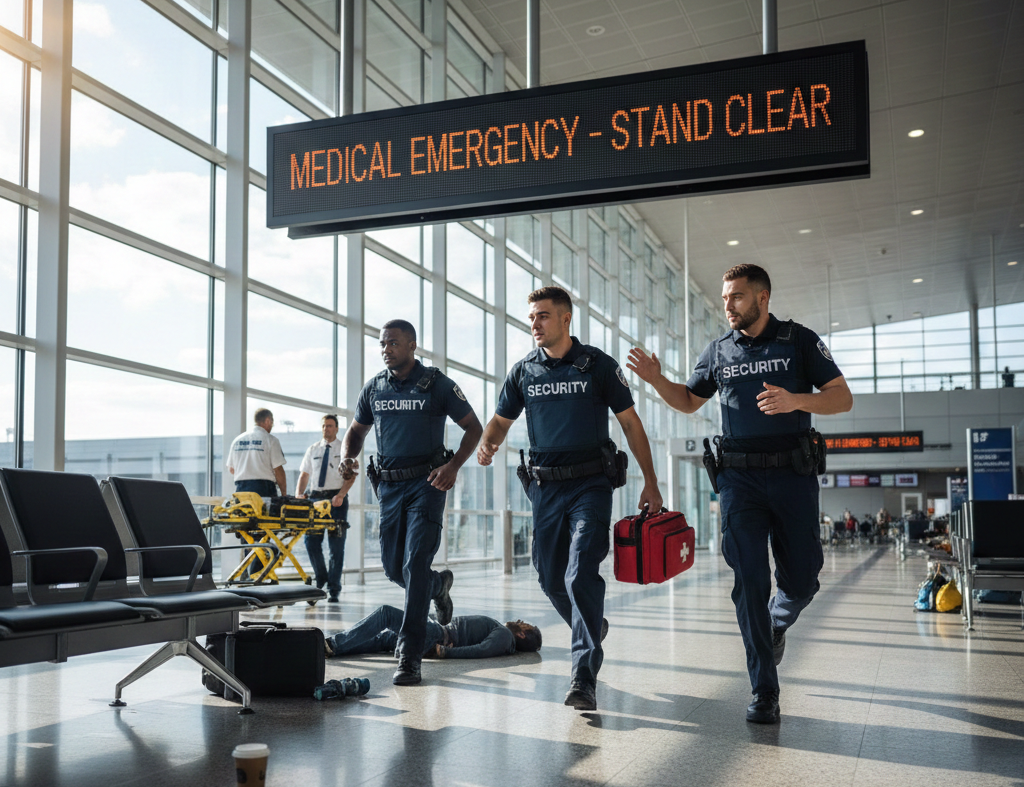
Guard response during medical emergencies plays a critical role in saving lives and reducing serious health risks. Security guards are often the first people present when a medical emergency happens in offices, shopping malls, housing societies, construction sites, or public events. Their actions in the first few minutes can make a major difference before medical professionals arrive. A calm, trained, and timely response helps control the situation, supports the injured person, and prevents panic. Medical emergencies do not give warnings, which is why security teams must always stay alert and prepared. Understanding how guards respond during medical emergencies helps businesses, residents, and event organizers recognize the value of trained security services.
Why Medical Emergency Response Matters in Security Services?
Medical emergency response is an important part of security services because safety is not limited to crime prevention alone. Many emergencies involve health issues such as sudden illness, accidents, or injuries. Security guards are positioned at entrances, patrol routes, and control rooms, making them easy to reach when someone needs help. A fast response helps stabilize the patient and reduces complications. Delays or incorrect actions can make a situation worse. Proper guard response during medical emergencies also builds trust. People feel safer knowing trained guards are ready to act during critical moments. This readiness adds real value to security services in every type of environment.
Common Medical Emergencies Faced by Security Guards
Here are common medical emergencies that security guards may encounter during duty, especially in public places, workplaces, and residential areas. These situations require quick action, calm handling, and basic medical awareness to protect lives until medical professionals arrive.
Cardiac Arrest and Heart Attacks
Heart-related emergencies are among the most serious situations guards face. Cardiac arrest requires immediate action, including calling emergency services and starting basic life support. Guards trained in CPR can help maintain blood flow until medical help arrives. Heart attacks may show signs such as chest pain, sweating, or difficulty breathing. Early response and fast medical support can save lives.
Fainting and Sudden Collapse
Fainting can happen due to dehydration, stress, heat, or low blood pressure. Guards must check responsiveness, help the person lie down safely, and monitor breathing. Keeping the area calm and calling medical assistance is important if the person does not regain consciousness quickly.
Injuries and Heavy Bleeding
Accidents can lead to cuts, fractures, or serious bleeding. Guards should apply pressure to control bleeding and prevent further injury. Proper handling during such moments reduces risks and helps medical teams later.
Seizures and Breathing Issues
Seizures require careful handling to protect the person from injury. Guards must keep objects away, avoid restraining the person, and call for medical help. Breathing problems such as asthma attacks also need quick attention and support.
Diabetic and Blood Pressure Emergencies
Low or high blood sugar and sudden blood pressure changes can cause confusion, dizziness, or collapse. Guards should recognize symptoms and act fast while waiting for medical professionals.
First Responsibilities of Guards During a Medical Emergency
The first responsibility of a guard during a medical emergency is to stay calm and alert. Panic can spread quickly, making the situation harder to control. Guards must assess the condition of the affected person and check for immediate danger. Securing the area helps prevent crowds and allows space for medical support. Calling emergency services is a priority. Guards should also inform supervisors and site management. Every action should focus on protecting life and providing support until trained medical teams arrive.
Step-by-Step Guard Response During Medical Emergencies
Here are the step-by-step actions security guards should follow during medical emergencies to handle the situation safely, reduce risks, and support the affected person until medical help arrives.
Assessing the Situation Quickly
Quick assessment helps guards understand the seriousness of the emergency. Checking consciousness, breathing, and visible injuries guides the next steps. Guards must avoid delays and act based on training.
Securing the Area and Crowd Control
Crowd control helps maintain order and privacy. Guards should guide people away and create clear access paths. This prevents accidents and allows medical teams to work efficiently.
Calling Medical Support and Emergency Services
Clear communication with emergency services saves time. Guards should provide accurate location details, patient condition, and any known medical history if available.
Providing Basic First Aid Until Help Arrives
Basic first aid includes controlling bleeding, assisting breathing, and keeping the patient comfortable. Guards should never attempt advanced medical procedures without training.
Assisting Medical Teams on Arrival
When medical teams arrive, guards should guide them to the scene quickly. Sharing information about the incident helps professionals provide faster treatment.
Importance of First Aid Training for Security Guards
First aid training has a strong impact on how security guards handle medical emergencies on duty. A guard who has proper training knows how to stay calm and respond with confidence when someone suddenly becomes ill or injured. First aid training teaches CPR, bleeding control, shock management, and safe ways to handle a patient until medical help arrives. These skills help prevent conditions from getting worse during the early minutes of an emergency. Regular refresher training keeps guards familiar with procedures and reduces hesitation during stressful situations. Training also lowers fear and confusion, which often occur when guards face serious medical incidents. Organizations that invest in first aid training reduce safety risks and create a more secure environment. Well-trained guards provide immediate support and act as dependable first responders until medical professionals take over.
Role of Communication in Medical Emergency Situations
Clear communication plays a major role during medical emergencies and directly affects response speed. Security guards must communicate clearly with emergency services, supervisors, medical teams, and on-site staff. Accurate information about the patient’s condition and location helps medical responders arrive prepared. Radios, mobile phones, and alarm systems allow guards to coordinate actions without delay. Calm and clear communication also helps reassure the injured person and people nearby, reducing panic and confusion. Poor communication can lead to mistakes, delays, or incomplete responses. Guards trained in emergency communication know how to give clear instructions and follow guidance from medical professionals. Strong communication skills help guards control the scene, manage people effectively, and support a smooth medical response until help arrives.
Equipment Security Guards Should Have for Medical Emergencies
Proper equipment allows security guards to respond quickly and effectively during medical emergencies. Basic medical supplies such as first aid kits, gloves, bandages, antiseptics, and face masks should be available at all times. These items help control bleeding, prevent infection, and provide immediate care. Automated external defibrillators are extremely important during cardiac emergencies, where fast action can save lives. Communication devices such as radios and mobile phones allow guards to contact emergency services without delay. Flashlights and protective gear can also support response efforts in low-light or risky conditions. When guards have easy access to the right equipment, they waste less time and act with confidence. Well-equipped security teams improve safety standards and reduce the severity of medical emergencies.
Challenges Guards Face During Medical Emergencies
Medical emergencies create several challenges for security guards, especially in busy or high-risk environments. Stress and pressure can affect decision-making, particularly when crowds gather around the injured person. Limited information about the person’s medical history may also slow response efforts. Guards who lack proper training may feel unsure about what actions to take. In some areas, delayed ambulance access adds further difficulty. Emotional reactions from family members or bystanders can increase tension and confusion. Despite these challenges, guards who receive regular training and guidance handle situations more effectively. Proper preparation, clear procedures, and suitable equipment help reduce risks. With the right support, guards can manage emergencies calmly and protect lives until medical professionals arrive.
How Proper Training Improves Guard Response During Medical Emergencies?
Proper training significantly improves how security guards respond during medical emergencies. Trained guards understand procedures clearly and act without hesitation. Training teaches guards how to assess situations, recognize symptoms, and apply first aid correctly. This preparation builds confidence and reduces panic during serious incidents. Training also improves teamwork, allowing guards to divide tasks and support each other effectively. Observation skills become stronger, helping guards notice warning signs earlier. Organizations that prioritize training create safer environments for staff, visitors, and residents. A trained guard responds faster, makes better decisions, and provides steady support during emergencies. Consistent training improves overall safety and strengthens emergency response standards across all security operations.
Guard Response During Medical Emergencies in Different Locations
Malls and Commercial Buildings
Malls and commercial buildings experience high public movement, increasing medical risks. Guards must respond quickly, manage crowds, and maintain clear access for medical teams.
Construction Sites
Construction sites involve heavy machinery and physical work, making injuries common. Guards must act fast, secure the area, and coordinate with site supervisors.
Schools and Colleges
Students may face sudden illness or injuries during activities. Guards help control the situation, calm students, and support staff until help arrives.
Housing Societies
Residents rely on guards for immediate assistance during emergencies. Familiarity with residents helps guards respond quickly and accurately.
Industrial Areas
Industrial environments involve higher safety risks. Guards must follow strict procedures and act carefully during medical emergencies.
Legal and Ethical Responsibilities of Guards in Medical Emergencies
Guards have ethical duties to help during emergencies. Acting within training limits protects both the guard and the organization. Reporting incidents properly is also important. Professional behavior builds trust and accountability.
Why Professional Security Services Matter in Medical Emergencies?
Professional security services invest in training, equipment, and supervision. This preparation improves guard response during medical emergencies. Businesses and communities benefit from faster response and better safety outcomes. Professional services offer peace of mind and reliable support during critical moments.
Ending Words:
Guard response during medical emergencies is a vital part of modern security services. Guards often become first responders during sudden health incidents. Their ability to assess, communicate, and provide basic care saves lives and reduces risks. Training, equipment, and professional support improve response quality. Choosing trained security services helps create safer environments for everyone