
Planning event security is not only about placing a few guards at the entrance. The question, How many security guards are needed for an event? directly affects crowd safety, asset protection, and overall event success. From small private gatherings to large public festivals, security planning must follow a structured risk assessment process. Organizers who underestimate staffing needs often face crowd control issues, delayed responses, and safety gaps. On the other hand, excessive deployment can increase operational costs without adding real value. A professional security plan balances risk level, venue size, expected attendance, and event type. This article explains the key factors that determine the correct number of security guards for any event while maintaining a high standard of safety and compliance.
Understanding Event Risk Assessment
Every successful security plan begins with a detailed risk assessment. Determining how many security guards are needed for an event depends heavily on identifying potential threats and vulnerabilities. Risk assessment evaluates crowd size, event purpose, guest profile, political or celebrity presence, and previous incident history. A high-profile corporate launch with VIP attendees presents different risks compared to a local community gathering. Professional security managers analyze access points, emergency exits, nearby public areas, and environmental risks such as fire hazards or traffic congestion. They also review local regulations that may mandate a minimum guard-to-attendee ratio. Events involving alcohol service, large cash transactions, or high-value equipment require stronger monitoring and rapid response capability.
Security staffing decisions should never rely on guesswork. Instead, they must be supported by documented evaluation and threat analysis. A well-structured risk assessment ensures that the number of deployed guards matches the actual security demand of the event.
Crowd Size and Guard-to-Guest Ratio
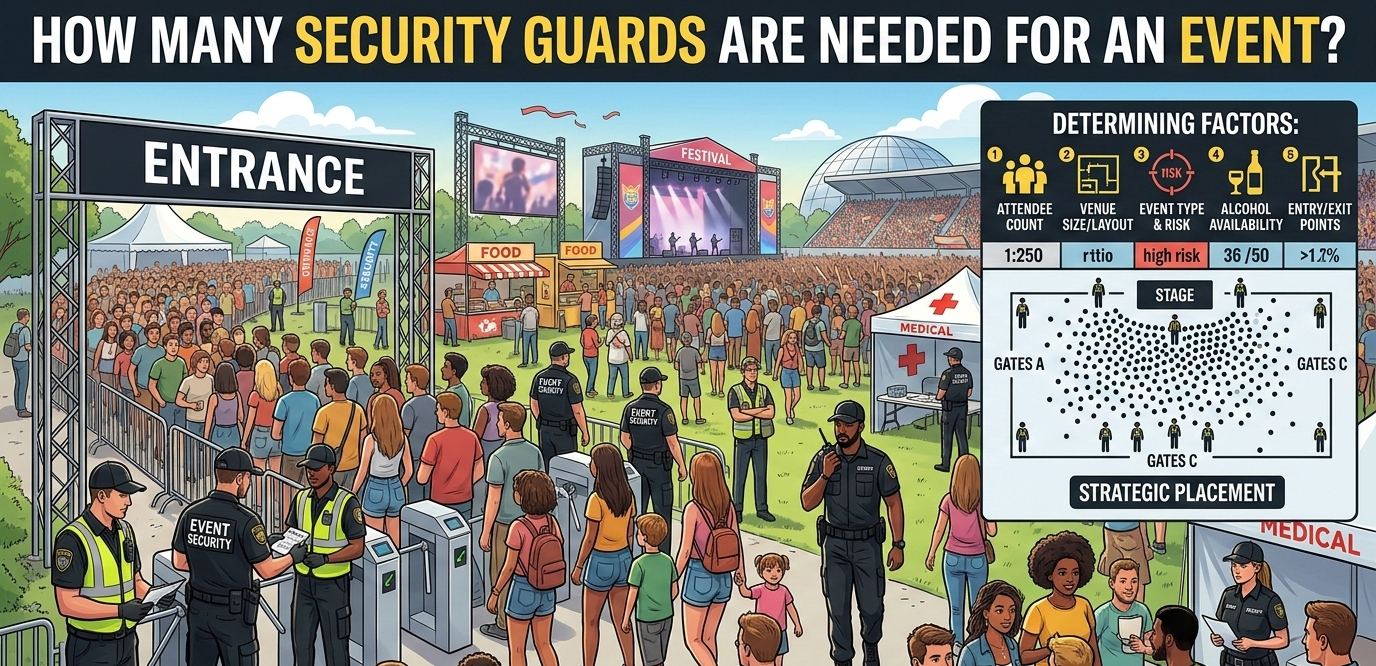
Crowd size remains one of the most critical factors in determining the required number of security guards. Industry standards often recommend one security guard for every 50 to 100 guests for low-risk events. However, this ratio changes significantly for high-risk or large-scale public gatherings. For concerts, festivals, or political rallies, the recommended ratio may shift to one guard per 25 to 50 attendees. Larger crowds create higher risks of stampedes, disputes, lost persons, and medical emergencies. Proper staffing ensures controlled entry, organized crowd flow, and immediate response during incidents. Event planners must also consider peak attendance periods. The number of guests entering at one time can strain entry screening teams if staffing is insufficient. Overcrowding at gates increases safety hazards and damages the event’s reputation. Selecting the correct guard-to-guest ratio is not only about numbers but about ensuring visibility, deterrence, and rapid action in every section of the venue.
Type of Event and Security Complexity
The nature of the event significantly influences security staffing requirements. A corporate seminar with registered guests requires fewer guards compared to an open public concert. Each event type introduces unique challenges that demand tailored security solutions. Weddings and private parties typically focus on access control and guest management. Sporting events require perimeter control, crowd monitoring, and conflict resolution capabilities. Political events demand strict screening, close coordination with law enforcement, and specialized protection units. Events involving celebrities or VIPs require personal protection officers in addition to general crowd control staff. High-profile gatherings often attract unwanted attention, increasing risk exposure. The level of security complexity also depends on whether alcohol is served, ticket verification is required, or valuable equipment is present. A thorough evaluation of event characteristics ensures that staffing levels match operational demands without compromising safety standards.
Venue Size and Layout Considerations
Venue structure plays a major role in deciding how many security guards are needed. A compact indoor hall requires fewer guards compared to a large outdoor festival ground. The number of entrances, exits, restricted areas, and emergency access points directly affects staffing calculations. Multi-level venues require additional personnel for stairways, elevators, and balcony sections. Outdoor events demand perimeter patrol units to prevent unauthorized entry. Parking areas must also be monitored to avoid theft or vehicle congestion. Blind spots, isolated corridors, and backstage zones increase security risks if not properly staffed. Each physical section of the venue must have visible security presence to maintain order and prevent incidents. Professional security planning divides the venue into operational zones. Each zone receives an appropriate number of guards depending on risk exposure and foot traffic volume. This structured approach ensures full coverage without leaving vulnerable gaps in protection.
Entry Points and Access Control Requirements
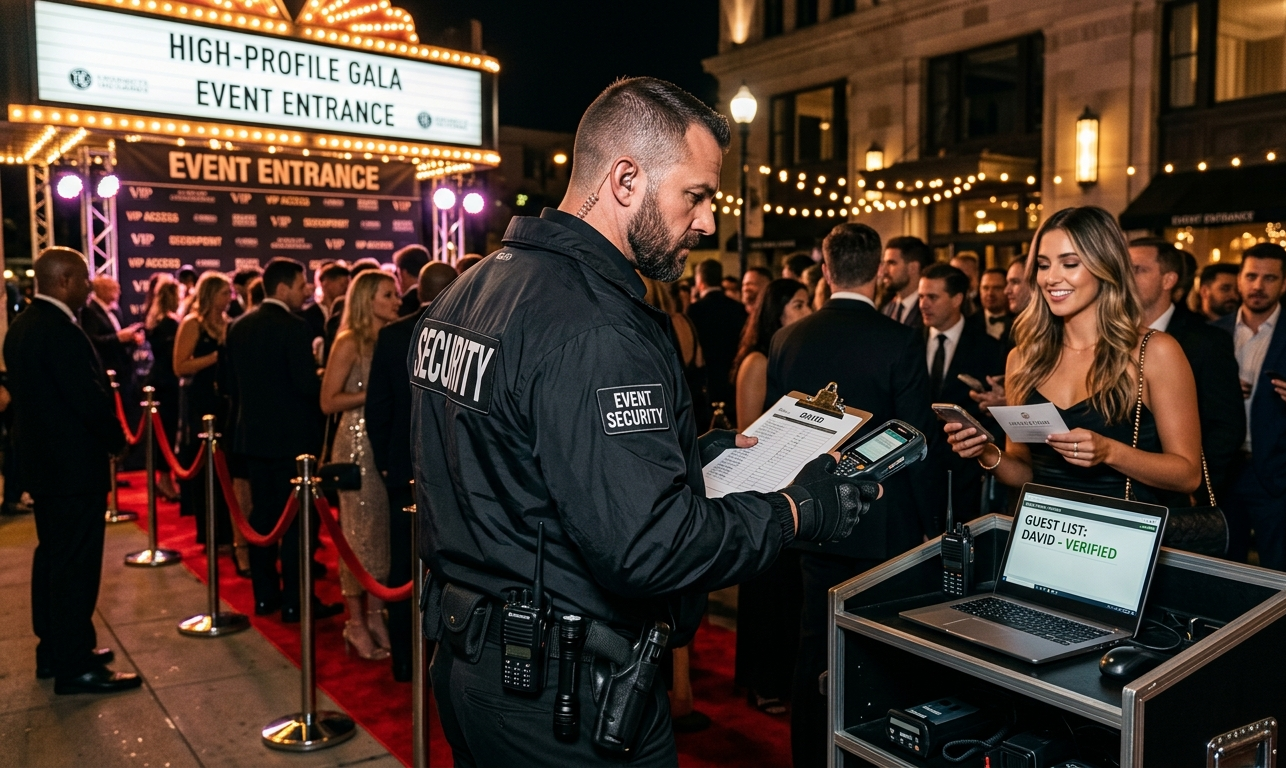
Access control remains one of the most important security functions at any event. Every entrance must be staffed to verify tickets, check credentials, and screen for prohibited items. The number of security guards required increases with the number of entry gates and expected arrival flow. Metal detectors, bag inspections, and ticket scanning require trained personnel. Large events with multiple gates demand dedicated teams for smooth and secure entry. Insufficient staffing at entry points causes long queues, frustration, and potential crowd surges. VIP entrances must be separated from general admission areas and monitored closely. Staff assigned to these zones must be experienced in identity verification and conflict management. Exit gates also require supervision to prevent bottlenecks during dispersal. Effective access control planning ensures that guard deployment matches entry volume and risk level, creating a safe and organized environment throughout the event.
Duration of the Event and Shift Planning
Event duration directly impacts staffing needs. A short three-hour conference requires fewer personnel shifts compared to a multi-day festival. Long events demand structured rotation schedules to prevent fatigue and maintain alertness. Security guards working extended hours may experience reduced response efficiency. Therefore, planners must allocate backup teams for shift replacement. Night events require additional lighting supervision and increased patrol frequency due to reduced visibility. Multi-day events require continuous monitoring of equipment, stages, and restricted areas even when the public is absent. Overnight security teams ensure asset protection and prevent vandalism. Proper shift planning guarantees consistent performance throughout the event timeline. Adequate staffing ensures that security coverage remains strong from setup to dismantling phases, maintaining operational discipline at every stage.
High-Risk Factors That Increase Guard Requirements
Certain risk indicators automatically increase the number of security guards required. Events featuring controversial speakers, political debates, or high-profile personalities require advanced protective measures. Large cash handling points, such as ticket counters or merchandise stalls, also raise security demand. Alcohol consumption can lead to disputes or disorderly behavior, increasing the need for trained crowd control staff. Previous incidents at similar events must also influence staffing decisions. Weather conditions may introduce additional risks in outdoor events, such as crowd panic during storms. Emergency evacuation planning requires sufficient personnel to guide attendees safely. Security managers must evaluate all high-risk indicators before finalizing guard deployment numbers. Increasing staff presence in sensitive areas enhances deterrence, rapid response, and overall event safety.
Coordination with Local Authorities
Collaboration with local law enforcement and emergency services influences staffing decisions. In some regions, regulations specify minimum guard requirements for public events. Police presence may supplement private security teams, but it does not eliminate the need for professional guards. Security teams must coordinate communication channels with emergency responders. Large-scale events require a central command post for monitoring and dispatch. Clear division of responsibilities prevents operational confusion during incidents. While police handle criminal matters, private guards manage crowd control, access monitoring, and internal order. Effective coordination ensures compliance with local regulations and strengthens overall safety management. Security staffing should complement official emergency services rather than rely solely on them.
Budget Considerations Without Compromising Safety
Event budgets influence security staffing levels, but cost reduction must never compromise safety standards. Cutting security personnel to save expenses exposes organizers to liability risks and reputational damage. Professional security planning aims to optimize guard placement rather than simply increase numbers. Strategic deployment in high-risk zones may reduce unnecessary staffing in low-risk areas. Insurance requirements may also dictate minimum security coverage for certain events. Failure to meet these conditions can void coverage in case of incidents. Investing in adequate security staffing protects attendees, assets, and brand reputation. A balanced approach ensures financial efficiency while maintaining a strong security framework.
Conclusion:
Determining how many security guards are needed for an event requires careful planning, structured assessment, and professional expertise. Crowd size, venue layout, event type, duration, and risk level all contribute to staffing calculations. A well-designed security plan ensures that every entrance, zone, and operational phase remains protected. Understaffing creates safety vulnerabilities, while strategic deployment builds confidence among attendees and stakeholders. Event security is not an area for assumptions or shortcuts. Proper guard allocation strengthens crowd management, emergency response capability, and asset protection. When event organizers prioritize professional security planning, they create a safe environment that supports smooth operations and positive guest experiences.