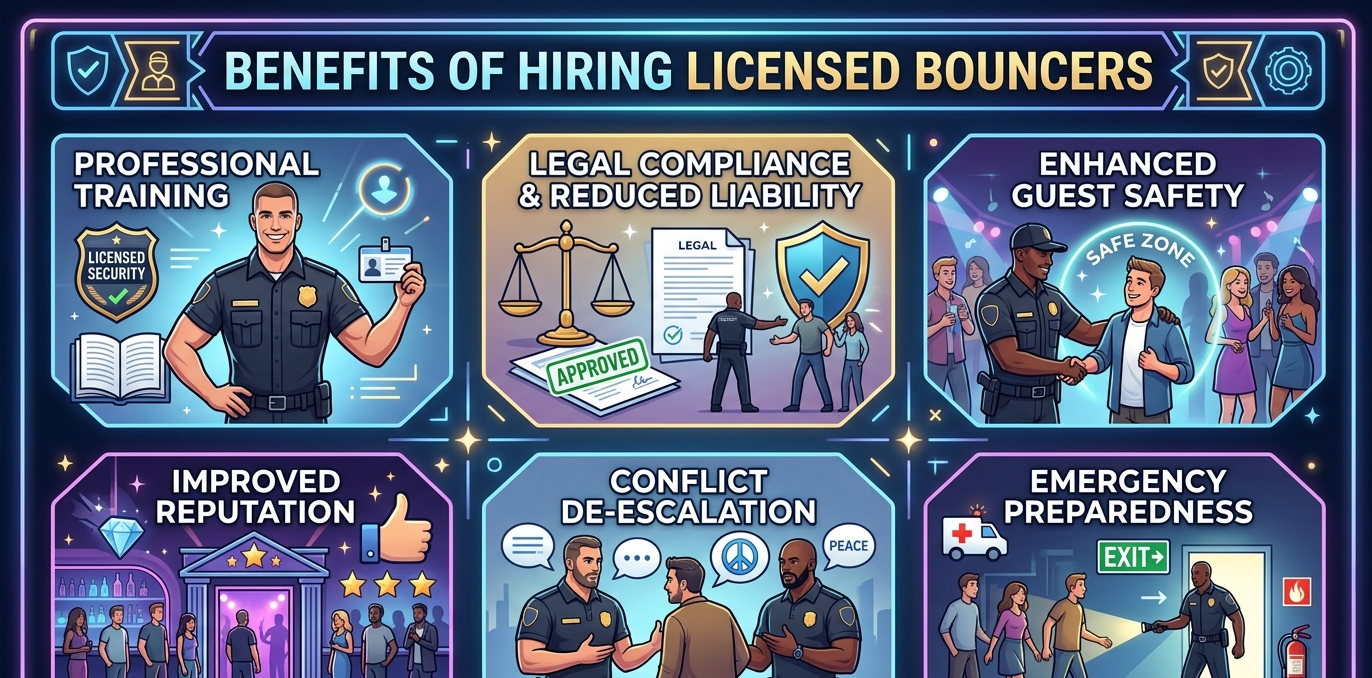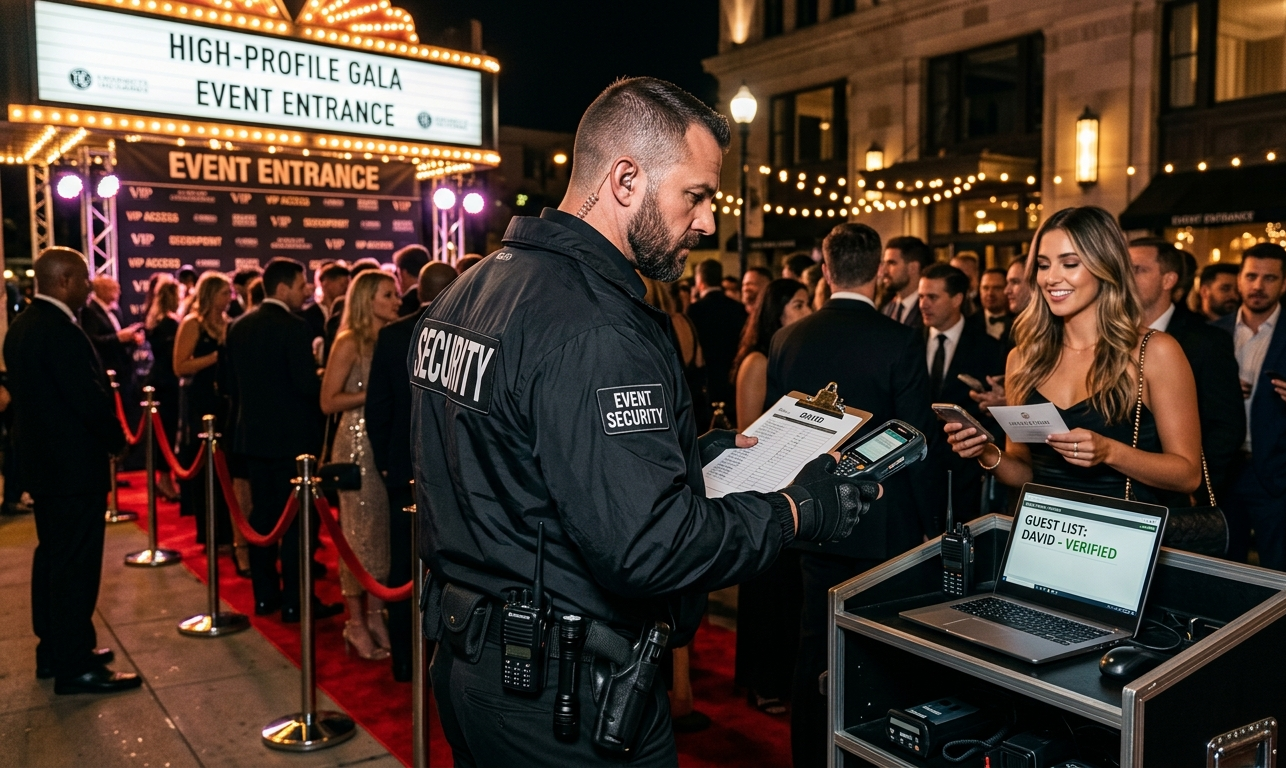

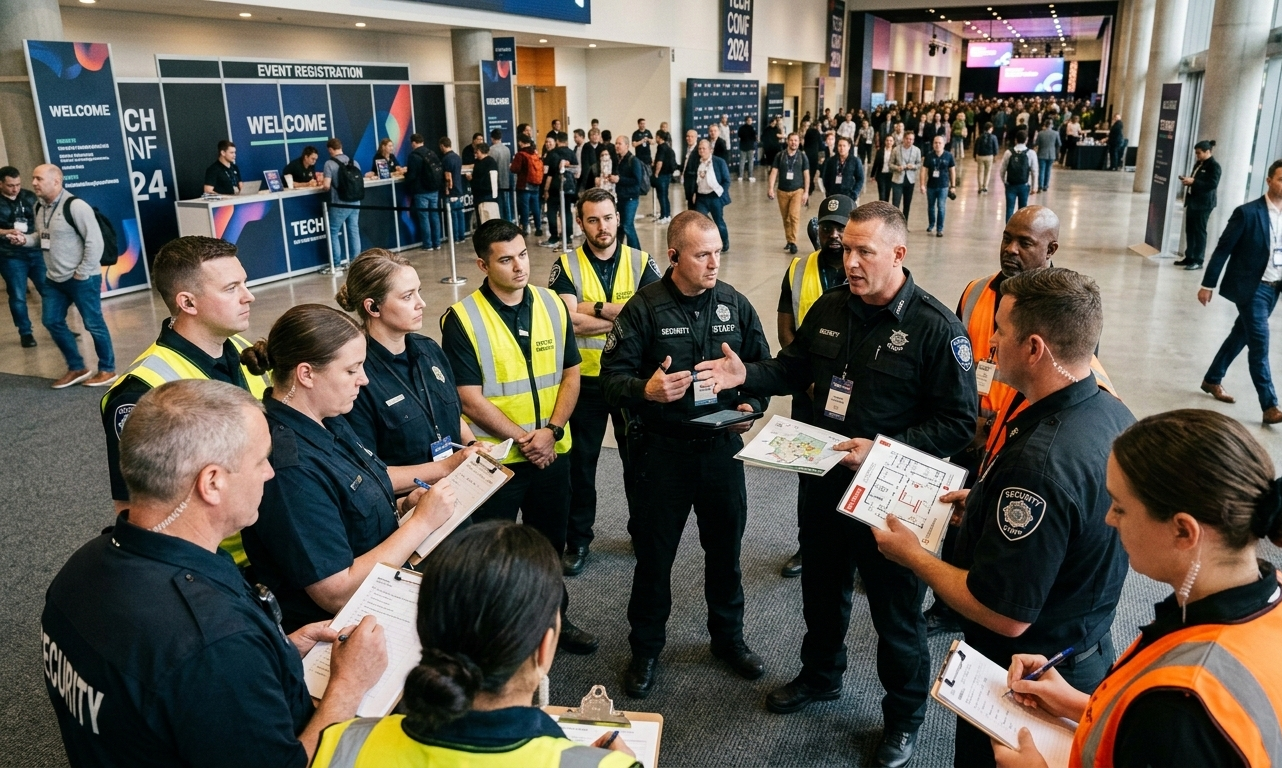
Every successful event begins long before guests arrive at the venue. Behind smooth coordination, controlled access points, and calm crowd movement lies careful planning supported by a detailed security briefing. The importance of security briefing before an event cannot be ignored in today’s environment where risks range from crowd mismanagement to emergency situations. Professional security services play a vital role in this preparation, ensuring that trained personnel understand venue layouts, entry protocols, risk factors, and emergency procedures before operations begin. A professional security briefing prepares the entire team with clear instructions, defined responsibilities, and practical response strategies. It aligns security personnel, event organizers, and support staff under one structured plan. When properly conducted, it reduces uncertainty, prevents confusion, and strengthens overall preparedness, ensuring the event proceeds safely, efficiently, and under complete operational control.
Importance of Security Briefing Before an Event
A well-planned event depends on more than logistics and coordination. Security briefing plays a central role in maintaining order and preparedness. Here are the key reasons why security briefing before an event is critically important.
Establishing Clear Roles and Responsibilities
A structured security briefing clearly defines the duties of every security professional assigned to an event. When responsibilities remain unclear, confusion can arise at critical moments, leading to delayed responses and operational gaps. During a pre-event briefing, supervisors allocate positions such as entry point monitoring, backstage protection, crowd observation, emergency response coordination, and VIP escort management. Each guard understands reporting lines, communication protocols, and escalation procedures. This clarity eliminates overlap and prevents essential tasks from being overlooked.
Clear role assignment also strengthens accountability. When each member knows their specific task, performance becomes measurable and efficient. The briefing provides an opportunity to address possible misunderstandings and align everyone with event-specific requirements. Security teams often include personnel from different units or agencies; therefore, unified instructions are necessary. Through detailed role clarification, the event security structure becomes organized and disciplined, which directly contributes to safer event execution.
Identifying Potential Risks and Threats
A comprehensive security briefing begins with risk assessment. Before any event, organizers evaluate potential threats such as overcrowding, unauthorized access, theft, medical emergencies, protests, or technical failures. Sharing this assessment with the entire security team ensures preparedness. Guards cannot respond effectively to risks they do not anticipate. During the briefing, supervisors explain venue layout vulnerabilities, high-risk zones, emergency exits, and sensitive areas requiring constant monitoring. They discuss crowd demographics, expected attendance numbers, and any previous incidents linked to similar events. This awareness equips security staff with situational intelligence.
Identifying threats in advance allows teams to implement preventive measures rather than reactive responses. Proactive preparation significantly reduces the chances of escalation. When guards understand possible scenarios and warning signs, they remain alert and confident. Risk identification within a security briefing transforms general protection into strategic event management.
Improving Communication and Coordination
Effective communication is the foundation of event security. A pre-event briefing standardizes communication methods, including radio channels, emergency codes, and reporting formats. Without agreed communication procedures, messages may become unclear or delayed during critical situations. The briefing establishes who communicates with whom and through which medium. It clarifies command hierarchy and identifies the central control point. This structure prevents conflicting instructions and ensures unified responses. In high-pressure environments, rapid and accurate information sharing determines how efficiently incidents are handled.
Coordination extends beyond security personnel to include event managers, medical teams, technical staff, and local authorities if required. A security briefing ensures that all stakeholders understand the flow of information. Strong communication reduces panic, improves teamwork, and supports quick decision-making. Ultimately, coordinated action enhances safety and maintains the professional image of the event.
Enhancing Crowd Management Strategies
Large gatherings require disciplined crowd management. During the security briefing, teams review entry and exit procedures, ticket verification systems, queue control methods, and emergency evacuation plans. Guards receive instructions on identifying unusual crowd behavior, preventing bottlenecks, and maintaining safe movement pathways. Proper crowd management reduces the likelihood of stampedes, conflicts, or structural strain on the venue. The briefing may include simulations or walkthroughs to help personnel visualize crowd flow. This preparation builds confidence and ensures readiness for peak attendance periods.
Security staff also learn de-escalation techniques to manage disputes calmly and professionally. A structured crowd management strategy protects attendees while maintaining event order. Through clear instructions provided in a security briefing, crowd control becomes systematic rather than reactive, significantly minimizing potential hazards.
Strengthening Emergency Response Preparedness
Emergencies can arise unexpectedly, including medical incidents, fire hazards, power outages, or security breaches. A security briefing prepares teams with defined response protocols. Guards learn evacuation routes, assembly points, and coordination procedures with emergency services. When emergency procedures are communicated clearly, panic decreases and response time improves. Personnel understand their immediate actions, whom to inform, and how to guide attendees safely. This clarity can prevent minor incidents from escalating into major crises.
The briefing also ensures first-aid knowledge among designated staff members and confirms the availability of emergency equipment. Preparedness strengthens public confidence and demonstrates professional responsibility. A well-conducted security briefing transforms unpredictable risks into manageable situations, protecting lives and preserving the event’s reputation.
Protecting VIPs and Special Guests
Many events host high-profile individuals, corporate executives, or public figures who require additional protection. A security briefing outlines specific protocols for VIP arrival, seating arrangements, backstage access, and departure routes. Confidentiality and discretion remain key priorities. Security personnel assigned to VIP protection receive detailed instructions about threat assessment, secure transport coordination, and restricted area control. They are briefed on contingency plans in case of disruption or unauthorized approach.
By preparing in advance, the team minimizes exposure to risk and ensures smooth movement for distinguished guests. Coordinated planning prevents public crowd interference and maintains privacy standards. The briefing ensures that VIP protection integrates seamlessly with general event security operations, avoiding unnecessary attention while maintaining strict safety measures.
Ensuring Compliance with Legal and Safety Regulations
Events must comply with local safety regulations, fire codes, and capacity limits. A security briefing reinforces adherence to these requirements. Security teams are informed about legal responsibilities, prohibited items, and reporting obligations.
Understanding regulatory guidelines prevents violations that could result in penalties or event shutdown. Guards are trained to conduct respectful security checks without infringing on attendee rights.
The briefing also addresses data protection, incident documentation, and evidence preservation if required. Legal awareness strengthens professional conduct and reduces liability risks. Compliance is not simply administrative; it directly influences public safety and organizational credibility. A detailed security briefing ensures that the event aligns with regulatory standards and industry best practices.
Boosting Team Confidence and Professionalism
Prepared teams perform with greater confidence. A security briefing eliminates uncertainty and fosters a sense of readiness. When guards understand event objectives, risk factors, and operational procedures, they approach their duties with clarity. Professional conduct reflects preparation. Attendees notice disciplined security teams who communicate effectively and respond calmly. This visible professionalism enhances the overall event atmosphere.
Team morale also improves when leadership provides clear direction and acknowledges responsibilities. Open discussion during the briefing allows questions and clarifications, ensuring everyone feels supported. Confident personnel reduce operational stress and contribute to smooth event execution. Preparation through structured briefing reinforces high standards of service and safety.
Preventing Financial and Reputational Loss
Security failures can result in financial losses, legal claims, or long-term reputational damage. A proactive security briefing significantly reduces such risks. By identifying potential issues and preparing structured responses, organizations minimize liability exposure. Incidents such as theft, property damage, or crowd injury can impact future event approvals and public trust. Proper preparation demonstrates due diligence and responsible management. Insurance requirements often mandate documented security planning, making briefings part of risk mitigation strategies.
Investing time in pre-event briefing is far more cost-effective than addressing post-incident consequences. The value lies not only in preventing harm but also in preserving brand image. A well-executed security strategy safeguards both people and organizational credibility.
Conclusion:
The importance of security briefing before an event extends far beyond routine instruction. It forms the operational backbone of event safety, ensuring clear responsibilities, strong communication, proactive risk management, and disciplined emergency response. A professionally conducted briefing aligns all personnel under a unified security strategy and transforms planning into action. From crowd control to VIP protection, every aspect of event safety depends on informed and prepared teams. Organizations that prioritize structured security briefings demonstrate commitment to safety, compliance, and excellence. Ultimately, careful preparation safeguards attendees, protects reputations, and ensures that events conclude successfully without disruption.