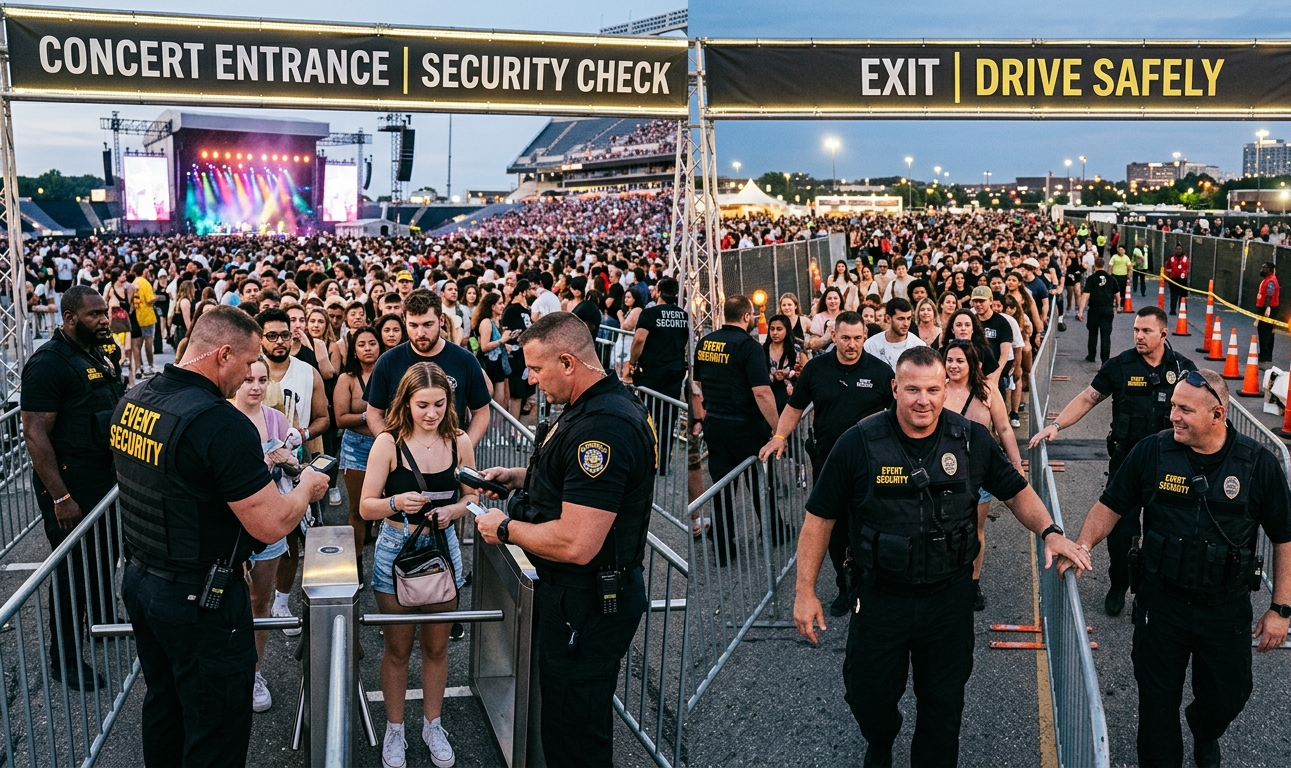

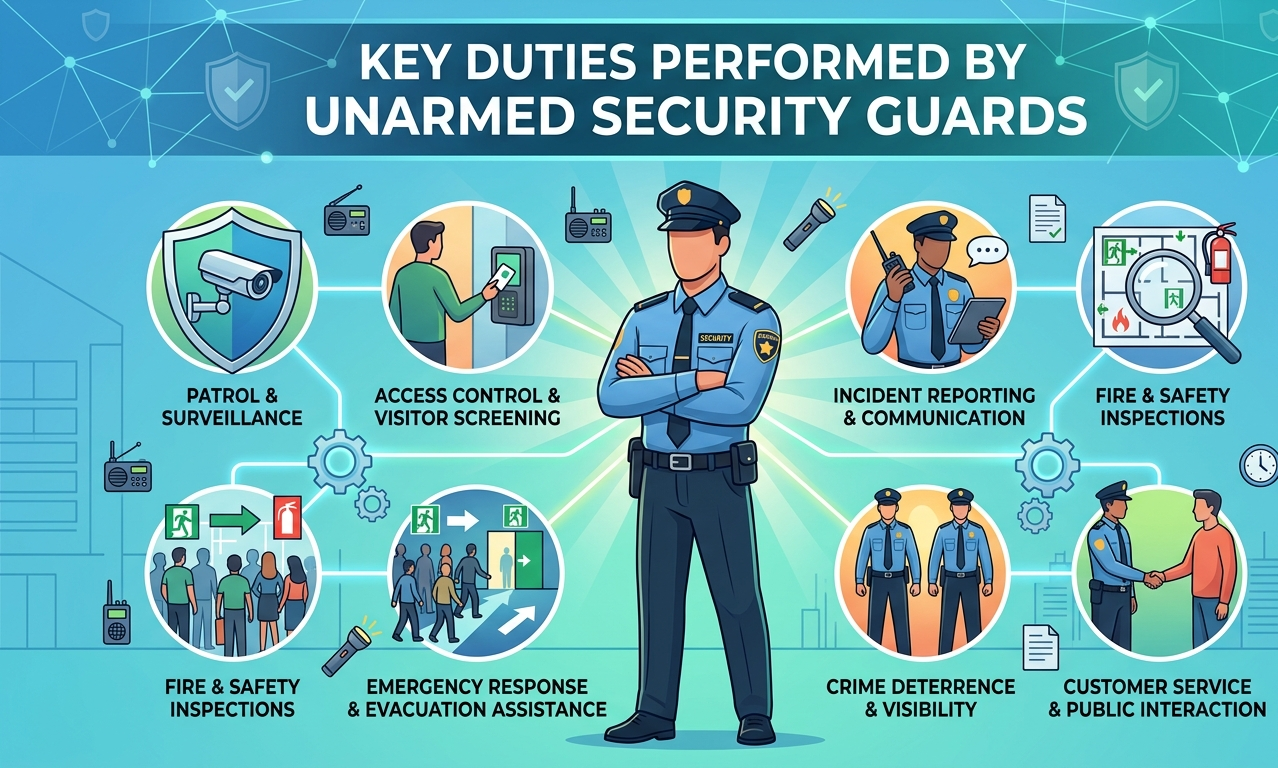
Security plays a central role in maintaining order, safety, and peace in workplaces, residential communities, and public areas. Many organizations depend on trained professionals who can observe situations carefully and respond in a calm and responsible manner. Unarmed security guards perform this responsibility without carrying weapons, yet their presence alone often discourages suspicious behavior and supports a safer environment. Their work requires attention, communication skills, and a strong understanding of safety procedures. Businesses, schools, hospitals, and shopping centers depend on these guards to manage daily security tasks and assist people when needed. A clear understanding of the duties performed through unarmed security guards helps organizations appreciate how these professionals contribute to protection, risk prevention, and smooth daily operations.
Key Duties Performed by Unarmed Security Guards
Every organization needs dependable security support to maintain a safe and organized environment. Unarmed security guards perform many practical duties that help protect people, property, and daily operations. Here are key responsibilities that highlight how these trained professionals manage safety and maintain order within different types of facilities.
Monitoring and Surveillance Responsibilities
Observation stands at the heart of professional security guard services, particularly within the role performed through unarmed security guards. Careful monitoring of surroundings allows them to identify unusual behavior, safety risks, or rule violations before a situation becomes serious. Guards watch entrances, hallways, parking areas, and other sensitive zones throughout their shifts. Many locations also use CCTV systems, and guards review camera footage while also performing physical patrols as part of daily security guard services. Constant awareness allows them to react quickly when something unexpected occurs. Their role includes paying attention to people entering and leaving the premises and noting activity that appears suspicious or out of place. This level of watchfulness supports early detection of potential problems. Businesses benefit greatly from this attentive supervision since it discourages theft, vandalism, and disruptive behavior while also reassuring visitors and staff that trained security personnel remain present to maintain order and safety.
Access Control and Visitor Management
Controlling entry points forms a major duty within the responsibilities of unarmed security guards. Offices, factories, educational institutions, and residential complexes require organized visitor management in order to maintain security standards. Guards verify identification, record visitor details, and guide guests toward the correct departments or individuals. This procedure helps maintain a clear record of people entering the premises. Security guards also manage employee access through badges or entry passes. Unauthorized individuals cannot freely enter restricted areas when access control procedures remain properly managed. This role also includes politely explaining entry policies to visitors and maintaining a respectful approach during interactions. Through this process, security guards help maintain discipline and organization within the facility. Businesses gain confidence knowing that every visitor remains accounted for, which supports safety and reduces the chance of unwanted entry or potential security incidents.
Routine Patrols and Property Inspection
Regular patrols allow unarmed security guards to maintain continuous awareness of the property they protect. These patrols often involve walking through hallways, parking areas, storage rooms, building exteriors, and other important zones. During these rounds, guards observe environmental conditions and check doors, windows, gates, and lighting systems. A damaged lock, open door, or broken light could create a security risk, so identifying these concerns early helps management address problems quickly. Guards also monitor for fire hazards, water leaks, or equipment left unattended. Their presence throughout different sections of the property discourages unwanted behavior and helps staff feel more secure. Routine patrols also provide guards with a better understanding of the location’s layout and daily activity patterns. This knowledge allows them to respond more effectively when unusual situations appear and strengthens the overall safety system within the facility.
Emergency Response and Incident Handling
Unexpected incidents require calm and organized action, and unarmed security guards receive training to manage such situations responsibly. Emergencies may include medical events, fire alarms, safety hazards, or disturbances involving visitors or staff members. Security guards respond quickly while following established safety procedures. Their first responsibility involves assessing the situation and contacting emergency services when necessary. They guide people toward safe areas, maintain order, and help prevent panic during stressful moments. Guards also document incidents through detailed reports so that management and authorities understand what occurred. Clear communication with supervisors and emergency responders supports a faster and more effective response. This ability to remain composed during difficult circumstances forms one of the most valuable qualities within security professionals. Their quick reaction often prevents small issues from developing into more serious problems and helps protect both people and property.
Customer Assistance and Public Interaction
Security guards frequently serve as the first point of contact for visitors entering a building or facility. Their professional attitude and helpful communication skills help create a welcoming environment while maintaining security awareness. Guards provide directions, answer basic questions, and guide people toward reception desks or service counters. Visitors often approach security personnel for help locating offices, meeting rooms, or parking areas. In shopping centers, hospitals, and corporate offices, this support improves the overall visitor experience. Guards must maintain patience and courtesy during every interaction while still observing the surroundings carefully. Their presence combines safety with service, which strengthens the reputation of the organization they represent. People feel more comfortable when a friendly yet attentive security professional remains nearby. This balance between assistance and vigilance allows unarmed security guards to contribute both to safety and to positive public relations.
Maintaining Order and Preventing Conflicts
Public spaces and busy workplaces occasionally experience disagreements or disruptive behavior. Unarmed security guards play a critical role in maintaining calm during such moments. Their training helps them recognize early signs of conflict and approach the situation in a respectful and controlled manner. Guards speak with individuals involved, encourage calm discussion, and attempt to reduce tension before a disagreement escalates further. Their presence alone often discourages aggressive behavior since people become aware that security supervision remains active. Guards also enforce facility rules and explain policies clearly when needed. Maintaining fairness and professionalism remains important while handling such situations. The goal always focuses on restoring order while protecting everyone involved. Effective conflict management supports a peaceful environment for employees, visitors, and residents. Organizations benefit greatly when trained security professionals maintain discipline and stability in daily operations.
Reporting and Documentation Duties
Accurate documentation forms a vital part of professional security work. Unarmed security guards prepare reports that record daily activities, unusual observations, and any incidents that occur during their shifts. These reports provide management with a clear understanding of security conditions within the property. Guards record information such as visitor entries, maintenance concerns, suspicious behavior, or safety hazards. Detailed reporting also supports investigations when an incident requires review. Written records help identify patterns and allow organizations to strengthen security policies when necessary. Guards must remain careful and factual while writing these reports so that the information remains reliable and useful. Clear documentation creates accountability and helps maintain transparency in security operations. Businesses rely on these reports to understand risks, improve procedures, and maintain consistent protection across the entire facility.
Conclusion:
Unarmed security guards perform a wide range of responsibilities that contribute to safety, organization, and peace within many environments. Their work includes monitoring activities, controlling access points, conducting patrols, responding to emergencies, assisting visitors, managing conflicts, and maintaining accurate records. Each duty supports the larger goal of protecting people and property while maintaining a calm and secure atmosphere. Their presence also builds confidence among employees, customers, and residents who feel reassured when trained professionals remain nearby. Organizations across different industries benefit greatly from these services since prevention and awareness often stop problems before they grow. A well trained unarmed security team strengthens daily operations and supports a safer environment for everyone who enters the premises.