
Personal security for business owners is no longer a luxury. It has become a real need for people who manage companies, handle finances, and make important decisions every day. Business owners face different risks such as theft, fraud, kidnapping threats, workplace violence, and online harassment. Their daily routines, public visibility, and financial status can make them easy targets. A strong personal security plan protects not only the business owner but also their family, employees, and company reputation. This article explains how personal security works, why it matters, and what steps business owners can take to stay safe in every situation.
Why Personal Security for Business Owners Is Important?
Running a business brings responsibility, public exposure, and financial pressure. Business owners often deal with large payments, contracts, and confidential data. These factors increase the chances of becoming a target for criminals. Personal security for business owners protects them from physical harm, threats, blackmail, and intimidation. Many owners attend meetings, travel frequently, and interact with unknown clients. Without proper security arrangements, these daily activities can create risks. A security plan reduces vulnerability and creates a controlled environment. When a business owner feels safe, they can focus better on growth and leadership. Safety also improves confidence among staff and clients. Investing in protection is not about fear. It is about responsibility. A secure leader creates a stable business. Proper security measures prevent problems before they grow into serious incidents that damage reputation and finances.
Risk Assessment and Threat Analysis
The first step in personal security for business owners is risk assessment. Every business owner faces different types of risks depending on their industry, public profile, and location. A professional threat analysis identifies weak points in daily routines, travel patterns, office locations, and residential areas. Security experts examine past incidents, competitor conflicts, financial exposure, and social media activity. This analysis helps in creating a tailored protection strategy. Without understanding the level of threat, security planning remains incomplete. Risk assessment also includes evaluating employees and internal processes. Sometimes internal conflicts or data leaks create security challenges. A detailed review ensures that hidden threats are addressed. When business owners understand their risk level, they can make informed decisions about guards, surveillance, travel security, and digital protection. Proper analysis forms the foundation of effective personal security planning.
Hiring Professional Bodyguards
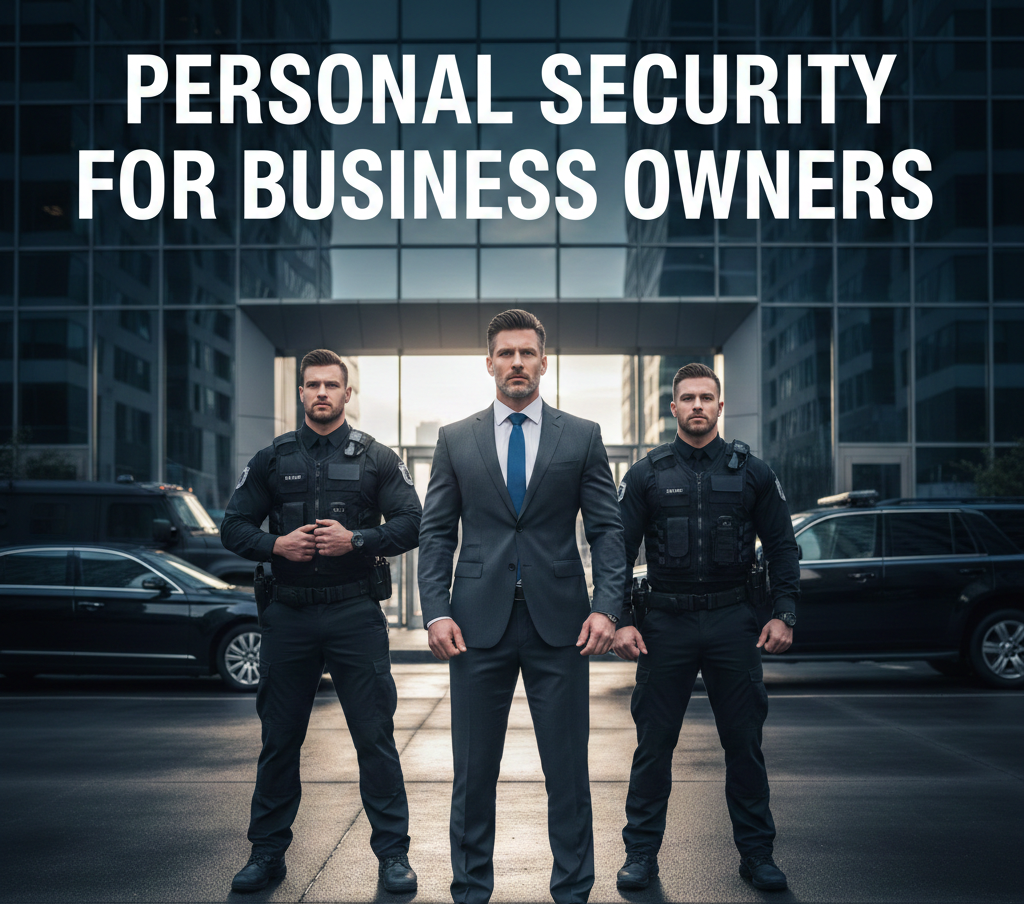
One of the strongest solutions for personal security for business owners is hiring trained protection officers. Professional bodyguards are skilled in surveillance detection, crowd management, and emergency response. They remain alert to suspicious behavior and prevent threats before they escalate. Close protection officers plan secure routes, manage access control, and maintain safe distances from unknown individuals. Their presence alone often discourages criminal activity. Many business owners choose discreet protection services to avoid unnecessary attention. Trained guards work professionally without disturbing normal business operations. When selecting security personnel, it is important to choose a licensed and experienced security company. Guards must have background checks, physical training, and crisis management skills. Properly trained bodyguards provide confidence, safety, and peace of mind for business leaders.
Secure Transportation and Travel Safety
Travel is a major risk factor for business owners. Meetings in different cities, factory visits, and public events increase exposure. Personal security for business owners must include secure transportation planning. Professional drivers trained in defensive driving techniques reduce road risks. Vehicles should be regularly inspected and, if necessary, equipped with tracking systems. Route planning prevents predictable travel patterns that criminals can monitor. Airport transfers and hotel stays also require attention. Coordinated security arrangements ensure safe entry and exit from high-risk locations. Business owners who travel internationally may require advance security surveys. These surveys analyze political stability, crime rates, and local threats. Safe transportation planning protects time, privacy, and physical safety. It reduces the risk of robbery, carjacking, or surveillance during daily travel.
Home Security Measures for Business Owners
Personal security does not end at the office. Many threats target business owners at home. Residential security planning is a critical part of overall protection. Installing CCTV cameras, alarm systems, and secure gates creates a strong first layer of defense. Security lighting reduces dark areas around the property. Access control systems restrict unauthorized entry. Hiring trained residential guards adds another layer of protection. They monitor visitors, deliveries, and suspicious activity. Family members must also be aware of basic safety rules. Sharing travel plans publicly or accepting unknown visitors increases risk. A secure home environment protects loved ones and reduces stress. Business owners perform better when their families feel safe and protected.
Office and Workplace Security Planning
Workplace security plays a major role in personal security for business owners. Office environments often store confidential information, expensive equipment, and financial records. Access control systems, visitor registration procedures, and ID verification reduce unauthorized entry. Security guards monitor entrances and sensitive areas. CCTV cameras provide real-time monitoring and evidence in case of incidents. Employee background checks reduce internal threats. Clear reporting systems encourage staff to report suspicious behavior. Emergency response plans must be in place. Fire drills, evacuation procedures, and lockdown systems prepare staff for unexpected situations. A secure workplace protects employees and leadership. It also strengthens trust among clients and partners who visit the premises.
Cybersecurity and Digital Protection
Modern threats are not limited to physical risks. Personal security for business owners includes digital safety. Cybercriminals target financial data, emails, and confidential documents. Strong passwords, multi-factor authentication, and encrypted communication protect sensitive information. Business owners must avoid sharing personal details on social media that reveal travel plans or private routines. Professional IT security services monitor networks and detect suspicious activity. Regular system updates reduce vulnerabilities. Data breaches can damage reputation and cause financial loss. Digital security measures prevent hacking, identity theft, and fraud attempts. Cybersecurity is a critical layer of protection that supports physical security strategies. Together, they create a complete safety system.
Crisis Management and Emergency Response
Even with strong security measures, emergencies can happen. Personal security for business owners requires a clear crisis response plan. This plan includes emergency contacts, evacuation routes, and communication strategies. Security teams must be trained to handle medical emergencies, threats, or violent incidents. Regular drills prepare staff and family members for quick action. Panic often increases risk during emergencies. Proper training builds confidence and reduces confusion. Media handling is also important. In case of public incidents, controlled communication protects reputation. Crisis management planning ensures that business owners remain calm and protected during unexpected events. Preparedness reduces damage and speeds up recovery.
Maintaining Privacy and Low Public Exposure
Public visibility increases security risks. Business owners who frequently appear at public events or share personal information online attract unwanted attention. Maintaining privacy is a simple but powerful security strategy. Limiting personal data on websites and social media reduces exposure. Private contact details should not be publicly accessible. Security teams often advise changing daily routines to avoid predictability. Predictable schedules make surveillance easier for criminals. Discreet behavior, secure communication, and limited public disclosure protect personal life and family safety. Balancing professional presence with personal privacy creates a safer environment for business leaders.
Choosing the Right Security Company
Selecting a professional security company is a critical decision. Experience, licensing, and training standards must be carefully reviewed. A reliable security provider conducts detailed risk assessments before recommending services. They offer trained guards, modern equipment, and 24 hour monitoring support. Client confidentiality should be a priority. Professional companies protect sensitive information and respect privacy. Checking client reviews and past performance helps in making the right choice. The right security partner becomes an extension of the business. Their responsibility is to protect life, reputation, and assets without interrupting daily operations.
Conclusion:
Personal security for business owners is about preparation, awareness, and professional support. Business leaders carry financial responsibility, public influence, and decision-making power. These factors increase exposure to different types of threats. A structured security plan covers home, office, travel, and digital protection. Risk assessment, trained bodyguards, secure transportation, and cybersecurity work together to create complete safety. Investing in security protects reputation, family, and long-term business stability. When safety measures are properly implemented, business owners can focus confidently on growth and leadership without constant concern about personal risk.