
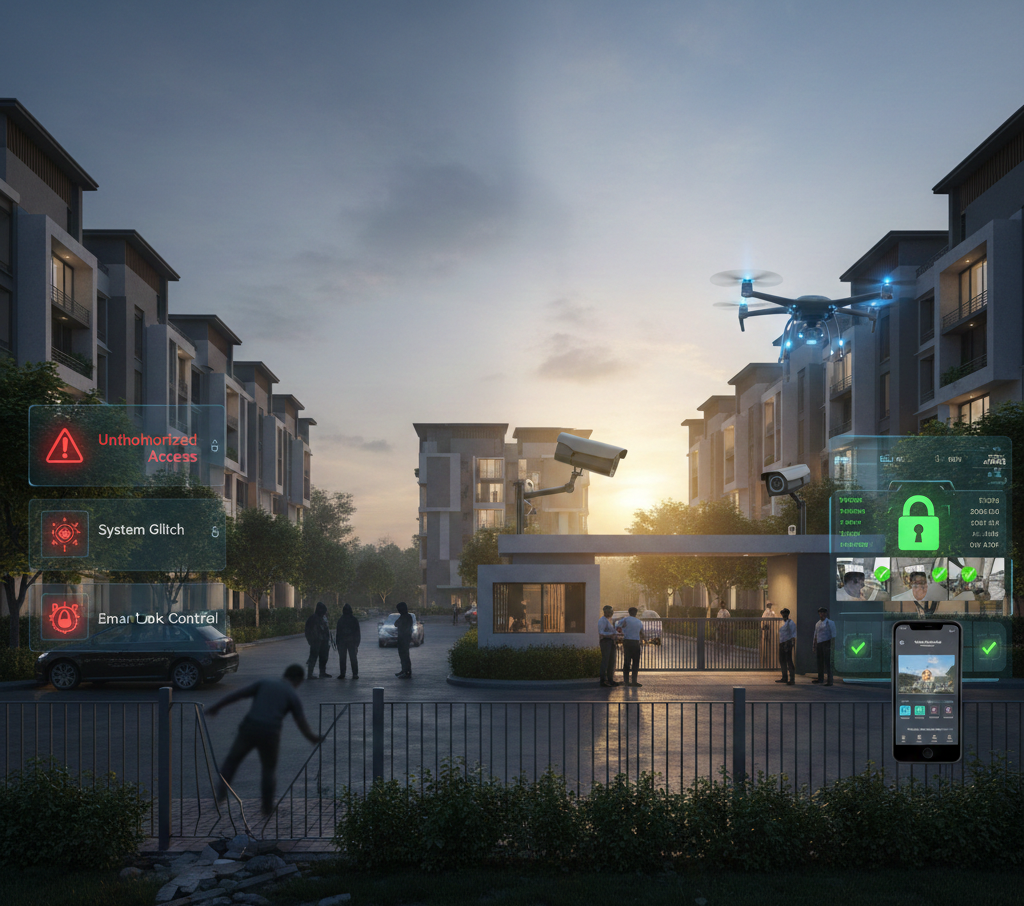
Residential society security challenges and solutions have become a serious topic for housing communities. Families expect a safe place where children can play freely and residents can live without fear. Sadly, many societies still face daily security problems due to weak systems, poor planning, and lack of awareness. Crimes like theft, unauthorized entry, and emergencies often happen because proper steps are missing. A secure residential society is not only about guards at the gate. It includes planning, training, technology, and cooperation among residents. This article explains common security challenges faced in residential societies and practical solutions that help create a safer living environment for everyone.
Key Aspects of Residential Society Security
Residential society security means protecting people, homes, and shared spaces from risks. It covers entry points, parking areas, parks, elevators, corridors, and even rooftops. Many people think security only means hiring guards, but it is much more than that. Real security includes rules, systems, and daily checks that work together. Residential societies have visitors, delivery staff, domestic workers, and maintenance teams coming in every day.
Without proper control, it becomes difficult to track who enters and leaves. Over time, this creates gaps that criminals can use. A well-planned security setup helps prevent problems before they happen. It also creates a sense of safety that improves daily life. When residents trust their security system, they feel relaxed and confident. Understanding security needs is the first step toward solving residential society security challenges in an effective way.
Common Security Challenges in Residential Societies
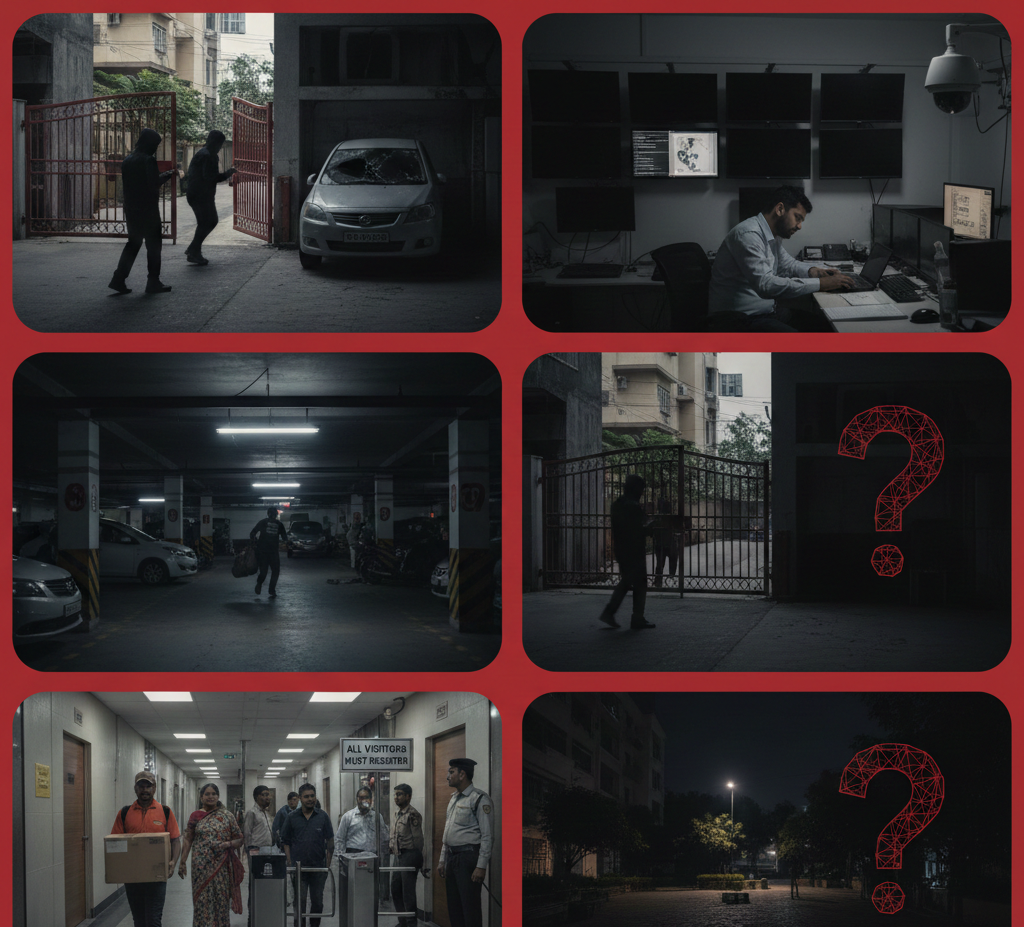
Many residential societies face similar security challenges. Unauthorized entry is one of the biggest problems. Open gates, careless guards, or lack of visitor records make it easy for unknown people to enter. Theft and burglary are also common, especially in parking areas and empty homes. Poor lighting creates dark corners where criminals can hide. Another challenge is untrained security staff who do not know how to handle emergencies or suspicious situations. Many societies also lack proper surveillance systems, or cameras do not work correctly. Emergency response is often slow because there is no clear plan. Mismanagement of delivery staff and domestic helpers adds another layer of risk. These challenges grow when residents ignore rules or do not cooperate. Without proper attention, small issues turn into serious threats. Identifying these problems clearly helps societies move toward the right security solutions.
Impact of Poor Security on Residents
Poor security affects residents in many ways. The biggest impact is fear and stress. People feel unsafe walking at night or leaving their homes empty. Families worry about children playing outside or elderly members staying alone. Financial loss due to theft or damage creates frustration and tension. Over time, trust between residents and management weakens.
Property value may also drop when a society gains a bad reputation for safety issues. Daily life becomes uncomfortable when people constantly stay alert instead of relaxed. Poor security can also lead to conflicts among residents when blame starts circulating. A safe environment helps build strong community bonds. When security fails, the entire lifestyle of residents suffers. Understanding this impact shows why residential society security challenges and solutions should never be ignored or delayed.
Effective Security Solutions for Residential Societies
Strong security solutions focus on prevention and quick response. Controlled entry and exit points help track movement. Guards should check visitors properly and keep records. Professional training helps guards act calmly and correctly during emergencies. Installing CCTV cameras in common areas helps monitor activity and discourages crime. Proper lighting removes dark spots and improves visibility.
Visitor management systems help control delivery staff and guests. Clear emergency plans guide guards and residents during incidents. Regular patrols keep all areas under watch. Rules must be clear and followed by everyone. When these solutions work together, security becomes reliable. Residential societies that invest in these steps experience fewer incidents and better peace of mind. Good planning turns security from a problem into a strong support system for residents.
Role of Technology in Residential Security
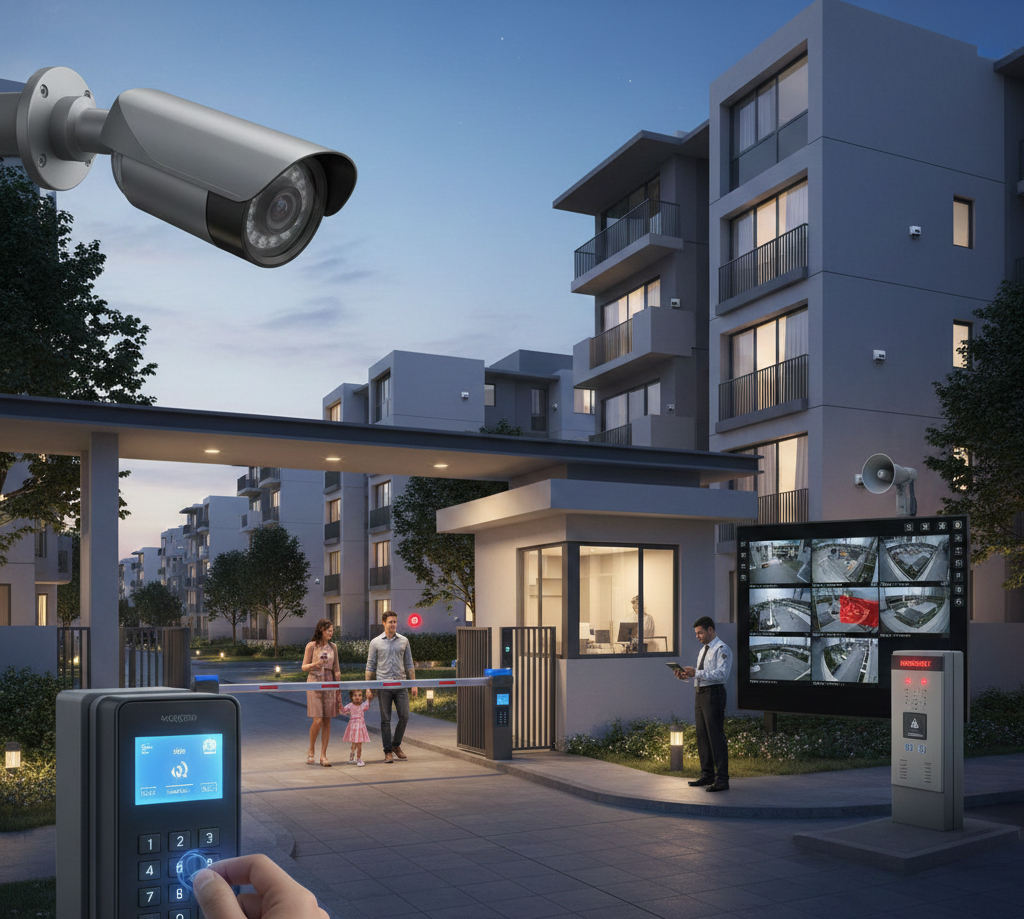
Technology plays an important role in solving residential society security challenges. Modern cameras provide clear footage and work day and night. Access cards or codes reduce the risk of unauthorized entry. Mobile alerts inform management about suspicious activity in real time. Digital visitor logs keep accurate records and reduce manual errors. Intercom systems help residents verify visitors before allowing entry.
Alarm systems warn guards during emergencies. Technology does not replace human effort but supports it. When guards and systems work together, security becomes stronger. Societies using smart tools manage risks better and respond faster. Over time, technology also helps reduce costs caused by theft or damage. Using the right tools improves safety and builds trust among residents.
Importance of Regular Security Audits
Security needs in residential societies are not fixed and change over time. New buildings, additional residents, and more visitors create new challenges and risks that may not have existed before. Regular security audits help identify weak areas in the system before they turn into serious problems. During an audit, management reviews guard performance, camera coverage, lighting in common areas, and entry or exit systems. It also helps check whether emergency plans are up to date and whether staff can handle different situations effectively.
By identifying gaps early, societies can fix issues before incidents happen. Security audits also help plan for future risks, ensuring that safety measures grow alongside the community. Without audits, outdated systems remain in place, which can fail when most needed. Conducting audits regularly shows residents that management takes their safety seriously. It also encourages cooperation, as residents trust that the society is proactive in protecting them. In short, security audits are not just inspections, they are a vital step toward creating a long-term, reliable safety system that keeps the community protected and confident.
Resident Awareness and Community Involvement
A strong security system works best when residents actively participate. Awareness among residents helps them follow society rules, report unusual or suspicious activity, and support security staff. Simple habits, like always wearing access cards, checking in visitors with guards, or informing management about deliveries, make a significant difference. Attending meetings, reading guidelines, and understanding emergency procedures ensure everyone knows what to do in critical situations.
Cooperation between residents and security personnel allows guards to perform their duties more effectively and respond quickly to incidents. When residents are involved, security becomes a shared responsibility instead of only depending on staff or technology. Communities where people communicate, watch out for each other, and follow rules create a safer environment naturally. Awareness also builds trust among residents and between residents and management. Residents become active partners in protecting the society rather than silent observers. This combined effort reduces risks, prevents crimes, and ensures that everyone feels secure in their homes and shared spaces. Active resident involvement is, therefore, a crucial part of any successful residential security system.
Conclusion:
Residential society security challenges and solutions require planning, effort, and teamwork. Weak systems, untrained staff, and lack of awareness create risks that affect daily life. Strong solutions focus on access control, trained guards, technology, and regular reviews. When residents and management work together, safety improves naturally. Security is not a one-time setup but an ongoing process that adapts to change. A well-protected society offers peace, comfort, and trust. Taking the right steps today helps create a safer tomorrow for all residents.
FAQs:
What are 5 common problems and solutions for security?
Common security problems include unauthorized entry, theft, untrained staff, poor surveillance, and emergency response delays. Solutions involve installing controlled entry points, CCTV cameras, proper lighting, hiring trained security personnel, and implementing clear emergency plans. Regular audits and resident awareness also help prevent incidents. Combining these steps ensures a safer environment and reduces risks in residential or commercial areas.
What is residential security?
Residential security refers to measures taken to protect homes, residents, and common areas in housing societies or apartments. It includes guards, access controls, surveillance systems, visitor management, and emergency preparedness. The goal is to prevent unauthorized access, theft, property damage, and safety risks. Effective residential security combines technology, trained personnel, and community cooperation to create a safe and comfortable living environment for families and residents.
What are the five fundamentals of security?
The five fundamentals of security are deterrence, detection, delay, response, and recovery. Deterrence prevents crime by showing security presence. Detection identifies unauthorized activities using alarms or cameras. Delay slows down intruders, giving time to respond. Response involves immediate action by guards or authorities. Recovery ensures restoring normalcy after an incident. These fundamentals form the foundation of an effective security strategy for any organization or residential society.
How can residential societies handle parking problems in a fair and organized way?
Societies can assign designated parking spots for residents and guests, use a numbering system, and maintain clear rules. Implementing visitor parking areas and penalties for unauthorized parking helps reduce conflicts. Regular monitoring, security oversight, and a booking system for common parking spaces ensure fairness and prevent disputes. Clear communication with residents about parking policies keeps the process organized and transparent.
What strategies can housing societies use to deal with water shortages effectively?
Societies can install water storage tanks and water meters to monitor usage. Encouraging rainwater harvesting, recycling greywater, and using efficient plumbing reduces wastage. Regular maintenance of pipelines prevents leaks. Residents should be educated about conserving water, and management can schedule usage during shortages. Combining these steps ensures a reliable water supply while promoting responsible water usage in the community.
Which steps can societies take to improve safety and security for all residents?
Societies can deploy trained security guards, install CCTV cameras, and maintain proper lighting in common areas. Access control systems for entry and visitor management ensure unauthorized people are kept out. Regular safety audits, emergency drills, and clear communication of rules to residents enhance preparedness. Resident cooperation, awareness, and timely reporting of suspicious activities strengthen security, creating a safe and secure living environment for everyone.
How can management committees deal with residents who do not follow society rules?
Management committees should first issue warnings and reminders about society rules. If violations continue, they can apply penalties, fines, or temporary restrictions according to the bylaws. Open communication helps resolve misunderstandings. Organizing meetings to discuss repeated issues encourages cooperation. Documenting all incidents ensures transparency and fairness. Consistent enforcement of rules maintains order, ensuring all residents follow regulations and live harmoniously in the society.