

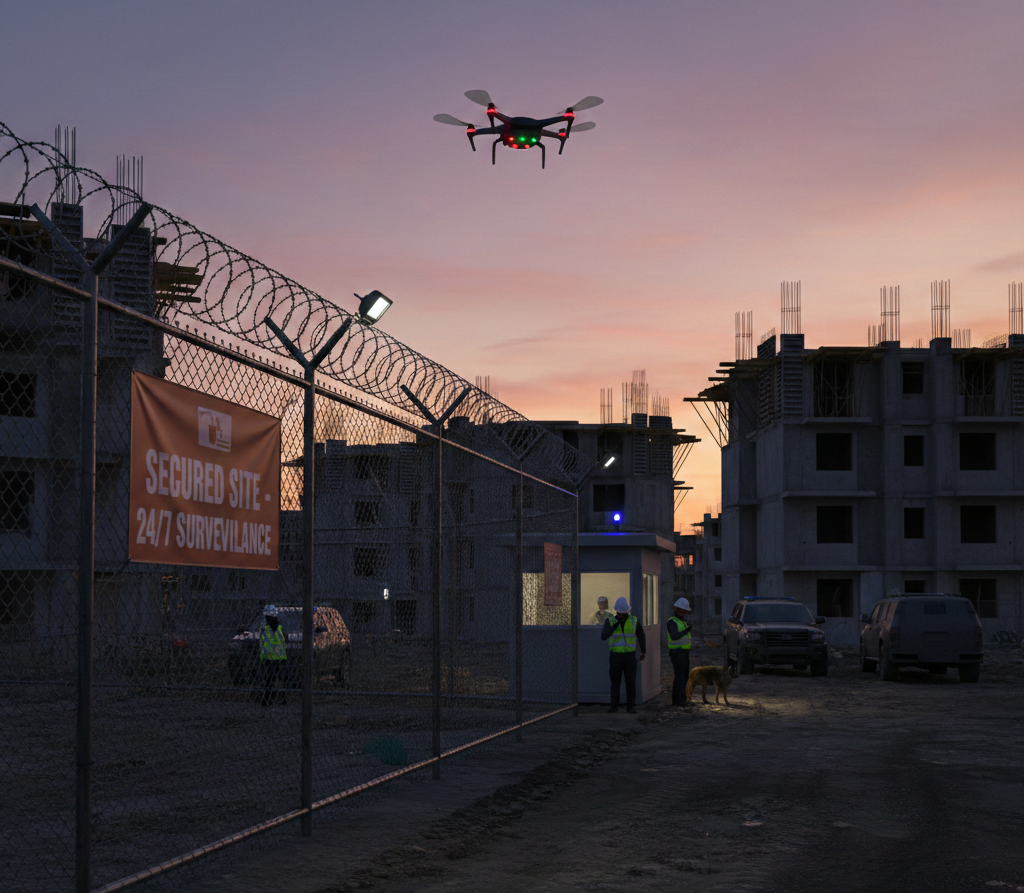
Security for under-construction housing projects is one of the biggest concerns for builders, developers, and investors. Construction sites remain open, full of expensive materials, heavy machinery, and valuable equipment. Without proper security planning, these sites become easy targets for theft, vandalism, and unauthorized access. A single security lapse can cause financial loss, project delays, and legal complications. This is why professional and well-planned construction site security plays a major role in project success.
Why Security for Under-Construction Housing Projects Is Important?
Every under-construction housing project faces multiple risks on a daily basis. Cement, steel, wiring, tiles, and machinery attract thieves, especially at night when activity is low. Unauthorized entry also increases the risk of accidents and injuries. If someone gets hurt inside the project area, legal problems may follow. Strong security reduces these risks and creates a safe environment for workers and management. It also builds trust among investors and future buyers. When people see that a project is protected properly, they feel confident about investing. Proper security planning helps maintain smooth operations and prevents unnecessary financial losses that can disturb the overall construction timeline.
Common Security Risks at Construction Sites
Under-construction housing projects usually do not have permanent boundaries or controlled entry systems. This makes them vulnerable to different security threats. Theft of building materials is one of the most common problems. Expensive items such as copper wiring, generators, and tools are often targeted. Vandalism is another serious issue that can damage property and increase repair costs. Sometimes rival contractors or local troublemakers may attempt to disturb the site. Fire hazards also exist because of electrical work and flammable materials. Without trained security personnel, managing these risks becomes difficult. Identifying potential threats early helps in designing a strong and reliable security strategy for the entire project.
Role of Security Guards in Construction Projects
Security guards play a central role in protecting housing projects under development. Trained guards monitor entry and exit points, check visitor records, and patrol the area regularly. Their presence alone discourages thieves and unauthorized individuals. Guards also handle emergency situations such as fire incidents or suspicious activities. Night shifts are especially important because most theft attempts happen after working hours. Professional guards remain alert and maintain proper communication with management. They prepare daily reports and record any unusual incidents. Hiring experienced and trained security staff ensures better control over the site and reduces the chances of criminal activity or unwanted disturbances.
Importance of Access Control Systems
Access control is a strong layer of protection for under-construction housing projects. Not everyone should be allowed to enter the site freely. Controlled entry points with visitor logs help maintain records of everyone entering or leaving the premises. Modern systems include ID verification, biometric access, and digital record keeping. These systems reduce the chances of internal theft and unauthorized labor entry. Contractors, suppliers, and workers should have proper identification cards. Restricting access to sensitive areas such as storage rooms and equipment zones prevents misuse. A structured access control system improves discipline and strengthens overall site management. It creates accountability and enhances project security standards.
CCTV Surveillance for Construction Site Safety
CCTV cameras are highly effective in improving security for under-construction housing projects. Cameras placed at entry gates, storage areas, and high-risk zones help monitor activities around the clock. Video recordings provide strong evidence in case of theft or damage. Real-time monitoring allows quick response to suspicious movements. Even the presence of visible cameras acts as a warning to potential intruders. Modern surveillance systems allow remote access through mobile devices, enabling project managers to monitor the site from anywhere. Installing CCTV cameras reduces dependency on manual monitoring alone. Combining surveillance with security guards creates a more powerful and reliable security setup for construction projects.
Boundary Walls and Fencing Solutions
Physical barriers are one of the first steps in securing any housing project under construction. Temporary fencing, metal sheets, or boundary walls prevent open access to the site. Proper lighting around the boundary further strengthens protection. Clear demarcation of the project area reduces the risk of trespassing. Gates should be strong and properly locked after working hours. Signboards warning against unauthorized entry also help in discouraging unwanted visitors. Physical security measures create a strong first impression of discipline and safety. When combined with guards and surveillance systems, fencing solutions significantly lower the chances of theft, vandalism, and illegal entry.
Lighting Systems for Night Security
Darkness provides cover for criminal activities, which is why proper lighting is necessary for construction site security. Floodlights installed at corners, entrances, and storage zones increase visibility. Well-lit areas reduce hiding spots and make surveillance more effective. Motion-sensor lights add another layer of protection. Bright lighting improves guard efficiency and boosts worker safety during night shifts. It also reduces the risk of accidents and injuries. Energy-efficient lighting systems can operate for long hours without excessive cost. Investing in proper lighting is a simple yet powerful way to strengthen security for under-construction housing projects and maintain continuous monitoring throughout the night.
Security Planning and Risk Assessment
Before starting construction, a proper security plan should be prepared. Risk assessment helps identify vulnerable areas and possible threats. Each housing project has different surroundings and risk levels. Urban projects may face higher theft risks, while remote sites may struggle with delayed emergency response. A detailed security plan includes guard deployment, surveillance placement, access control procedures, and emergency response strategies. Regular security audits help evaluate performance and identify gaps. Planning ahead prevents unexpected losses and confusion during emergencies. Developers who invest in structured security planning save money in the long run and maintain smooth construction progress.
Emergency Response and Crisis Management
Emergencies can occur at any time during construction. Fire outbreaks, accidents, or attempted break-ins require quick action. A clear emergency response plan ensures that everyone knows their role. Security staff should receive proper training in handling fire extinguishers and basic first aid. Contact numbers for police, ambulance, and fire services should remain easily accessible. Evacuation routes must remain clear and visible. Regular drills help workers understand safety procedures. Quick response reduces damage and protects lives. Construction projects that prepare for emergencies create a safer environment for workers and maintain trust among stakeholders and investors.
Technology Integration in Construction Security
Modern technology has transformed security for under-construction housing projects. Smart surveillance systems, alarm sensors, and remote monitoring tools improve efficiency. Motion detectors alert guards about unusual movement during closed hours. Digital reporting systems reduce paperwork and improve record accuracy. Drone monitoring can cover large project areas quickly. Technology reduces human error and strengthens security coverage. Combining human supervision with advanced tools creates a balanced and reliable security structure. As construction projects grow in size and complexity, adopting modern security technology becomes a practical and effective solution for long-term protection.
Cost Benefits of Professional Construction Security
Some developers hesitate to invest in security because they see it as an extra expense. In reality, proper security prevents heavy financial losses. Theft of materials, damaged property, and project delays cost far more than hiring professional security services. Insurance companies also consider site protection measures before approving claims. A secure construction site attracts serious buyers and investors. Strong security management reflects professionalism and responsible project handling. Spending on security is not a burden but a protective measure that secures investments and supports timely project completion.
Conclusion:
Security for under-construction housing projects is not optional; it is a necessity. From theft prevention to worker safety, strong security measures protect both financial and human resources. Guards, surveillance systems, fencing, lighting, and proper planning all work together to create a secure environment. Developers who prioritize security reduce risks and maintain smooth construction progress. A well-protected housing project builds trust, saves money, and ensures successful project completion without unnecessary setbacks.