
Public events bring people together for entertainment, celebrations, and shared experiences. Concerts, festivals, exhibitions, and large community gatherings often attract massive crowds, which makes safety planning a top priority for organizers. Trained bouncer security teams for public events provide the discipline and structure needed to keep such environments controlled and comfortable for guests. Their role goes far beyond standing at entrances. These professionals monitor crowd movement, guide attendees, and respond quickly to any disturbance that may arise. Strong security management helps prevent confusion, overcrowding, and conflicts during busy events. With experienced bouncer teams managing safety, organizers can focus on delivering a successful event while guests enjoy the occasion in a secure and well-managed environment.
Importance of Trained Bouncer Security Teams for Public Events
Public events often bring together hundreds or even thousands of people in a single location. Such gatherings require careful planning so safety remains under control from beginning to end. Trained bouncer security teams for public events provide structured protection that allows organizers to manage large crowds smoothly. These professionals understand how to monitor entrances, guide attendees, and respond calmly during tense situations. Their training allows them to identify unusual behavior early, which helps prevent conflicts before they escalate. Another advantage of trained security teams lies in their ability to maintain discipline without creating unnecessary panic. A professional bouncer knows how to communicate clearly, manage aggressive behavior, and guide people toward safe exits when required. This balance of authority and calm behavior creates a comfortable environment for guests.
Event organizers often face challenges such as overcrowding, gate management, and VIP movement within busy spaces. Skilled bouncer teams support these operations with organized planning and strong teamwork. Their presence also sends a clear message that the event management values safety and professionalism. Guests feel more confident attending events where visible security teams maintain order and ensure that everyone can enjoy the gathering peacefully.
Professional Training and Skills of Event Bouncer Teams
Professional bouncer teams receive structured training that prepares them for many situations that may occur during large gatherings. Training often includes crowd control techniques, conflict management, communication skills, and emergency response procedures. These skills allow bouncers to react quickly while maintaining calm authority in difficult circumstances. Physical strength alone does not define a good event bouncer. Modern security training focuses on observation, decision making, and respectful communication. A trained bouncer knows how to guide guests politely, check entry passes, and maintain organized movement near entrances and exits. Their professional attitude helps create a controlled environment without causing discomfort to visitors.
Many training programs also include basic first aid knowledge and emergency awareness. During large public events, small incidents such as minor injuries, panic situations, or overcrowding can occur. A trained security professional understands how to respond immediately and coordinate with medical or emergency services if required. Experience also plays an important role in strengthening these skills. Bouncers who regularly work at concerts, exhibitions, festivals, and corporate gatherings develop strong instincts for crowd behavior. Their practical understanding of event environments helps them anticipate problems early and act before a situation becomes difficult to control.
Crowd Control and Safety Management During Events
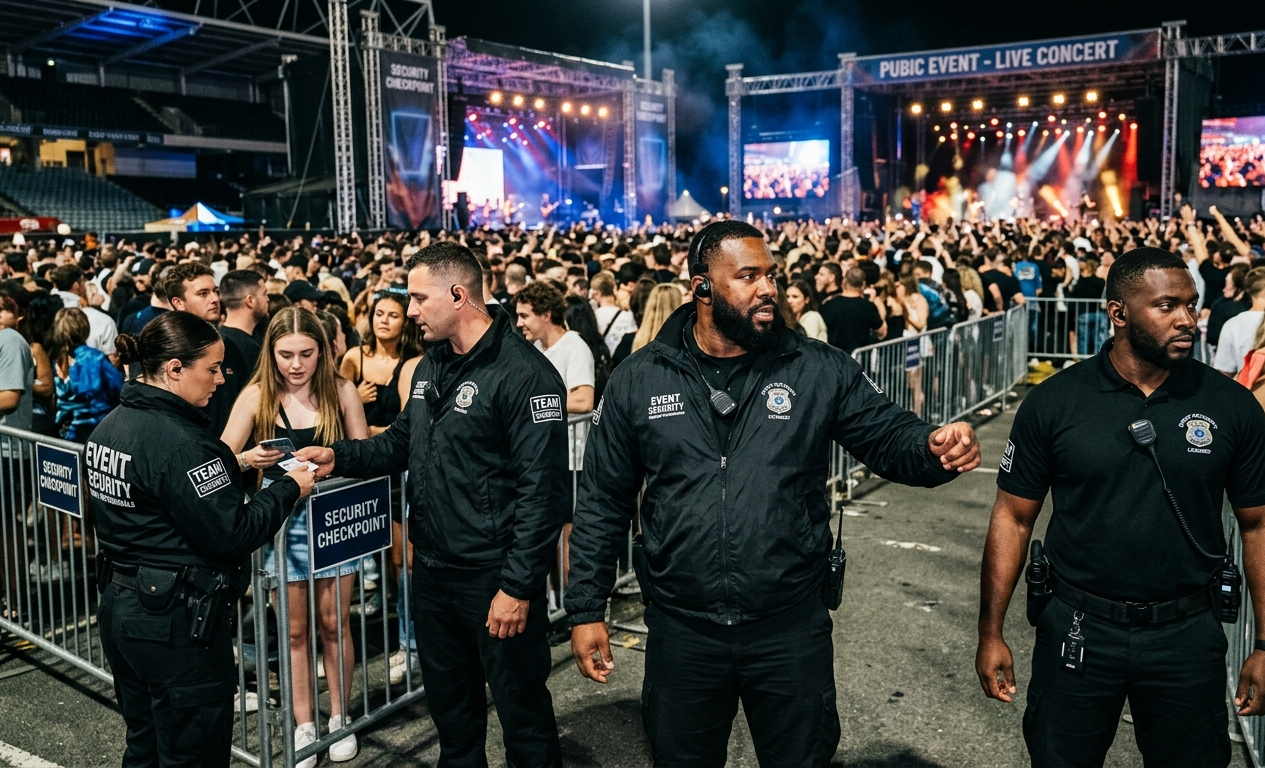
Crowd control stands as one of the most critical responsibilities of trained bouncer security teams for public events. Large gatherings can quickly become chaotic when movement is not managed properly. Professional bouncers guide guests through designated entry points, maintain organized queues, and prevent overcrowding near important areas such as stages or restricted zones. A well trained team observes crowd behavior constantly. Small signals such as pushing, heated arguments, or sudden crowd movement can indicate the beginning of a larger disturbance. Bouncers react quickly to calm the situation and separate individuals involved in conflicts before the issue spreads to the surrounding crowd.
Safety management also includes monitoring emergency exits and maintaining clear pathways. In busy environments people often gather near entrances, which can create obstacles during an emergency. Bouncers remain alert to ensure these areas remain accessible and organized at all times. Another important responsibility includes guiding people during unexpected situations. Sudden weather changes, technical issues, or temporary event pauses may cause confusion among attendees. Security teams communicate instructions clearly and help guests move safely without panic. Their calm control helps maintain stability even during unpredictable moments at large events.
Managing Entry Points and Guest Screening
Entrance management is one of the first and most visible responsibilities of trained bouncer security teams for public events. The way entry points operate often determines how smoothly an event begins. Professional bouncers manage these areas carefully so large crowds can enter in an organized and controlled manner. Guest screening remains an important part of this process. Bouncers check tickets, verify passes, and ensure that only authorized individuals enter restricted sections. This helps protect performers, VIP guests, and event staff while maintaining order inside the venue. Organized entry procedures also prevent overcrowding near gates.
Security teams also monitor items brought into the venue. Certain objects may pose risks during crowded gatherings. Trained bouncers conduct respectful checks and guide guests about allowed and restricted items. Their professional behavior helps maintain safety without creating unnecessary delays. Communication also plays an important role at entry points. Guests often ask questions about seating areas, event timing, or directions inside the venue. Friendly interaction with security staff creates a welcoming atmosphere while still maintaining authority. When entry operations run smoothly, the entire event benefits from better organization and reduced stress for both organizers and attendees.
Handling Conflicts and Maintaining Discipline
Large gatherings naturally bring together people with different personalities, moods, and expectations. Small misunderstandings or disagreements can sometimes occur among attendees. Trained bouncer security teams for public events play a key role in managing such situations before they grow into serious conflicts. Professional bouncers focus on calm communication first. When an argument begins, they approach the situation with controlled body language and respectful dialogue. This approach often helps reduce tension quickly and encourages individuals to cooperate. Many disputes can be resolved through simple conversation and clear instructions.
In situations where behavior becomes aggressive, security teams act firmly while maintaining professionalism. Their training teaches them how to separate individuals involved in conflicts and restore order without causing unnecessary harm. Physical intervention remains a last option and is handled carefully according to safety guidelines. Maintaining discipline across a large crowd also requires continuous observation. Bouncers move through different areas of the venue to monitor behavior and ensure rules are respected. Their visible presence discourages disruptive actions and helps maintain a peaceful atmosphere. Guests feel more comfortable attending events where trained professionals maintain control and ensure respectful conduct throughout the gathering.
Role of Bouncer Teams in VIP and Stage Security
Many public events include special guests, performers, or important personalities who require additional protection. Trained bouncer security teams for public events provide structured security for VIP areas and stage zones where crowd excitement can become intense. Stage areas often attract large numbers of enthusiastic fans. Without proper security, people may attempt to move closer to performers, which can create safety risks. Bouncer teams create clear boundaries around these areas and guide attendees toward designated viewing spaces. Their presence helps maintain safe distance between the crowd and performers.
VIP guests also require controlled access and movement within the venue. Security teams escort these individuals through busy areas, ensuring their safety while avoiding disruption to the event. Careful coordination allows VIPs to interact with guests while maintaining a secure environment. Bouncers assigned to stage and VIP security remain highly alert throughout the event. They monitor crowd reactions, watch for unusual activity, and respond quickly to protect both performers and guests. Their professionalism allows the event to proceed smoothly while maintaining safety for everyone involved in the gathering.
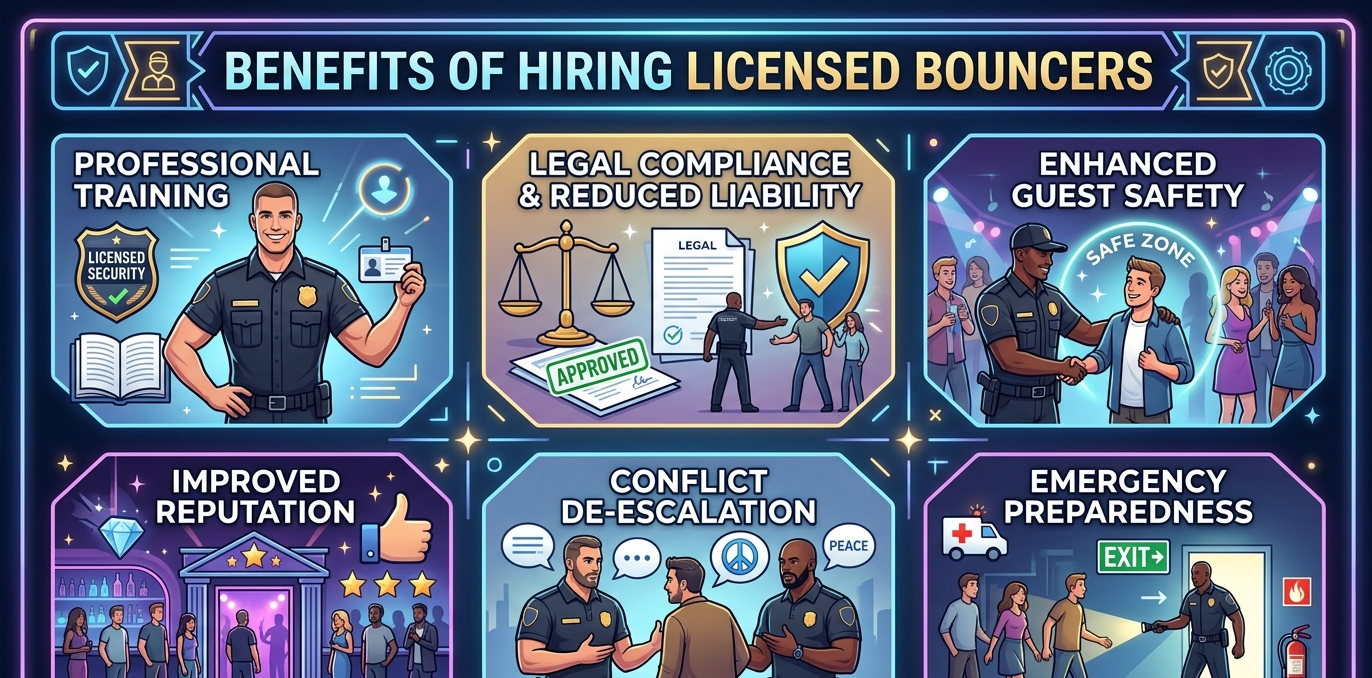
Benefits of Hiring Professional Bouncer Security Services
Event organizers gain many advantages when they hire trained bouncer security teams for public events. Professional security services bring experience, structure, and discipline that help manage large gatherings with confidence. Their preparation allows organizers to focus on the event itself while security teams manage safety responsibilities. A strong security presence also builds trust among guests. People attending concerts, festivals, exhibitions, and corporate functions often feel more relaxed when they see organized security teams managing the venue. This sense of protection encourages more people to attend future events as well.
Professional bouncer teams also help reduce risks related to crowd disturbances, unauthorized entry, or property damage. Their ability to identify early warning signs of trouble allows them to act before problems grow larger. Preventive action often avoids serious incidents that could affect the reputation of an event organizer. Another benefit involves coordination with event staff. Security teams work closely with management, technical crews, and guest services to maintain smooth operations. This teamwork creates a structured environment where safety, comfort, and organization remain balanced throughout the entire event.
Conclusion:
Public gatherings require more than just planning entertainment and logistics. Safety and crowd management remain central to the success of any large event. Trained bouncer security teams for public events provide the professional support needed to maintain order, manage entrances, protect guests, and respond calmly to unexpected situations. Their training, discipline, and experience help prevent conflicts and guide crowds safely throughout the venue. Event organizers who invest in professional security services create a secure environment where guests can relax and enjoy the occasion with confidence. Strong security teams form the foundation of well managed and successful public events.